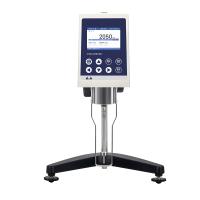
Application of Rotational Viscometer in viscosity detection of ceramic paste
Meaning of measurement
The viscosity of ceramic slurry refers to the viscosity of ceramic slurry during the flow process. Measuring the viscosity of ceramic slurry can provide the following benefits for related industries:
Control the consistency of ceramic slurry: The viscosity of ceramic slurry directly affects its fluidity and construction performance. If the viscosity is too low, it will cause the ceramic slurry to lose and have poor permeability during construction, and if the viscosity is too high, it will cause the ceramic slurry to be difficult to construct and apply. By measuring the viscosity of ceramic slurry, its consistency can be grasped in time, so as to control its fluidity and construction performance.
Guarantee the quality of ceramic products: the quality of ceramic products is closely related to the viscosity of ceramic slurry. If the viscosity of the ceramic slurry is uneven or too low, it will cause problems such as uneven density and cracks in the product, which will affect its quality. By measuring the viscosity of ceramic slurry, it is possible to ensure that the quality of ceramic products meets relevant standards and improve product quality and market competitiveness.
Adjust the production process: The viscosity of ceramic slurry is closely related to the production process. By measuring the viscosity of the ceramic slurry, the production process can be adjusted in time to ensure that the viscosity is within a reasonable range and improve production efficiency and product quality.
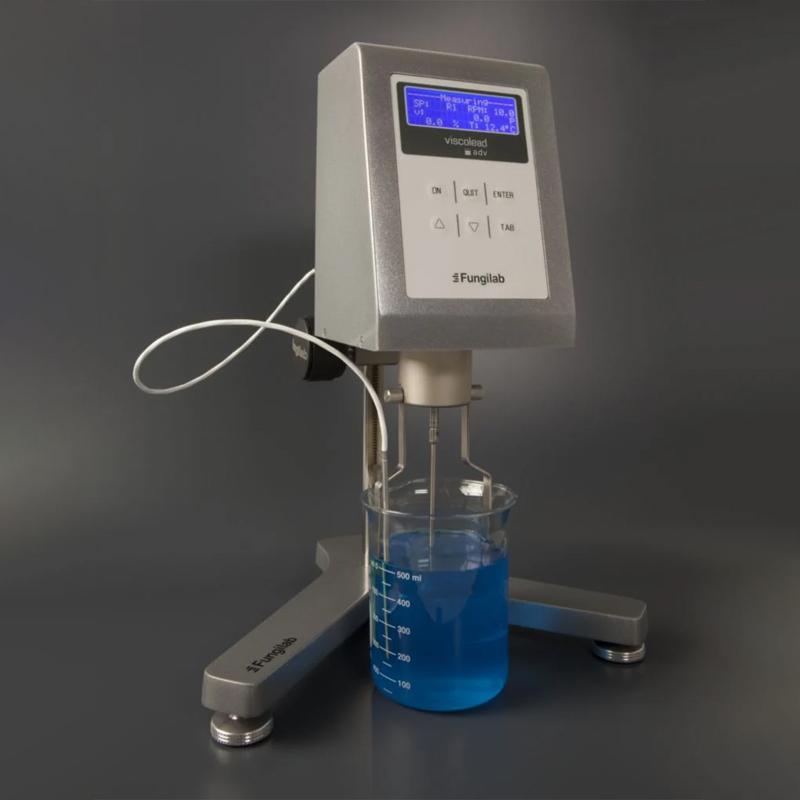
Rotational viscometer is also a commonly used instrument in the detection of ceramic slurry viscosity. The principle is to determine the viscosity of the slurry by measuring the resistance of the ceramic slurry to flow on the surface of a rotating cylinder.
Measurement steps
The following are the steps for testing the viscosity of ceramic slurry using a Rotational Viscometer:
Prepare the sample: Stir the ceramic slurry to be tested evenly, and pour it into the sample cell of the Rotational Viscometer.
Adjust the temperature: adjust the temperature of the Rotational Viscometer according to the specifications of the ceramic slurry.
Adjust the rotation speed: according to the viscosity range of the ceramic slurry, select the appropriate rotation speed.
Start the test: Start the Rotational Viscometer and wait a few minutes until a stable reading appears.
Record the results: Record the reading on the Rotational Viscometer and compare it to the ceramic specification.
NBCHAO reminds you: Before performing the Rotational Viscometer test, the instrument needs to be calibrated to ensure the accuracy of the test results. In addition, when using a Rotational Viscometer for testing, it is necessary to strictly follow the instructions of the instrument to avoid damage to the instrument or inaccurate test results. For ceramic slurry samples, since its viscosity is related to factors such as its solid concentration, additives, and particle size, it is necessary to understand the physical and chemical properties of the sample before testing. If it is necessary to compare and analyze different characteristics of ceramic slurry, tests under different conditions can be carried out as required, such as different solid concentrations, different additives and different particle sizes, etc.
- 1Rotational viscometer - principle, classification, application and calibrating
- 2Application of NDJ-8S digital Rotational Viscometer in viscosity measurement of cosmetic raw materials
- 3NDJ-5S digital Rotational Viscometer accurate measurement of natural oil viscosity
- 4Viscosity of polypropylene (PP) amide measured by NDJ Viscometer
- 5Application of HBDV-1H swirl/spin High Temperature Viscometer in Viscosity Determination of Plastic Particles
- 6Rotational viscometer selection guide: How to choose the right viscosity equipment for you?
- 7Principle, type and accuracy control of Rotational Viscometer
- 8Which Viscometer to Choose for Licorice Extract Viscosity Testing? How to Test?
- 9Application of Rotational viscometer in Waterborne Polyurethane Adhesive