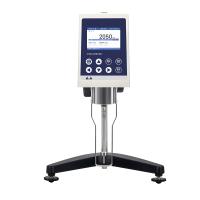
Application of Rotational Viscometer in ink viscosity detection
The viscosity of ink is one of the key factors affecting the quality of printed matter. If the viscosity of the ink is too high or too low, it will affect the physical properties of the ink such as fluidity, dispersion, and adhesion, thereby affecting the quality of printed matter. Here are some important reasons for measuring ink viscosity:
Quality control: By measuring the viscosity of the ink, the stability and consistency of the ink during the production process can be determined to ensure that the ink quality of each batch produced is consistent.
Processing control: By measuring the viscosity of the ink, the flow properties and processability of the ink during the printing process can be determined to ensure that the ink can provide the required processing properties.
Color control: By measuring the viscosity of the ink, the color, transparency and texture of the ink can be controlled to ensure that the color effect of the printed matter meets the requirements.
Material comparison: By comparing the viscosity of different batches or different types of inks, it is possible to determine which ink is more suitable for a specific application to improve the quality and efficiency of printed matter.
Application improvement: By measuring the viscosity of the ink, the effect of inks with different viscosities under different printing conditions can be explored to improve and optimize the printing process.
Measuring ink viscosity is one of the key steps to ensure the quality of ink prints and production efficiency, which is very important for the printing industry.

Rotational viscometers are also widely used in ink viscosity testing. The following are the steps for ink viscosity detection using a Rotational Viscometer:
Prepare the sample: Pour the ink sample to be tested into the measuring cup of the Rotational Viscometer.
Adjust measurement conditions: According to the properties of the ink and measurement requirements, adjust the measurement conditions of the Rotational Viscometer, such as rotation speed, temperature, etc.
Start Measurement: Start the Rotational Viscometer, let it spin and measure the viscosity of the sample. During the measurement, record the measurement result and the measurement time.
Analytical data: convert the measured data into the corresponding viscosity value, usually the unit used is Pa·s or cP.
Judgment result: Compare the measured viscosity value with the specification requirements of the ink to judge whether the sample meets the requirements. If it does not meet the requirements, it needs to be adjusted accordingly.
NBCHAO reminds you: different types of inks have different viscosity characteristics and measurement requirements, so you need to read the operation manual carefully before measuring, be familiar with the use of the instrument, and make corresponding adjustments according to specific conditions.
- 1Rotational viscometer - principle, classification, application and calibrating
- 2Application of NDJ-8S digital Rotational Viscometer in viscosity measurement of cosmetic raw materials
- 3NDJ-5S digital Rotational Viscometer accurate measurement of natural oil viscosity
- 4Viscosity of polypropylene (PP) amide measured by NDJ Viscometer
- 5Application of HBDV-1H swirl/spin High Temperature Viscometer in Viscosity Determination of Plastic Particles
- 6Rotational viscometer selection guide: How to choose the right viscosity equipment for you?
- 7Principle, type and accuracy control of Rotational Viscometer
- 8Which Viscometer to Choose for Licorice Extract Viscosity Testing? How to Test?
- 9Application of Rotational viscometer in Waterborne Polyurethane Adhesive