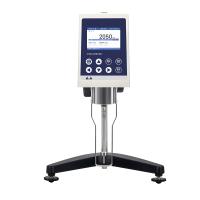
Application of Rotational Viscometer in surface Coating viscosity measurement
The viscosity of surface coatings is an important parameter to evaluate its coating performance, coating effect and service life. Measuring the viscosity of a surface coating can provide a lot of useful information, such as:
Evaluate the viscosity of surface coatings to determine their paintability and rheological properties.
Evaluate the stability of surface coatings, such as emulsion stability, dispersion stability, etc.
Evaluate the rheological properties of surface coatings, such as shear stress, shear rate, and rheological index.
Evaluate the quality and performance of surface coatings, such as color, gloss, abrasion and chemical resistance, and more.
Detection steps
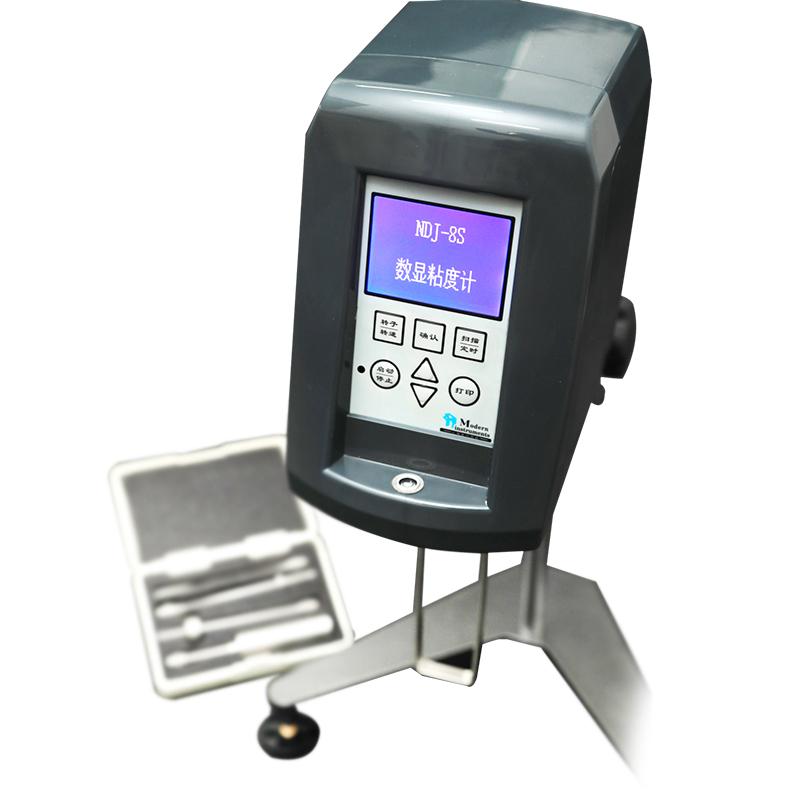
According to the type of sample and the required temperature range, select the appropriate Rotational Viscometer and calibrate it.
Prepare a surface coating sample and inject it into the Rotational Viscometer.
According to the characteristics of the sample and testing requirements, set the testing parameters of the Rotational Viscometer, such as temperature, rotational speed and time, etc.
Start the Rotational Viscometer and observe the movement of the sample within the Rotational Viscometer while recording the viscosity data.
Repeat the above steps over the desired temperature range to obtain more data and verify viscosity stability.
Calculate the viscosity value of the surface coating according to the obtained data, and analyze and compare the results.
Other relevant tests, such as color measurement, gloss measurement, etc., can be carried out as required.
After the test is complete, turn off the Rotational Viscometer and clean the device and sample.
When testing the viscosity of surface coatings, Beichao reminds you to pay attention to the following points:
The preparation and processing of samples should be operated strictly in accordance with the regulations to avoid the influence on the test results.
During the detection process, parameters such as temperature and rotational speed need to be well controlled to ensure the accuracy and reliability of the data.
According to different coating types and testing purposes, it is necessary to select a suitable Rotational Viscometer and set appropriate test parameters.
When testing the viscosity of surface coatings, it is also necessary to pay attention to the safety of equipment and samples to prevent accidents.
- 1Rotational viscometer - principle, classification, application and calibrating
- 2Application of NDJ-8S digital Rotational Viscometer in viscosity measurement of cosmetic raw materials
- 3NDJ-5S digital Rotational Viscometer accurate measurement of natural oil viscosity
- 4Viscosity of polypropylene (PP) amide measured by NDJ Viscometer
- 5Application of HBDV-1H swirl/spin High Temperature Viscometer in Viscosity Determination of Plastic Particles
- 6Rotational viscometer selection guide: How to choose the right viscosity equipment for you?
- 7Principle, type and accuracy control of Rotational Viscometer
- 8Which Viscometer to Choose for Licorice Extract Viscosity Testing? How to Test?
- 9Application of Rotational viscometer in Waterborne Polyurethane Adhesive