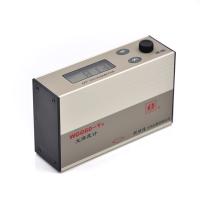
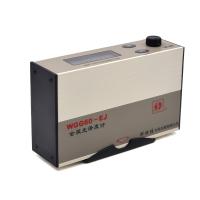
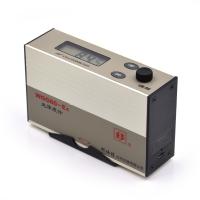
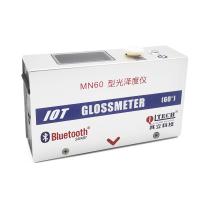
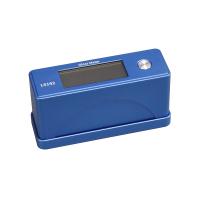
How to detect enamel gloss with Glossmeter?
Enamel is a hard, high-density ceramic glaze layer that provides a high degree of corrosion resistance and protection for surfaces. Gloss is a very important quality indicator in the enamel manufacturing process. Gloss meter is also a commonly used detection tool in enamel gloss detection. It measures the gloss and reflectivity of enamel surfaces to assess the quality and appearance of enamel.
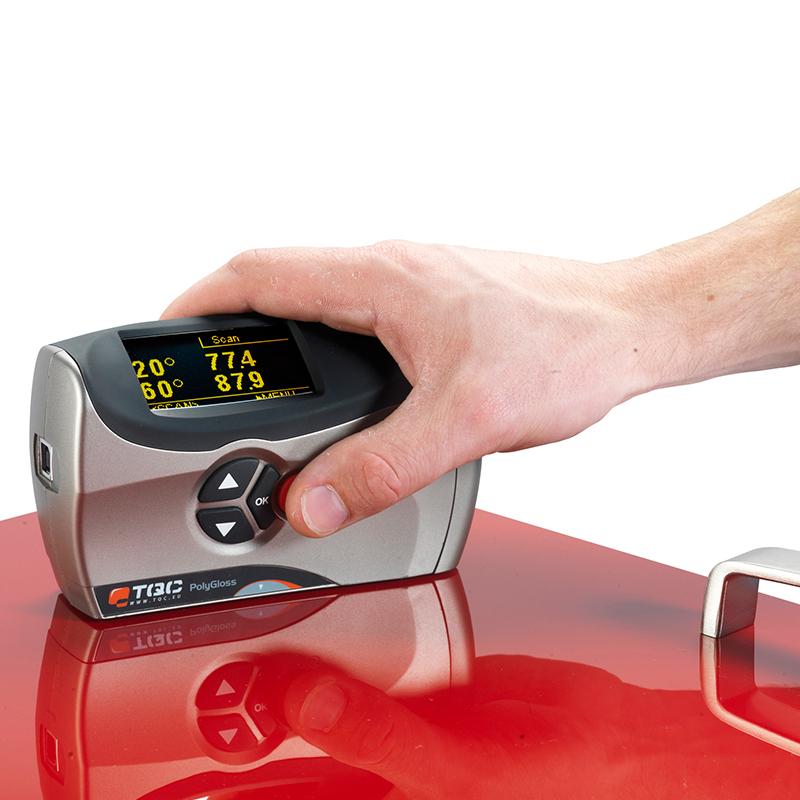
The following are the measurement steps of the gloss meter in the detection of enamel gloss:
Prepare samples: Select representative samples of enamel and test them on a random number of samples. Make sure the surface of the sample is clean, flat, and free of obvious defects.
Calibrate the instrument: Before using the gloss meter, it is necessary to calibrate the instrument to ensure the accuracy and reliability of the measurement results. The calibration process usually includes black and white plate calibration and standard plate calibration.
Measure the sample: put the sample on the gloss meter, press the measurement button to measure. When measuring, make sure that the position and angle of the light source and photocell are correct to avoid errors. Often multiple measurements are taken and averaged for the final gloss measurement.
Analyzing data: Carry out data analysis and processing according to the measurement results, and compare the gloss difference between different samples to evaluate the quality and appearance of the enamel. At the same time, the measurement results can be compared with the specification requirements provided by the enamel material used to ensure that the enamel meets the standard.
Record the results: Record the measurement results and file them. This can be presented and communicated in the form of diagrams or reports if required.
When testing the glossiness of enamel, it is necessary to strictly control the test conditions and the use of instruments to ensure the accuracy and reliability of the measurement results. At the same time, the glossiness of the enamel surface is also affected by factors such as the type, thickness, and sintering temperature of the coating. Therefore, when testing the glossiness of enamel, it is necessary to fully consider various factors and effectively control the enamel production process.
- 1Gloss inspection method of slurry inks
- 2Principle and Application of Glossiness Tester
- 3Working Principle and Application of Metal Gloss Meter
- 4Basic principle and application analysis of insulating paint gloss Detector
- 5Working principle and application analysis of film Glossmeter
- 6Principle and application analysis of microporous gloss meter
- 7 FZ/T 01097 Analysis of fabric gloss test method
- 8Evaluation and Application of Optical Properties of Powder coatings
- 9Coating coatings - Determination of surface gloss and Gloss meter