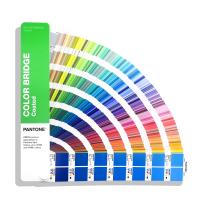
Paint Film Appearance and Optical Properties inspection method--Paint Film Color Determination Method
1 definition
Color is a kind of vision, the so-called vision is the reflection caused in the brain after the light of different wavelengths stimulates the eyes. The color of the coating film is when light is irradiated on the coating film, after absorption, reflection, refraction and other effects, its surface is reflected into the projected color and enters our eyes. The color of the coating film is determined by the light source, the nature of the coating film itself and the human eye.
2 standards of beauty
GB/T 9761_88 Visual color comparison of paints and varnishes
IS03668 1998 Visual color comparison of paints and varnishes
3 Introduction to key points of inspection methods
3.1 GB/T9761-88 Visual color comparison of paints and varnishes
3.1.1 Test Principle
Use the visual method to compare the color difference between the sample template and the standard sample template (or standard Color Chart) under a certain light source (natural sunlight or artificial sunlight).
3.1.2 Materials and equipment
Substrate: tinplate, duralumin plate, steel plate or glass plate, flat and not less than 120mmx50mm in size;
Sample and standard sample (or standard Color Chart);
Color box
3.1.3 Operation points
3.1.3.1 Preparation of sample panels and standard sample panels
Prepare the samples and standard samples at the same time as required, construct and dry under the same conditions.
3.1.3.2 Colorimetric procedure
Place the sample template and the standard sample template (or standard Color Chart) side by side so that the corresponding ones touch or overlap each other. Compare colors under natural sunlight or artificial sunlight, and observe the color difference. The distance from the eye to the sample is about 500mm during the color comparison.
For paint films with great differences in gloss, follow the following principles for color comparison:
a. Observe under natural sunlight: Observe in a direction close to a right angle to limit the influence of contrasting colors due to gloss differences.
b. Observation in the colorimetric box: the irradiating light is incident at an angle of 0°, and the human limit is observed at an angle of 45°.
The color comparison during the referee inspection shall be carried out under the artificial sunlight conforming to the CIE standard light source D65.
3.1.3.3 Evaluation of conditional color matching
Conditional color matching: If the sample and the standard sample contain different pigment compositions, they may be isochromatic under a certain standard light source, but not under another light source.
Put the test board under the CIE standard light source D65 and A (tungsten lamp) respectively to observe whether it is the same color.
3.1.4 Result presentation
Is the color consistent.
3.1.5 Precautions
3.1.5.1 The eyesight of the observer needs to be normal, without visual defects.
3.1.5.2 The continuous color comparison of the observer should not be too long, and the eyes should not be overly tired.
3. 1.5.3 After observing a strong color, the light color or complementary color cannot be seen immediately. In addition, when comparing the saturated color of the bright color, if the judgment cannot be made immediately, the observer should look at the neutral gray on the third side for a few seconds After a few minutes, continue the color comparison.
3.1.5.4 Observers should wear neutral color clothing during color comparison, and the color comparison environment is preferably neutral gray, and there should be no reflected light from colored objects around.
3.2 Is0 3668:1998 Visual color comparison of rattan and varnish one-color paint
3.2.1 Test principle
Use the visual method to compare the color difference between the sample template and the standard sample template (or standard Color Chart) under a certain light source (natural sunlight or artificial sunlight) and observation conditions. The components of color difference (differences in hue, chroma and lightness) are described on a numerical scale. The evaluation of conditional isochromaticity is also considered.
3.2.2 Materials and equipment
Substrate: tin plate, duralumin plate, steel plate or glass plate, flat and not less than 150mmx10C)mm in size;
Sample and sample (or standard Color Chart);
Color box
3.2.3 Operation points
Same as 3.1.3.
3.2.4 Result presentation
The color difference (hue difference, chroma difference and lightness difference) is expressed in numerical grades and corresponding symbols.
Rating method for each component of color difference:
Grade Degree of difference
0 no visible difference
1 Very slight, just visible difference
2 Slight, clearly visible difference
3 medium difference
4 considerable difference
5 very big difference
Hue difference: expressed in DH, evaluation method: 0~5 grades; more yellow (ye, y), more green (gr, g), more red (re, r), more blue (bl, b). Example: "DH:5ye" means "the color difference between the sample and the standard sample is 5 grades and more yellow".
Chroma difference: expressed in DC, evaluation method: 0-5 grade; greater than (+) or less than (-). Example: "DC:-2" means "the color difference between the sample and the standard sample is 2 grades".
Brightness difference: expressed in DL, evaluation method: 0-5 grade; brighter (+) or darker (-). Example: "DL:-2" means "the lightness difference between the sample and the standard sample is 2 levels and darker".
3.2.5 Precautions
Same as 3.1.5.
4 other
In addition, there is a method of directly measuring the coating film sample with a color difference meter, and the results are expressed by the three-stimulus value XYZ, Lab value or the color difference value with the target plate.

- 1The Difference Between RAL Formula Guide K5 and K7
- 2What are the main differences between Varnish and Paints?
- 3Selection points of Color Chart reader
- 4Color card selection tool operation guide
- 5What are the characteristics of phenolic resin?
- 6What is varnish? (for packaging and printing)
- 7What are the optical properties of paper and cardboard
- 8Colormeter Color Difference Tester Realizes Color Card Query Color Number Video Tutorial
- 9Color difference meter applied to the appearance color difference detection of electric kettle