Application of color difference meter in Art Coatings color difference detection
With people's pursuit of quality of life, Art Coatings have been widely used in architectural decoration, furniture painting and other fields. However, Color difference has become a major problem plaguing manufacturers and consumers. This paper mainly introduces the application of color difference meter in Art Coatings color difference detection, in order to provide an efficient and accurate color difference detection method for the Coating industry.
Introduction
As a kind of Coating with unique visual effects and decorative effects, the accuracy of Art Coatings' Color is crucial to the quality and market acceptance of the product. However, due to differences in raw materials, processes and other aspects in the production process, Art Coatings are prone to color differences. In order to ensure the Color quality of Art Coatings, color difference detection becomes a key link. As an accurate and fast detection tool, color difference meter plays an important role in Art Coatings color difference detection.
Principle and characteristics of color difference meter
The principle of color difference meter is based on the Optical inspection measurement of the surface Color of the object, which simulates the perception of Color by the human eye, and evaluates and monitors the Color mass of the product by quantifying the Color difference.
Light source
Color difference meters use a stable Light source to illuminate the object. Light sources are typically designed to simulate Standard light sources such as D65 (a daylight standard) to ensure conformity of Color data measured in different environments and conditions.
Optical path system
Light source emits rays of light to the object to be measured, reflected by the surface of the object. The reflected light passes through the optical path system, including lenses, gratings or Miscellaneous Optical inspection elements, and is focused on the Detector.
Detector
Detectors can be photodiodes, CCDs (Charge Coupled Devices) or Miscellaneous type photoelectric converters. It converts the received optical signal into an electrical signal.
Signal processing system
The electrical signal is sent to a signal processing system, where it is amplified, filtered, and digitalized. The data is then converted into numerical representations of Color Spaces, most commonly CIE Lab Color Spaces.
The L value represents the lightness of Color, from 0 (black) to 100 (white).
A value represents the red-green shade of Color, with positive numbers skewed towards red and negative numbers towards green.
The B value represents the blue-yellow tone of the Color, with positive numbers skewed towards blue and negative numbers skewed towards yellow.
Color difference calculation
Color differences are calculated by comparing the Lab values of the measured object to the standard Color or between different samples. The commonly used color difference calculation formula is Delta E * (CIE 1976 Color difference formula), which calculates the total color difference between two Colors.
Delta E *= [ (L1 - L2) ² + (a1 - a2) ² + (b1 - b2) ²] ^ (1/2)
Among them, L1, a1, and b1 are the Lab values of the sample under test, and L2, a2, and b2 are the Lab values of the standard Color or reference sample.
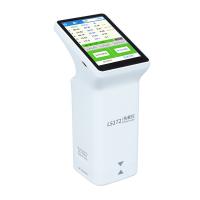
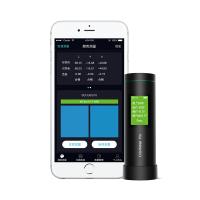
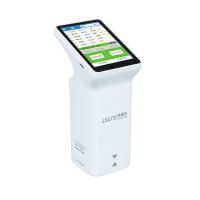
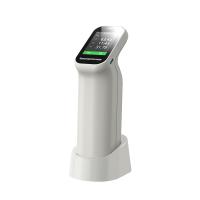
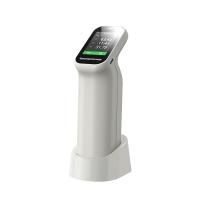
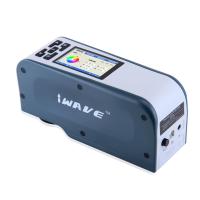
Color difference meters convert Color into numerical values by measuring Color luminance, saturation and shade on the surface of an object, and calculate it with standard Color values to obtain Color differences. The color difference meter is mainly composed of Light source, receiver and processor. Its Key Features are as follows:
Measurement accuracy of color difference meter can meet the strict requirements of Art Coatings color difference detection.
The color difference meter can complete the measurement in a short time and improve the production efficiency.
The color difference meter is easy to operate and does not require professional knowledge, making it easy to be widely used in the production site.
The output value of the color difference meter is objective, reducing human error and improving the Reliability of the detection data.
Application of color difference meter in Art Coatings color difference detection
A representative sample is randomly selected from the Coating batch and evenly applied on the standard cardboard. Place the color difference meter on the surface of the sample and adjust the angle to ensure that the Light source is illuminated vertically on the sample. Press the measurement button and the color difference meter automatically completes the measurement and outputs the data. Compare the data (L, a, b values) output by the color difference meter with the standard Color data to calculate the color difference value (such as Eab, E00, etc.). Evaluate the qualification of the sample based on the calculated color difference value. If the color difference value is within the acceptable range, it means that the Coating Color meets the requirements; otherwise, the production process needs to be adjusted until the color difference value reaches the standard.
Color difference meters play an important role in Art Coatings color difference detection, providing an efficient and accurate color difference detection method for the Coatings industry. By reasonably applying color difference meters, manufacturers can ensure the Stability of Art Coatings Color, improve product mass, and meet consumer demand for high-quality Art Coatings. At the same time, the application of color difference meters also helps to improve production efficiency, reduce production costs, and provide technical support for the sustainable development of the Coatings industry.

Color measurement method
Color difference meters are widely used in Art Coatings color difference detection. The following are general measurement procedures:
Determine the measurement area: Select the surface of Art Coatings as the measurement area and try to avoid defects or sinkage for measurement.
Calibrate: calibrate the color difference meter to zero to ensure accuracy. The calibration process may vary depending on the make and model of the color difference meter, but in general, you need to place the color difference meter on a standard white board and press the "calibrate" button.
Measurement: Place the color difference meter on the measurement area and press the "measurement" button, and the color difference meter will automatically acquire Color data. For larger measurement areas, multiple measurements may be required and the results are averaged to improve accuracy.
Data analysis: Input measurement data into a computer or software for color difference analysis. In general, the commonly used color difference values are delta E, delta L, delta a, delta b, etc., where delta E is the commonly used color difference value, which represents the degree of difference between the sample Color and the standard Color.
Result comparison: The measurement result is compared with the standard Color, and if the color difference value is within a certain range, it is considered qualified.
NBchao prompts you to avoid interference from external rays of light during measurement, and operate the color difference meter strictly according to the instructions to ensure the accuracy of the measurement results.

- 1Color difference meter and its application in Coating production
- 2Application of color reader in paper color difference control
- 3Principle, characteristics and application of Spinning & weaving precision color difference instrument
- 4Determination of thermal plasticity Resin melt flow rate
- 5Molecular weight and distribution characteristics of polyester resin in thermosetting powder coatings
- 6Density Determination Method and Application
- 7Determination method of cone-plate viscometer and its application
- 8Thermal plasticity polyvinyl chloride (PVC) powder coatings in highway engineering: technical requirements and inspection methods
- 9Determination of compatibility of powder coatings: methods, effects and applications