Hull paint film thickness measurement
The purpose of measuring the thickness of the hull paint film is to ensure the quality and performance of the coating to protect the hull from corrosion and other damage in the marine environment. Hull paint films are commonly used to improve the corrosion resistance, abrasion resistance and appearance quality of the hull surface. If the hull paint film is not thick enough, it may not provide adequate protection and be vulnerable to corrosion and damage from the marine environment. However, if the coating is too thick, it will increase the usage and cost of the coating, and may cause quality problems such as unevenness and cracking of the coating. Therefore, measuring the paint film thickness of the hull can ensure that the thickness of the coating meets the requirements, thereby ensuring the protection performance and appearance quality of the hull, and it also helps to control the usage and cost of the paint.
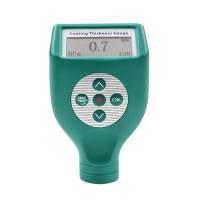
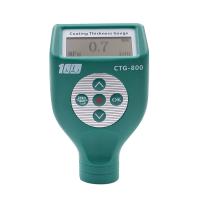
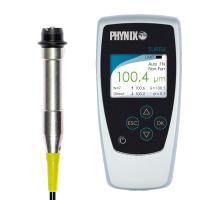
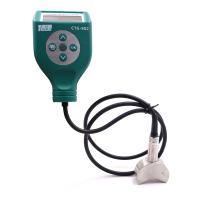
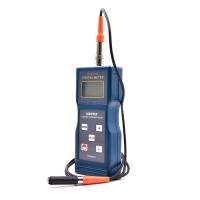
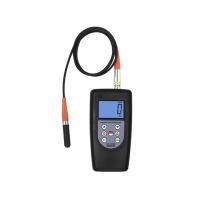
Coating Thickness Gauges are also a common application in hull paint film thickness measurement. The measurement of hull paint film thickness requires a certain measurement range and accuracy of the coating Thickness Gauge. The following is the application and operation steps of the coating Thickness Gauge in the measurement of the thickness of the hull paint film:
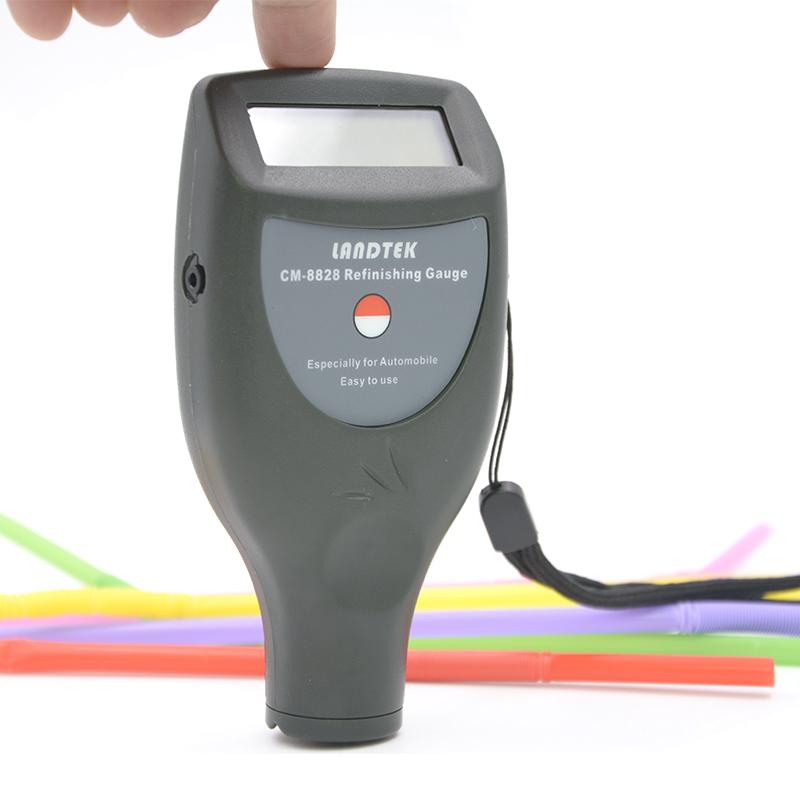
Steps:
Turn on the coating Thickness Gauge, and place the measuring probe on the standard plate for calibration to ensure the accuracy of the instrument.
Prepare the hull surface where the paint film thickness needs to be measured, making sure the surface is clean, smooth and free of impurities.
Place the measuring probe on the surface of the hull to be measured, and select a suitable measurement position, usually different parts should be selected for measurement.
Turn on the coating Thickness Gauge and start measuring, place the probe on the surface of the hull to be tested and wait for the instrument reading. The readings are usually in millimeters or microns.
Record the thickness of the measured hull paint film according to the measurement results, and save the results in a suitable record form or data system for subsequent use.
After finishing the measurement, turn off the coating Thickness Gauge and clean the measuring probe for the next use.
Precautions:
Ensure the accuracy of the instrument and calibrate the probe to the standard plate before measurement.
When measuring, make sure that the probe is in close contact with the surface of the measured object to avoid measurement errors.
For different types of coatings, appropriate measurement modes should be selected to ensure accuracy.
During the measurement process, the hand should be kept stable to avoid vibration from interfering with the measurement results.
The probe should be cleaned in time after the measurement to avoid contamination and damage.
For larger parts of the hull, it is recommended to use a mobile coating Thickness Gauge for measurement.
- 1Nondestructive measurement Coating thickness
- 2Principle, application and selection of traffic coatings Coating Thickness Gauge
- 3Principle, Application and Selection of Eddy current Coating Thickness Gauge
- 4Principle, Application and Type Selection of Electronic Coating Thickness Gauge
- 5Explore the principle, application and selection of phosphating layer Coating Thickness Gauge
- 6Principle, Application and Type Selection Analysis of Chrome Coating Thickness Gauge
- 7Principle, Application and Selection of Coating Thickness Gauge for inner wall of small pipe
- 8Basic principle and application scenario of steel Coating Thickness Gauge
- 9Principle and Application Analysis of Coating Thickness Gauge