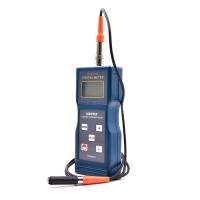
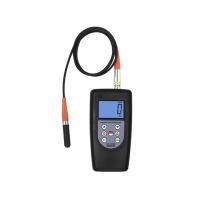
Application of coating Thickness Gauge in thickness measurement of steel pipe paint film
Steel pipes are important materials widely used in construction, machinery, energy and other fields. During use, anti-corrosion treatment is required to improve the durability and prolong the service life of steel pipes. A common method of anti-corrosion treatment is to paint the surface of steel pipes, and measuring the thickness of the paint film on the surface of steel pipes is one of the important indicators of anti-corrosion treatment.
The paint film thickness of the steel pipe surface coating is very important to prevent corrosion of the steel pipe. When the thickness of the coating film is insufficient, the surface of the steel pipe is prone to problems such as corrosion and rust, thereby reducing the durability and service life of the steel pipe. An overly thick paint film may cause the surface of the coating to crack or peel off, which will also reduce the anti-corrosion effect of the coating.
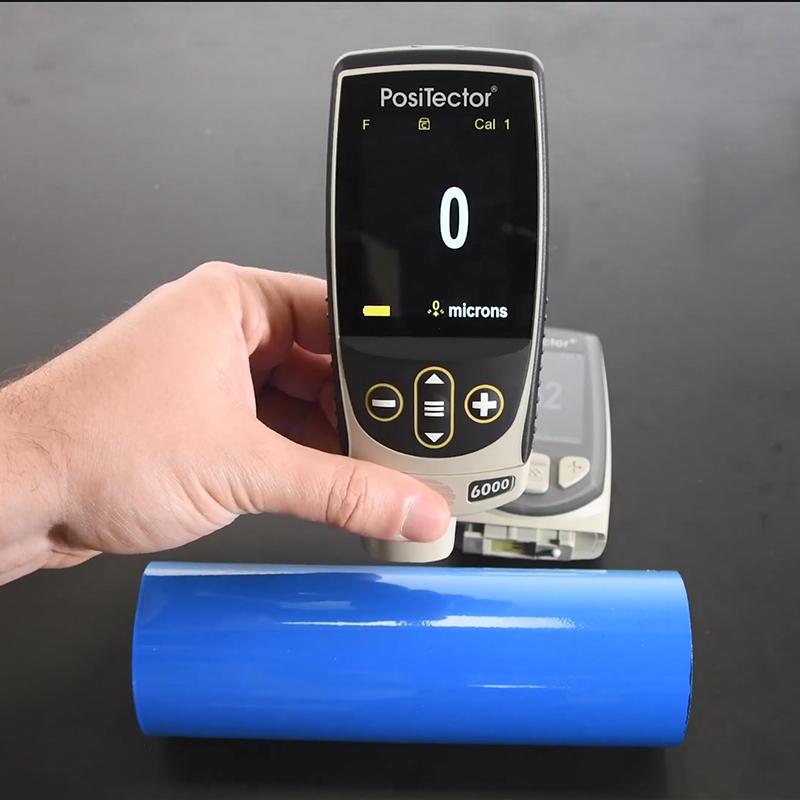
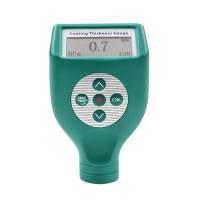
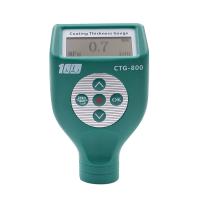
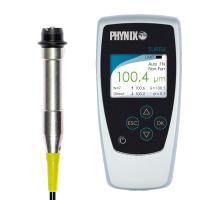
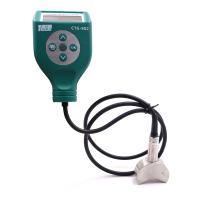
The application of coating Thickness Gauge in steel pipe paint film thickness measurement is mainly used to measure the paint film thickness on the steel pipe surface to judge whether its quality meets the requirements.
The following are the operation steps of the coating Thickness Gauge in the measurement of steel pipe paint film thickness:
Preparation tools: coating Thickness Gauge, standard plate, cleaning cloth, etc.
Prepare the sample: The surface of the steel pipe to be tested should be dry, clean, free of impurities, scratches, etc.
Calibrate the instrument: put the coating Thickness Gauge on the standard plate for calibration to ensure accurate measurement of the instrument.
Measure steel pipe paint film thickness: put the coating Thickness Gauge on the steel pipe surface, press the test button, and record the measured value after the instrument reading is stable. Since the surface of the steel pipe is generally circular, it needs to be measured according to certain rules to ensure the accuracy of the measurement results.
Repeated measurement: Take multiple measurements on the same area and take the average as the final measurement result.
Record the measurement results: record the measurement results, and perform necessary processing, such as calculating the average thickness of the paint film, judging whether it meets the requirements, etc.
When measuring the paint film thickness of steel pipes, NBCHAO reminds you to choose a suitable measurement position and avoid measuring non-coated areas, such as welding points and bends. At the same time, a coating Thickness Gauge suitable for steel pipe paint film measurement, such as a special coating Thickness Gauge for steel pipes, etc., should be selected to ensure the accuracy of the measurement results. It is also necessary to operate in accordance with the instructions of the coating Thickness Gauge to ensure the accuracy of the measurement results.
- 1Nondestructive measurement Coating thickness
- 2Principle, application and selection of traffic coatings Coating Thickness Gauge
- 3Principle, Application and Selection of Eddy current Coating Thickness Gauge
- 4Principle, Application and Type Selection of Electronic Coating Thickness Gauge
- 5Explore the principle, application and selection of phosphating layer Coating Thickness Gauge
- 6Principle, Application and Type Selection Analysis of Chrome Coating Thickness Gauge
- 7Principle, Application and Selection of Coating Thickness Gauge for inner wall of small pipe
- 8Basic principle and application scenario of steel Coating Thickness Gauge
- 9Principle and Application Analysis of Coating Thickness Gauge