How is Coating storage stability determined?
1 Definition, Purpose and Significance

2 Relevant standards
GB/T 6753.3-86 Test method for storage stability of coatings.
5.5 in GB/T 9755-2001 "Synthetic Resin Emulsion Exterior Wall Paint", 5.5 in GB/T 9756_2001 "Synthetic Resin Emulsion Interior Wall Paint" low temperature stability
3 Introduction to key points of inspection methods
3.1 GB/T6753.3-86 Test method for storage stability of coatings
3.1.1 Test Principle
Liquid paints and varnishes stored in airtight containers under natural or accelerated conditions, determination of changes in viscosity, settling of pigments in paints, ease of remixing paints and varnishes for use, and others according to the product Specifies the performance change to be detected.
3.1.2 Materials and instrument settings
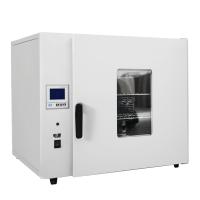
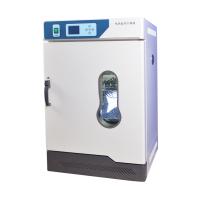
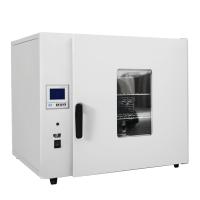
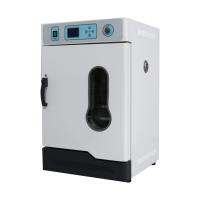
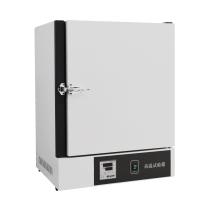
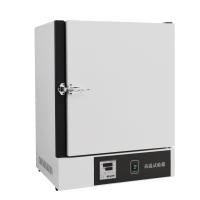
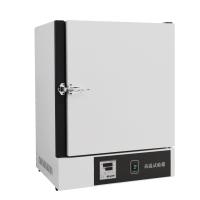
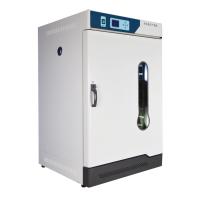
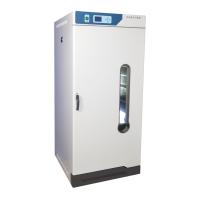
Drying oven: Forced Air Drying Oven capable of maintaining (50±2)°C; (related equipment: oven)
Container: Standard gland-type metal paint can with a volume of 0.4L;
Balance: the division value is 0.2g; (related instruments: precision analytical balance)
Viscometer: Tu-4 viscometer, Tu-l viscometer or other viscometers;
Thermometer: 0-50°C, graduation value is 0.5°C;
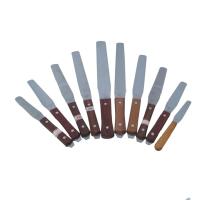
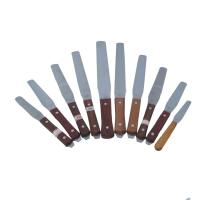
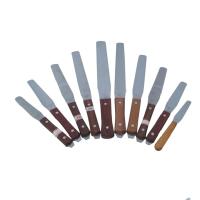
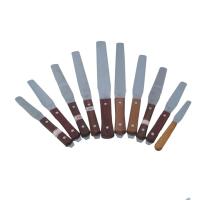
Ink adjusting knife: a adjusting knife for paint, about 100mm long, about 20mm wide, and about 30g in weight;
Paint brush: wolf hair brush, about 25mm wide;
Test plate: 120mnx90mmx2~3mm flat glass plate.
3.1.3 Operation points
According to the provisions of "Sampling of Coating Products", take out representative samples, take three samples and put them into the three specified containers, and the amount of samples should be about 15mm from the top of the tank. Weigh the two cans of samples, then put them into a direct-temperature dry box, and store them under accelerated conditions of (50±2)°C for 30 days, or under natural environment conditions for 6-12 months. Before the storage test, check the original performance of another can of original sample, so as to
Then compare.
After the sample is stored for the specified period, first open the cover to check whether there is crust, corrosion and spoilage smell in the container, and score according to the following six levels: 10=none, 8=very slight, 6=slight, 4=moderate , 2=more serious, 0=serious. Then use a paint spatula to check the degree of settlement, and evaluate the nature and level of settlement according to Table 5. It can also be used to check paint film particles, glue blocks, brush marks and viscosity changes as needed.

3.1.4 Result presentation
The final evaluation of this method is conclusive with "pass" or "fail". When all evaluations are "0" or only according to the degree of settlement, the sample is considered "unsuitable", and in other cases it is "passed" or evaluated according to product requirements.
3.2 GB/T 9755-2001; Determination method of 5.5 low temperature stability in GB/T 9756-2001
3.2.1 Test principle
After the water-based paint is subjected to cold strain and subsequent melting (cycle test), observe and evaluate the conditions of settling, agglomeration, agglomeration, and agglomeration of the sample in the container.
3.2.2 Materials and equipment
Low temperature: (-5±2)℃.
Plastic or glass container: height about 130mm, diameter about 112mm, wall thickness about (0,23mm-0.27mm)
3.2.3 Operation points
Put the sample into a plastic or glass container of about 1L, seal it, put it in a low-temperature box at (-5i2)°C, take out the container after 18 hours, and place it under the condition of (23i2)°C relative humidity (50±5)% 6h, so repeated three times, open the container, stir. Observe the sample for lumps, aggregation and separation.
3.2.4 Result presentation
If the sample has no lumps, agglomeration and high points after the freeze-thaw cycle, it can be expressed as "no deterioration".
- 1Paint transparency detection method
- 2Coating rheology and thixotropic
- 3Coating unit talk
- 4Coating gloss detection solution
- 5What coating defects can be avoided by testing the surface tension properties of coatings?
- 6Measuring Color Difference in the Coatings Industry
Cheryl Roberts
- 7Classification of coatings
- 8The role of paint and film formation method
- 9What is the difference between paint and paint?
-
![Chemical Ink knife No. 4 paint blender, solder paste Stir knife length 100mm]()
-
![Pushen 14 #Ink knife]() Pushen 14 #Ink knife$ 81.00
Pushen 14 #Ink knife$ 81.00 -
![Pushen 12 #Ink knife]() Pushen 12 #Ink knife$ 80.00
Pushen 12 #Ink knife$ 80.00 -
![Pushen 10 #Ink knife]() Pushen 10 #Ink knife$ 80.00
Pushen 10 #Ink knife$ 80.00 -
![Pushen 9 #Ink knife]() Pushen 9 #Ink knife$ 79.00
Pushen 9 #Ink knife$ 79.00 -
![Pushen 8 #Ink knife]() Pushen 8 #Ink knife$ 78.00
Pushen 8 #Ink knife$ 78.00