How to measure film and film Drying time?
1 Definition, Purpose and Significance
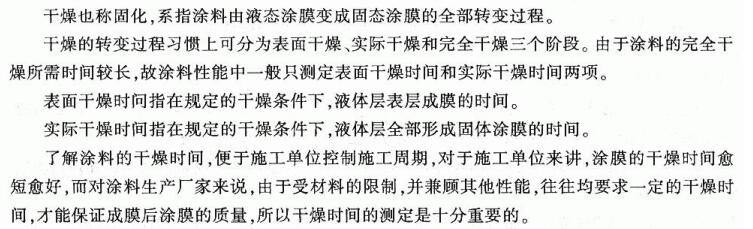
2 Relevant standards
GB/T 1728-79(89) Determination of drying time of paint film and putty film
GB/T 6753.2-86 Paint surface dry operation test small glass ball method
GB/T 9273-88 Paint film non-printing test
3 Introduction to key points of inspection methods
3.1 GB/T1728-79(89) Determination of drying time of paint film and putty film
3.1.1 Materials and equipment
Drying time Tester (dry weight)
Constant temperature and humidity equipment (constant temperature and humidity Chamber)
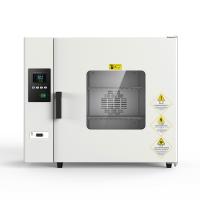
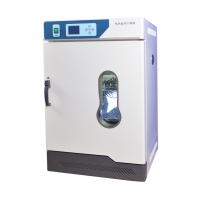
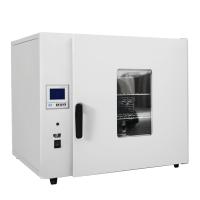
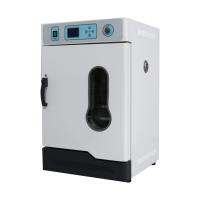
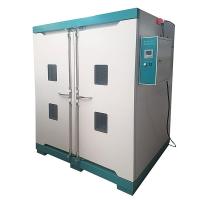
Electric heating drum to dry the operation box, etc.
3.1.2 Operation points
There are two methods for the determination of surface dry time, namely method A: cotton ball blowing method and method B: finger touch method.
A method: Blowing cotton ball method
Put a degreasing cotton ball on the surface of the paint film, and gently blow the cotton ball along the horizontal direction with your mouth. If it can be blown away without leaving any traces on the film surface, the surface is considered dry.
B method: finger touch method
Lightly touch the surface of the paint film with your fingers, if you feel a little sticky, but no paint sticks to your fingers, the surface is considered dry.
There are four methods for measuring real time:
Method A: Pressed paper method
Press a piece of paper on the paint film with a drying time Tester, remove the Tester after 30 seconds, turn the sample over, and the paper can fall freely, which is considered to be actually dry.
Method B: Cotton Ball Pressing Method
Press a degreased cotton ball on the paint film with a drying time Tester, remove the Tester and the cotton ball after 30 seconds, and if there is no cotton ball trace and loss of gloss, it is considered to be actually dry.
C method: blade method
Cut the paint film or putty film on the sample board with a blade, observe the bottom layer and the inside of the film, if there is no sticking phenomenon, it is considered to be actually dry.
Finishing method: thick layer drying method
Take out the test piece after dry operation from the collar box, cut it into two parts, there should be no mucus in the cut part, and if the cut surface is closed and then pulled apart, there is no stringing phenomenon, that is, it is considered to be actually dry.
3.1.3 Result representation and result judgment
Record the longest time required to achieve surface dryness, expressed in h or min. Judge whether to pass or fail according to the specified table time.
Record the maximum time required to achieve the actual dry operation, expressed in h or min. Pass or fail according to the specified hard work time.
3.1.4 Precautions
3.1.4.1 Attention should be paid to the environmental conditions of the drying time measurement during the measurement:
Normal temperature drying: the temperature is (23±2)°C, and the relative humidity is (50±5)%;
Drying paint: Baking at the specified temperature, generally the air blast should be turned on when baking the sample. (Related instrument: oven)
3.1.4.2 The film thickness of the sample plate used for measurement shall be controlled within the range specified in the standard.
3.1 4.3 Attention should be paid to the selection of the substrate during the determination, and the corresponding substrate should be indicated in the result.
3.1 4.4 The sample of oil-based paint and the sample of nitro-lacquer should not be baked in the same oven at the same time.
3,2 GB/「6753.2-86 Paint surface dry operation test small glass ball method
This method is a method for determining the drying time of the surface of the paint film, and it is only used for self-drying coatings.
3.2.l Materials and equipment
Glass ball
Constant temperature and humidity equipment, etc.
3.2.2 Operation points
Pour about 0.5g of small glass balls on the surface of the paint film at a certain height, then tilt the sample at 20°, and use a soft brush. When the small glass balls on the paint film can be gently brushed away, the surface is considered dry.
3.2.3 Result representation and result judgment
Record the longest time required to achieve surface dryness, expressed in h or min. Judge pass or fail according to the specified dry time
3.2.4 Precautions
3.2.4.1 During the measurement, attention should be paid to the environmental conditions for the determination of the drying time: the temperature is (23i2)°C, and the relative humidity is (50i5)%.
3.2, 4.2 The film thickness of the test sample should be controlled within the range specified in the standard.
3.2.4.3 Attention should be paid to the selection of the substrate during the measurement, and the corresponding substrate should be indicated in the result.
3.2.4.4 During the measurement, it should be noted that the diameter of the broken glass ball used must meet the standard requirements.
3.3 GB/T 9273-88 Paint film non-printing test
This method is a method for determining the actual drying time of the paint film, which is used for self-drying and oven-drying coatings.
3.3.1 Materials and equipment
polyacid mesh
weights
Constant temperature and humidity equipment
3.3.2 Operation points
Put a 25mm x 25mm polyacid screen and a certain weight on the surface of the paint film, remove the weight and the screen after 10 minutes, and observe whether there are marks on the paint film to evaluate the degree of drying.
3.3.3 Result presentation
After the specified time, whether the coating reaches no mark (pass and fail) or the time when the coating just has no mark, expressed in h or min.
3.3.4 Precautions
3.3,4,1 Attention should be paid to the conditions of the drying time measurement during the measurement:
Normal temperature drying: the temperature is (23±2)°C, and the relative humidity is (50±5)%;
Drying paint: Baking at the specified temperature, the blast should be turned on when baking the sample.
3.3.4.2 The film thickness of the sample plate used for measurement shall be controlled within the range specified in the standard.
4 other
In addition to the above-mentioned standard measurement methods, there are also methods to measure the drying time using various instruments, such as automatic drying time measuring instruments, paper tape method, gear method, falling sand method, needle marking method, etc. Shakeout and scratching.
- 1Principle, application and selection of Electric Oven
- 2Principle, application and selection of vertical Electric Forced Air Drying Oven
- 3Principle, application and selection of Electric Oven
- 4Principle, application and selection of ozone sterilizing oven
- 5Principle, application and selection of electric heating air Drying Oven
- 6Principle, application and selection of tunnel oven
- 7Principle, application and selection of Drying Oven with timed blast
- 8Working principle and application analysis of laboratory oven
- 9Working principle and application analysis of pointer Electric Forced Air Drying Oven