Coating film thickness measurement scheme
Marking paint is used to draw marking lines in places such as roads and parking lots, which can improve road safety and guide traffic. Measuring marking paint thickness is very important to ensure marking quality and safety. If the thickness of the marking paint is too thin, it is easy to be worn by car tires and eroded by water and rain, resulting in the failure of the marking. If the marking line is too thick, the edge of the marking line will peel or peel off, which is not conducive to driving safety. By measuring the thickness of the marking paint, the construction volume and process parameters can be adjusted in time to ensure that the marking paint is uniform in thickness and meet the standards, improve the durability and visibility of the marking lines, and reduce the occurrence of road traffic accidents.
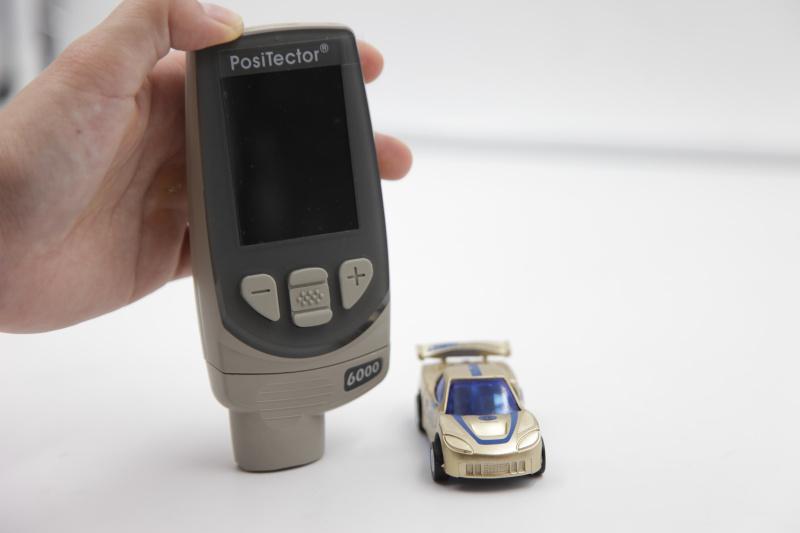
Coating Thickness Gauge can also be used to measure the thickness of marking paint, the following are the general operation steps:
Preparations: First, the coating Thickness Gauge needs to be calibrated to the marking paint measurement mode and calibrated to the correct substrate material.
Clean the surface: Clean the surface to be measured with detergent and a soft cloth to ensure that it is free of any impurities or dirt.
Place the coating Thickness Gauge: place the coating Thickness Gauge flat on the surface to be measured to ensure that the sensor is aligned with the measurement point, and press down lightly to ensure good contact.
Measurement: Press the measurement button on the coating Thickness Gauge, the gauge will automatically measure the thickness of the marking paint and display the result.
Record results: Record measurements as needed, or connect the coating Thickness Gauge to a computer or mobile device for easier recording and management of measurement data.
Cleaning: When you are done measuring, clean the sensor of the coating Thickness Gauge and return it to its protective case to protect it from damage or contamination.
- 1Principle, Characteristics and Application of Wet Film Comb
- 2Determination method of dry and wet paint film thickness
- 3How to detect the thickness of steel structure paint?
- 4Measuring method of ISO 2808 film thickness
- 5Coating Thickness Gauge measurement circuit board film thickness scheme
- 6Epoxy asphalt film thickness measurement solution
- 7Application of coating Thickness Gauge in thickness measurement of steel pipe paint film
- 8Ship paint film thickness measurement
- 9Hull paint film thickness measurement