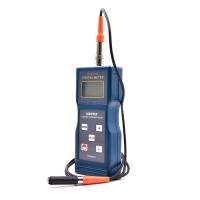
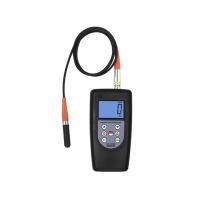
Application scheme of coating Thickness Gauge for measurement of pipeline coating thickness
Pipeline coating is used to improve the corrosion resistance and insulation performance of pipelines, and protect pipelines from corrosion and external environment. Measuring pipeline coating thickness is very important to ensure pipeline quality and safety. If the coating thickness is too thin, it will not be able to protect the pipeline from corrosion and wear, and the pipeline will be easily oxidized, corroded and damaged. If the coating is too thick, the fluid transmission performance of the pipeline will be affected, and the frictional resistance and energy consumption of the pipeline operation will be increased. By measuring the coating thickness of the pipeline, problems can be found in time and corresponding measures can be taken to ensure that the coating thickness is uniform and meet the requirements, improve the anti-corrosion performance and safety performance of the pipeline, reduce maintenance costs and risks, and ensure the reliability and benefits of pipeline operation .
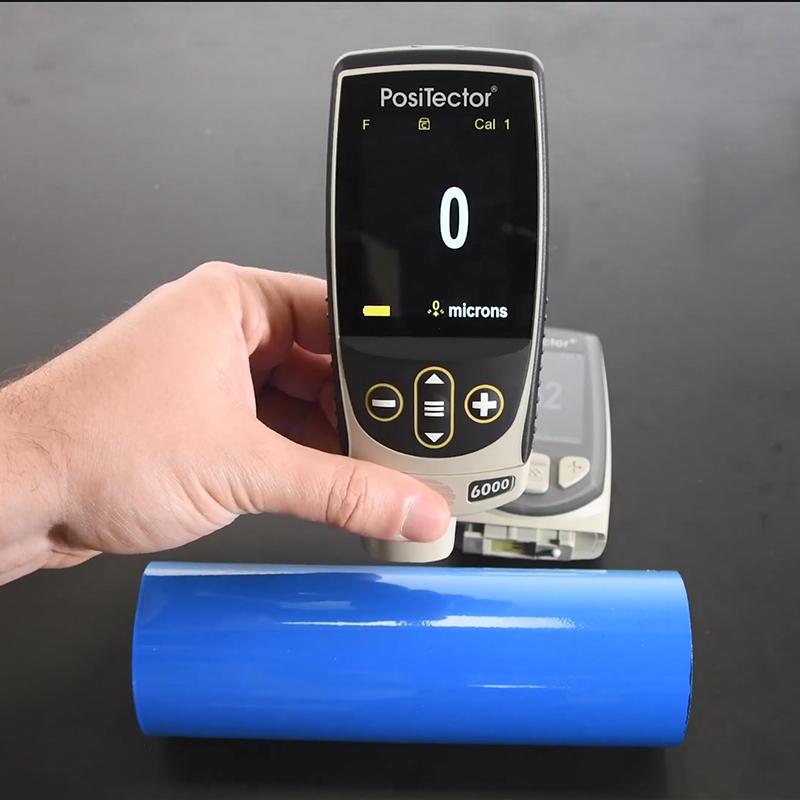
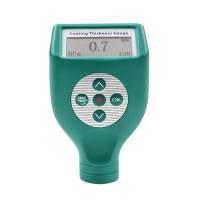
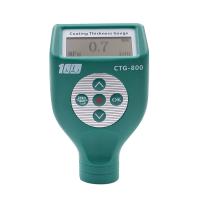
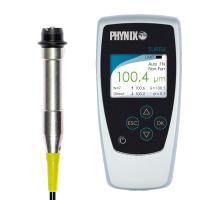
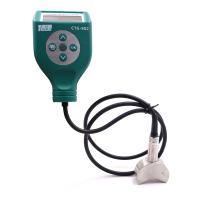
Coating Thickness Gauges are widely used in pipeline coating thickness measurement. The following are general steps for measuring pipeline coating thickness using a coating Thickness Gauge:
Preparation: Clean pipe surfaces to remove dirt and loose coatings to ensure accurate measurements.
Select coating Thickness Gauge: According to the difference of pipe material and coating material, choose the appropriate coating Thickness Gauge.
Calibrate the coating Thickness Gauge: Before taking measurements, the coating Thickness Gauge should be calibrated to ensure its accuracy. Typically, coating Thickness Gauges are supplied with calibration blocks or standards that can be calibrated against the values they provide.
Measurement: Place the sensor of the coating Thickness Gauge on the surface of the pipe and measure perpendicular to the surface. Multiple measurements should be taken to obtain a more accurate average. Measurements should be spread evenly over the entire pipe surface, avoiding measuring in only one area.
Record results: record the measurement results, including information such as measurement location, measurement value and calibration date. The measurement location can be marked on the pipe surface if required.
Beichao reminds you: different types of pipelines and coatings require different types of coating Thickness Gauges, and you need to carefully read and follow the operation manual of the coating Thickness Gauge before use. When using a coating Thickness Gauge, it is also necessary to pay attention to the gap between the sensor and the pipe surface, as well as to avoid external disturbances, such as vibration or electromagnetic fields.
- 1Nondestructive measurement Coating thickness
- 2Principle, application and selection of traffic coatings Coating Thickness Gauge
- 3Principle, Application and Selection of Eddy current Coating Thickness Gauge
- 4Principle, Application and Type Selection of Electronic Coating Thickness Gauge
- 5Explore the principle, application and selection of phosphating layer Coating Thickness Gauge
- 6Principle, Application and Type Selection Analysis of Chrome Coating Thickness Gauge
- 7Principle, Application and Selection of Coating Thickness Gauge for inner wall of small pipe
- 8Basic principle and application scenario of steel Coating Thickness Gauge
- 9Principle and Application Analysis of Coating Thickness Gauge