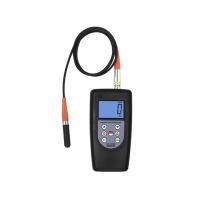
Thickness measurement of aluminum zinc nickel coating by coating Thickness Gauge
The thickness of the aluminum galvanized nickel layer refers to the coating of a layer of zinc-nickel alloy layer on the aluminum surface by electroplating process, and its thickness refers to the thickness of the alloy layer on the aluminum surface. Usually, the thickness measurement of aluminum galvanized nickel layer is to ensure the quality and performance of the product. The aluminum zinc-nickel coating can provide good corrosion resistance and mechanical properties, thereby protecting the aluminum surface from oxidation and corrosion, and can enhance its strength and hardness. Measuring the thickness of the aluminum zinc-nickel coating can ensure that the thickness of the coating meets the design requirements, and can help the control and quality assurance of the production process. At the same time, for industries and manufacturers that use Al-Zn-Ni coatings, such as automotive, aerospace, construction, etc., measuring the thickness of Al-Zn-Ni coatings is also a necessary step to ensure product quality and performance while reducing costs and enhance competitiveness.

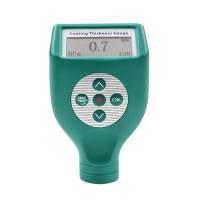
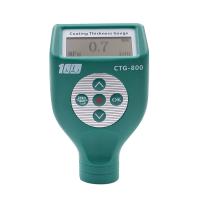
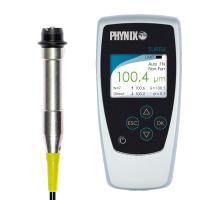
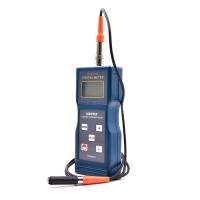
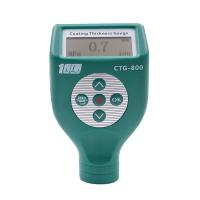
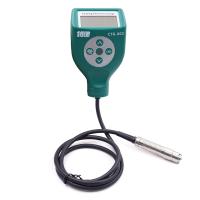
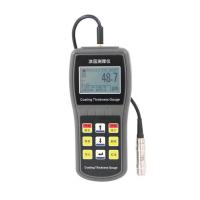
In the thickness measurement of aluminum galvanized nickel layer, magnetic induction coating Thickness Gauge or eddy current coating Thickness Gauge can be used.
For the magnetic induction coating Thickness Gauge, the operation steps are as follows:
Turn on the power of the instrument and select the appropriate probe;
Put the probe close to the surface to be tested, make sure it is perpendicular to the surface, and ensure that the center of the probe is in the center of the test area;
Press the test key, wait for the instrument to stabilize and send out a signal;
Read the measurement and record it.
For the eddy current coating Thickness Gauge, the operation steps are as follows:
Turn on the power of the instrument and select the appropriate probe;
Put the probe close to the surface to be tested, make sure it is perpendicular to the surface, and ensure that the center of the probe is in the center of the test area;
Press the test key, wait for the instrument to stabilize and send out a signal;
Read the measurement and record it.
No matter what kind of coating Thickness Gauge is used, the appropriate probe and instrument parameters should be selected according to the specific conditions of the tested object, and calibrated before measurement.
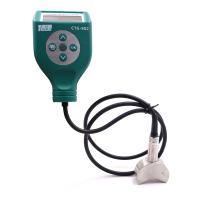
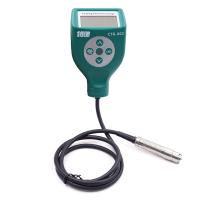

- 1Nondestructive measurement Coating thickness
- 2Principle, application and selection of traffic coatings Coating Thickness Gauge
- 3Principle, Application and Selection of Eddy current Coating Thickness Gauge
- 4Principle, Application and Type Selection of Electronic Coating Thickness Gauge
- 5Explore the principle, application and selection of phosphating layer Coating Thickness Gauge
- 6Principle, Application and Type Selection Analysis of Chrome Coating Thickness Gauge
- 7Principle, Application and Selection of Coating Thickness Gauge for inner wall of small pipe
- 8Basic principle and application scenario of steel Coating Thickness Gauge
- 9Principle and Application Analysis of Coating Thickness Gauge