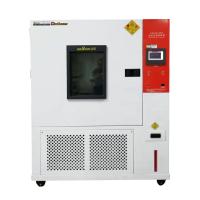
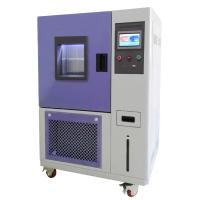
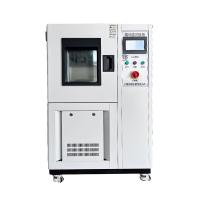
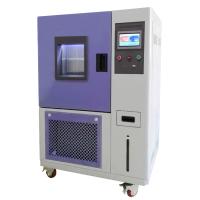
Low/high Temperature Test Chamber for high-low temperature resistance test of foam materials
Foam materials may be exposed to high or low temperatures during use, which can affect their performance and structure. Therefore, it is very important to conduct high-low temperature resistance tests on foam materials.

The high-low temperature resistance test can evaluate the physical and chemical properties of foam materials at high or low temperatures, such as strength, hardness, flexibility, thermal expansion coefficient, etc. These properties are closely related to the service life, safety and reliability of foam materials.
In the high-low temperature resistance test, it is possible to simulate the high-low temperature environment under actual use conditions, such as placing it at a high temperature for a period of time, and then test whether the performance of the foam material is affected. Through these tests, the service temperature range and durability of the foam can be determined, thus ensuring its good performance and stability in practical applications.
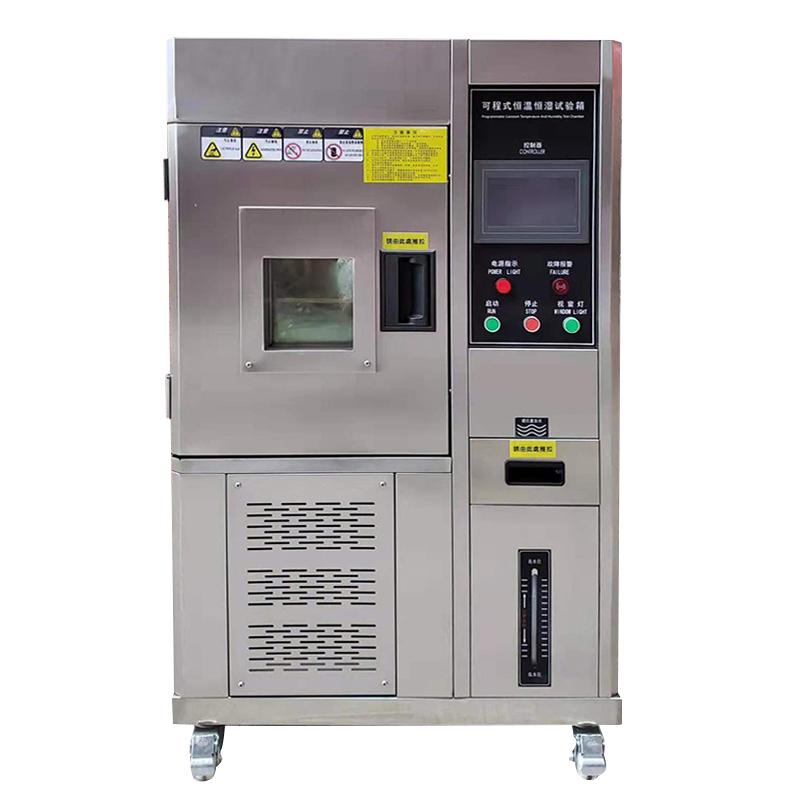
experiment procedure
The high-low Temperature Test Chamber can be used for high-low temperature resistance tests of foam materials. The following are the test steps:
Prepare samples: prepare foam samples with a certain size and shape according to the standard requirements.
Place the sample: place the sample in the high-low Temperature Test Chamber, and make sure that the sample does not move or slide.
Set the test conditions: According to the standard requirements, set the test temperature and time, and preheat the Test Chamber to the target temperature.
Conduct the test: within the set time, gradually increase or decrease the temperature of the Test Chamber to the target temperature, and keep it for a period of time. During the test, changes in the sample are monitored, such as shape changes, dimensional changes, surface cracks, discoloration, etc.
Stop the test: After the test time is over, return the temperature of the Test Chamber to normal temperature and take out the sample.
Check samples: conduct visual inspection and performance test on the samples, record the test results and analyze them.
Multiple trials can be performed as needed to obtain more accurate data. After the test, the Test Chamber should be cleaned and maintained.


- 1Application and structure principle of low/high Temperature Test Chamber
- 2Principle, application and selection of low/high Temperature Test Chamber for plastic belt
- 3Principle, application and selection of fire-proof coatings low/high Temperature Test Chamber
- 4Principle, application and selection of ultra low/high Temperature Test Chamber
- 5Principle and application of desktop low/high Temperature Test Chamber
- 6Application of FRP low/high Temperature Test Chamber
- 7The working principle and application scenario of non-standard high-low-Temperature Test Chamber
- 8Two Methods and Instruments of Film Flexibility Test
- 9Application of programmable low/high Temperature Test Chamber NBC-CDW-150M in luminaire testing