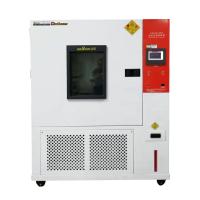
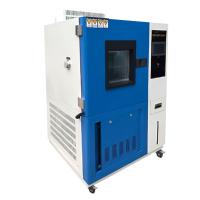
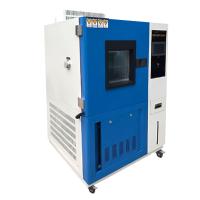
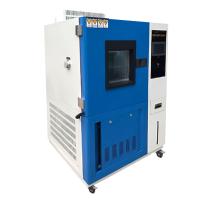
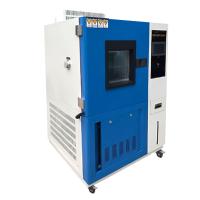
Low/high Temperature Test Chamber for high-low temperature resistance test of rubber pads
The rubber pad is a commonly used sealing element, which needs to have good sealing performance and durability during use. The high or low temperature environment may affect its performance and life, so it is necessary to test the high-low temperature resistance of the rubber pad.
The high-low temperature resistance test can evaluate the physical and chemical properties of the rubber pad at high or low temperature, such as sealing, hardness, elasticity, durability, anti-aging performance, etc. These properties are closely related to the service life, safety and reliability of the rubber pad.
In the high-low temperature resistance test, the high-low temperature environment under actual use conditions can be simulated, such as placing it at a high temperature for a period of time, and then testing whether the sealing performance of the rubber pad is affected. Through these tests, the temperature range and durability of the rubber pad can be determined, so as to ensure its good performance and stability in practical applications. At the same time, it is also possible to evaluate the chemical stability of the rubber pad at different temperatures, so as to avoid the degradation of sealing performance or material failure due to chemical changes.
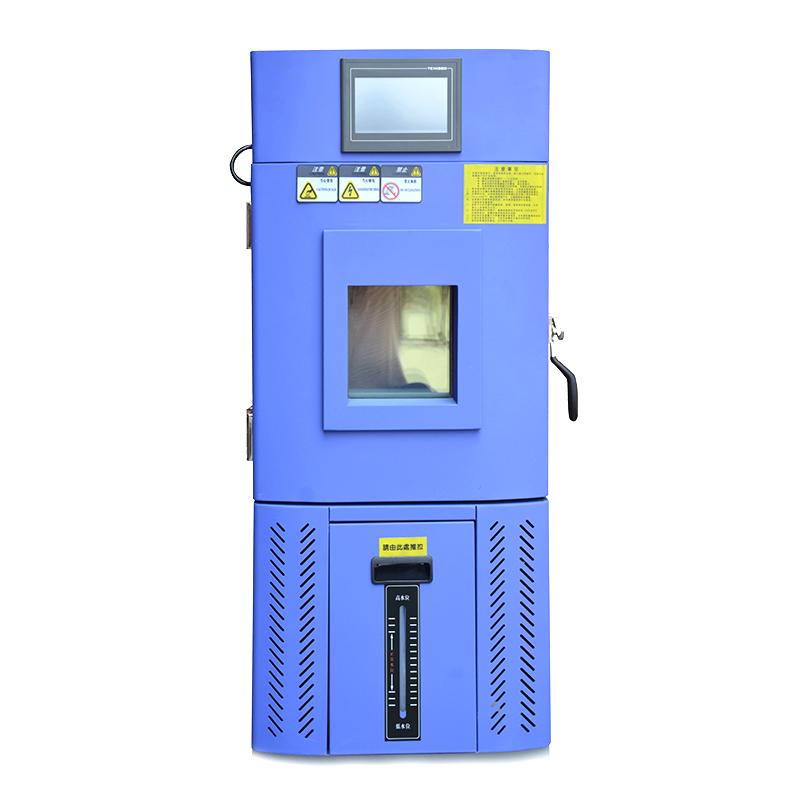
experiment procedure
The high-low Temperature Test Chamber can be used for the high-low temperature resistance test of the rubber pad. The following are the test steps:
According to the size and requirements of the rubber pad, place the rubber pad in the test area in the high-low Temperature Test Chamber.
Set the temperature and humidity to the desired test temperature and humidity.
Close the door of the Test Chamber and start the Test Chamber to allow it to run to the set temperature and humidity.
Under the set high-low temperature environment, keep the stability time of the rubber pad.
Set the temperature and humidity of the Test Chamber back to room temperature and humidity, and keep it for a certain period of time to achieve the equilibrium of the rubber pad.
Remove the gel pad and check that it looks and performs as expected.
Precautions for use
During the experiment, the following matters should be paid attention to in advance:
Make sure that the gel pad is in a stable position in the Test Chamber to avoid the gel pad from moving or sliding during the test.
Before placing the rubber pad in the Test Chamber, make sure its surface is dry and clean to avoid external factors from affecting the test results.
Before the test, the temperature and humidity sensors of the Test Chamber should be calibrated as needed to ensure test accuracy and reliability.
After the test is over, the inside of the Test Chamber should be cleaned in time to avoid the accumulation of moisture and pollutants inside the Test Chamber from affecting subsequent tests.
Result analysis: According to the test results, evaluate the performance of the waterproof membrane and determine whether it meets the relevant standards and requirements.
In short, the high-low Temperature Test Chamber can help enterprises evaluate the stability and durability of waterproof membranes in high-low temperature environments, so as to ensure their reliability and performance in practical applications.

- 1Application and structure principle of low/high Temperature Test Chamber
- 2Principle, application and selection of low/high Temperature Test Chamber for plastic belt
- 3Principle, application and selection of fire-proof coatings low/high Temperature Test Chamber
- 4Principle, application and selection of ultra low/high Temperature Test Chamber
- 5Principle and application of desktop low/high Temperature Test Chamber
- 6Application of FRP low/high Temperature Test Chamber
- 7The working principle and application scenario of non-standard high-low-Temperature Test Chamber
- 8Application of programmable low/high Temperature Test Chamber NBC-CDW-150M in luminaire testing
- 9What are the reasons why the high-low temperature alternating heating and Humidity Chamber cannot be thermostatic?