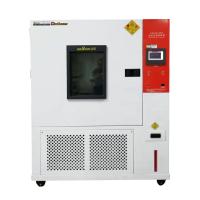
FRP high-low temperature resistance test solution
FRP is a composite material widely used in construction, shipbuilding, chemical industry, environmental protection and other fields. Its main components are glass fiber and resin. In actual use, FRP products may encounter working conditions under different environmental conditions, such as high temperature, low temperature, ultraviolet light, etc. These environments may have an adverse effect on the performance and reliability of FRP. Therefore, the high-low temperature resistance test is one of the necessary means for performance evaluation and quality control of FRP. By simulating the use conditions at different temperatures, the strength, hardness, wear resistance, aging resistance and other indicators of FRP can be tested to ensure its stability and reliability in practical applications. At the same time, the high-low temperature resistance test can also provide manufacturers with important reference information on improving product design, process and material selection, etc., and improve product quality and competitiveness.

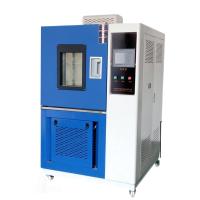
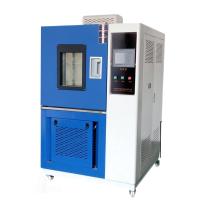
High-low Temperature Test Chambers can be used to test the performance and durability of materials and products in high-low temperature environments, including FRP materials. The following are the application and test steps in the high-low temperature resistance test of FRP:
application
Test the heat resistance, cold resistance, temperature change resistance and other properties of FRP;
Test the physical and chemical properties of FRP in high-low temperature environments;
Evaluate the durability, stability and reliability of FRP.
experiment procedure
Preparation of samples: According to standard methods, prepare FRP samples that meet the requirements;
Place the sample: place the sample in the high-low temperature test box to make it reach the required temperature;
Keeping the temperature: Keep it in a high-low temperature box for a certain period of time, usually hours to days;
Take out the sample: after reaching the required temperature and time, take out the sample and conduct test analysis;
Repeated test: according to the need, the test can be repeated several times to obtain more accurate results;
Analysis results: According to the test results, evaluate the high-low temperature performance and durability of FRP to guide product design and material selection.

- 1Application and structure principle of low/high Temperature Test Chamber
- 2Principle, application and selection of low/high Temperature Test Chamber for plastic belt
- 3Principle, application and selection of fire-proof coatings low/high Temperature Test Chamber
- 4Principle, application and selection of ultra low/high Temperature Test Chamber
- 5Principle and application of desktop low/high Temperature Test Chamber
- 6Application of FRP low/high Temperature Test Chamber
- 7The working principle and application scenario of non-standard high-low-Temperature Test Chamber
- 8Application of programmable low/high Temperature Test Chamber NBC-CDW-150M in luminaire testing
- 9What are the reasons why the high-low temperature alternating heating and Humidity Chamber cannot be thermostatic?