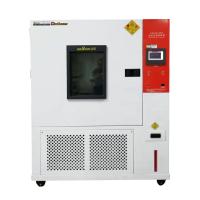
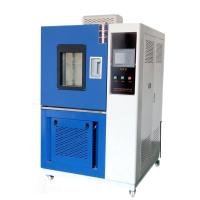
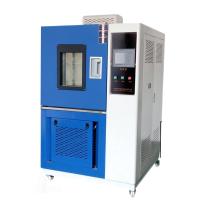
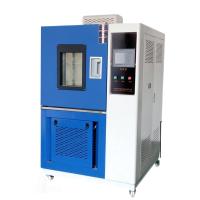
Low/high Temperature Test Chamber for high-low temperature resistance test of bearings
Bearings are important parts in mechanical equipment, and their working environment may have high or low temperature conditions, and these conditions may affect their performance and life. Therefore, it is necessary to conduct high-low temperature tests on bearings. The high temperature test can detect the heat resistance, lubricity and life of the bearing in a high temperature environment; the low temperature test can detect the cold resistance, starting force and life of the bearing in a low temperature environment. Through high-low temperature tests, the performance and reliability of bearings in different temperature environments can be evaluated to provide guarantees for their practical applications. At the same time, high-low temperature tests can also help manufacturers discover possible problems, make adjustments and improvements, and improve the quality and competitiveness of bearings.
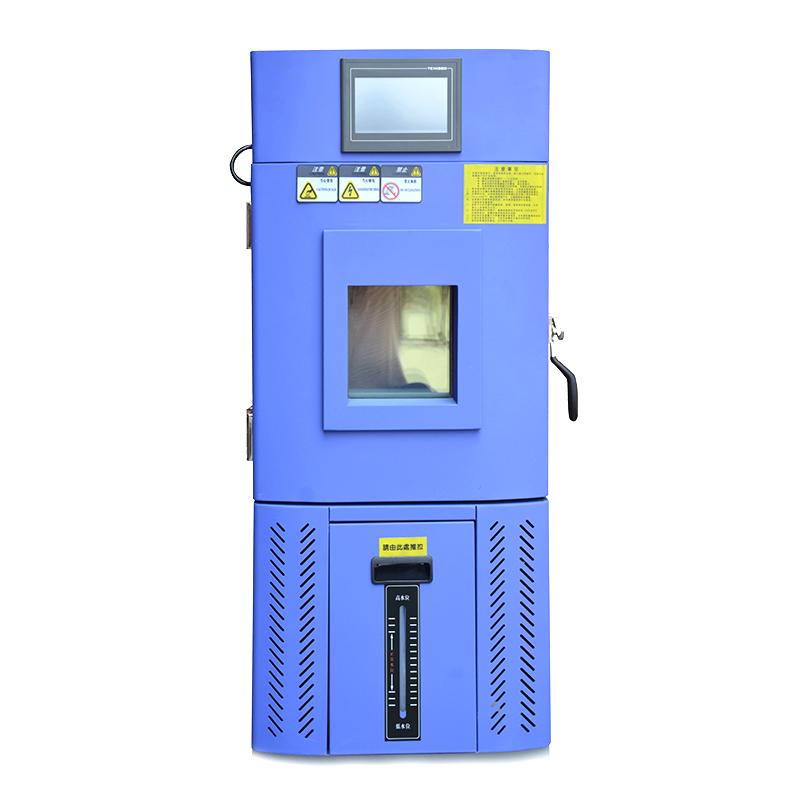
experiment method
The high-low Temperature Test Chamber can be used for high-low temperature resistance tests of bearings to evaluate the performance and reliability of bearings in extreme temperature environments. The following are the general steps of bearing high-low temperature test:
According to the use requirements of the bearing, determine the temperature range of high temperature and low temperature.
Install the bearing on the test equipment to ensure its normal operation.
Put the test equipment in the high-low Temperature Test Chamber, and set parameters such as high-low temperature and temperature change rate.
The test is carried out under the condition of alternating high-low temperature, and the operating state and performance data of the bearing at different temperatures are recorded, such as speed, friction, noise, etc.
According to the test results, the performance and reliability of bearings in high-low temperature environments are evaluated to determine their service life and scope of application.
According to the use requirements of the bearing, multiple tests or tests in different temperature ranges can be carried out as needed.




- 1Application and structure principle of low/high Temperature Test Chamber
- 2Principle, application and selection of low/high Temperature Test Chamber for plastic belt
- 3Principle, application and selection of fire-proof coatings low/high Temperature Test Chamber
- 4Principle, application and selection of ultra low/high Temperature Test Chamber
- 5Principle and application of desktop low/high Temperature Test Chamber
- 6Application of FRP low/high Temperature Test Chamber
- 7The working principle and application scenario of non-standard high-low-Temperature Test Chamber
- 8Application of programmable low/high Temperature Test Chamber NBC-CDW-150M in luminaire testing
- 9What are the reasons why the high-low temperature alternating heating and Humidity Chamber cannot be thermostatic?