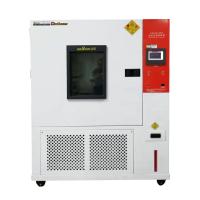
Application of low/high Temperature Test Chamber in high-low temperature resistance test of silicone rubber
Silicone rubber is an elastic material commonly used in high-low temperature environments, so high-low temperature resistance tests are required to evaluate its performance and reliability at different temperatures. High-temperature tests verify the thermal stability, elastic modulus, and hardness of silicone rubber, while low-temperature tests evaluate its bend and tensile properties. Through these tests, the applicability and limitations of silicone rubber at different temperatures can be determined, providing a basis for its selection and design in practical applications.

The application of the high-low Temperature Test Chamber in the high-low temperature resistance test of silicone rubber and the test steps are as follows:
application
Silicone rubber is a commonly used high-temperature material. It is often used in the production of electronic components such as seals, heat conduction pads, and insulating sleeves, as well as in the fields of automobiles and machinery. Due to the high temperature stability and weather resistance of silicone rubber materials, it is necessary to test its performance under extreme temperature conditions through high-low temperature tests.
experiment procedure
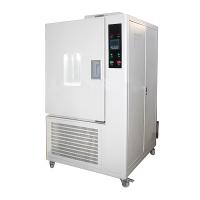
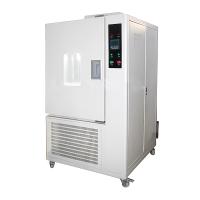
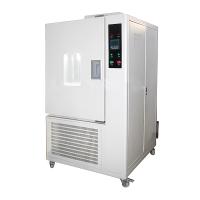
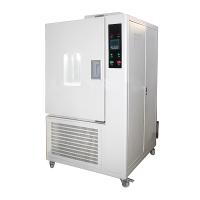
1. Put the silicone rubber sample into the high-low Temperature Test Chamber, the temperature range is -70°C to 200°C, and different temperature ranges can be set according to needs.
2. After waiting for the temperature in the Test Chamber to stabilize, start the temperature cycle test. The temperature cycle test under constant temperature and constant humidity conditions is usually used, that is, cyclical changes between high temperature and low temperature, for example, the temperature range is from -50 ℃ to 150 ℃, and the high temperature maintenance, low temperature maintenance and recovery time are cycled in this temperature range test.
3. During the test, the temperature change, dimensional change, appearance change, etc. of the silicone rubber sample can be monitored to determine its stability and durability in high-low temperature environments.
4. Finally, the test results are analyzed to obtain the performance evaluation of the silicone rubber samples in high-low temperature environments, including the changes, damage, life expectancy and other indicators of the silicone rubber samples.
- 1Application and structure principle of low/high Temperature Test Chamber
- 2Principle, application and selection of low/high Temperature Test Chamber for plastic belt
- 3Principle, application and selection of fire-proof coatings low/high Temperature Test Chamber
- 4Principle, application and selection of ultra low/high Temperature Test Chamber
- 5Principle and application of desktop low/high Temperature Test Chamber
- 6Application of FRP low/high Temperature Test Chamber
- 7The working principle and application scenario of non-standard high-low-Temperature Test Chamber
- 8Application of programmable low/high Temperature Test Chamber NBC-CDW-150M in luminaire testing
- 9What are the reasons why the high-low temperature alternating heating and Humidity Chamber cannot be thermostatic?