Coating adhesion test --- scratch test method
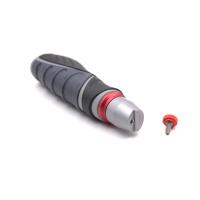
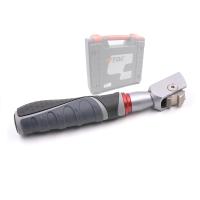
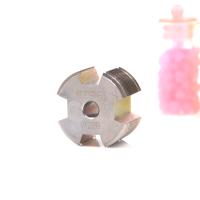
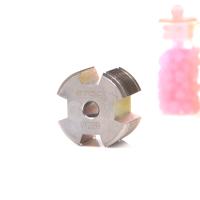
The scratch test method mainly uses hard copper needles or blades to criss-cross the surface of the sample to scratch the coating into parallel lines or squares with a certain distance. The number and spacing of scratches are not limited. When scratching, use The coating generates force with the substrate under stress, and when the force is greater than the bonding force of the layer removal, the layer is peeled off from the substrate. After scratching, the bonding force of the coating is evaluated by whether the layer removal starts or falls Whether it is qualified or not. This method is suitable for some medium-spread and thin-thickness layers, plastic layers, pine hole plating layers, etc. (Related instruments: cross-cutting knife)
The specific method of the test is as follows.
(1) Use a sharp hard steel needle or a copper scribe to draw two parallel lines with a distance of 2mm on the surface of the test sample. Sufficient pressure should be applied when scribing, so that the scribe can scratch the coating to the substrate at one time . If the coating between the two lines has no rise or fall, it is qualified (relevant equipment: cross-cutting device)
(2) Use copper needles or steel knives to cut through the layer on the surface of the tested sample, and draw a certain number of square or basic-shaped small networks with a distance of 1-3mm and a staggered angle of 45°~90°. The legal layer has no degree of rise or is cut off as qualified.
(3) After drawing two scratches according to the above method, further use a sharp-edged tool to pick through the remaining layer at the scratches, and the coating is qualified if the coating does not fall off after pickling.
(4) Use an adhesive tape with high adhesiveness to draw on the surface of the scratched sample, remove the tape after curing, and the coating is qualified if it does not fall off. (Related instrument: Adhesion Tester)
- 1Overview of resistant coatings
- 2Characteristics and construction points of corrosion resistant Coatings
- 3Application of corrosion resistant coatings on reinforced concrete surfaces
- 4Technological development and application of heavy anticorrosive coatings
- 5Application and performance analysis of silicon diffusion coatings
- 6Research and application of chromium diffusion coatings
- 7High temperature oxidation and corrosion resistance performance and application of aluminum diffusion coatings
- 8Zinc diffusion coating performance process and application
- 9Chromate coating technology and its application