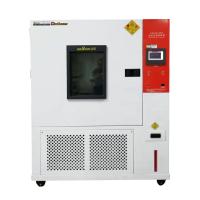
Application of low/high Temperature Test Chamber in high-low temperature resistance test of polymer materials
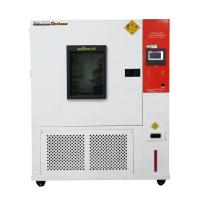
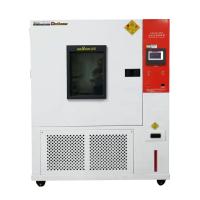
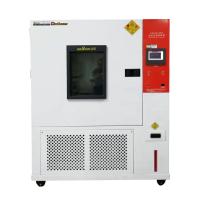
It is widely used in high-low temperature resistance tests of polymer materials, such as plastics, rubber, polyimide, polycarbonate, etc. The following are the application and test steps of the high-low Temperature Test Chamber in the high-low temperature resistance test of polymer materials:

application
The high-low Temperature Test Chamber is used for heat resistance, cold resistance, moisture resistance and other tests of polymer materials. Under high temperature conditions, polymer materials will soften, expand, and age, while under low temperature conditions, polymer materials will become brittle and prone to cracks and fractures. By performing high temperature and low temperature cycle tests in the high-low Temperature Test Chamber, the use of polymer materials in extreme environments can be simulated to evaluate whether their performance meets the requirements.
experiment procedure
Prepare samples: randomly select a certain number of samples from the production batch, and prepare samples according to the standard requirements.
Place the sample: place the sample in the high-low Temperature Test Chamber, and pay attention to having enough space between the samples to avoid mutual influence.
Set temperature: According to the standard requirements, set the temperature of the high-low temperature box and the rate of temperature change. Generally speaking, the high temperature test temperature is 100°C to 300°C, and the low temperature test temperature is -60°C -10°C.
Perform cycling: Alternate high-low temperature cycling tests within the set temperature range. The number of cycles is generally more than 100, and the time and temperature of each cycle should be set according to the standard requirements.
Observing samples: After a certain number of cycles, take out some samples for observation to check whether deformation, cracks, aging, etc. occur.
Analysis results: compare and analyze according to the performance of the sample and the standard requirements, and evaluate whether the sample meets the requirements.
Through the application and test steps of the high-low Temperature Test Chamber, the performance of polymer materials can be evaluated, the design and manufacture of products can be guided, and the reliability and stability of products can be improved.



- 1Application and structure principle of low/high Temperature Test Chamber
- 2Principle, application and selection of low/high Temperature Test Chamber for plastic belt
- 3Principle, application and selection of fire-proof coatings low/high Temperature Test Chamber
- 4Principle, application and selection of ultra low/high Temperature Test Chamber
- 5Principle and application of desktop low/high Temperature Test Chamber
- 6Application of FRP low/high Temperature Test Chamber
- 7The working principle and application scenario of non-standard high-low-Temperature Test Chamber
- 8Application of programmable low/high Temperature Test Chamber NBC-CDW-150M in luminaire testing
- 9What are the reasons why the high-low temperature alternating heating and Humidity Chamber cannot be thermostatic?