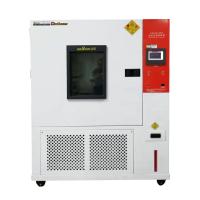
Low/high Temperature Test Chamber for high-low temperature resistance test of capacitors
Capacitors may have various problems under different temperature environments, such as reduced capacitance, increased leakage current, and aging of insulating materials. Therefore, high-low temperature tests are required to test their tolerance. Capacitors may experience problems such as increased leakage current in high-temperature environments, while capacitance may decrease in low-temperature environments. Through the high-low temperature resistance test, the reliability and performance of the capacitor under different temperature conditions can be determined, so as to ensure its stability and durability in practical applications.

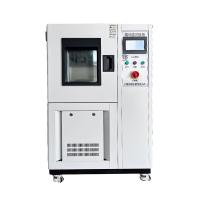
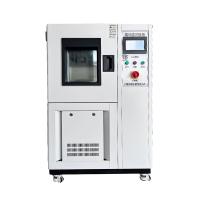
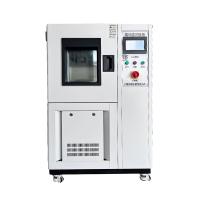
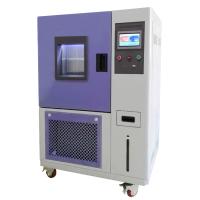
The high-low Temperature Test Chamber can be used for high-low temperature resistance tests of capacitors to evaluate the performance and stability of capacitors in high-low temperature environments. The following are the general test steps:
According to the specifications and requirements of the capacitor, set the temperature range and change rate of the Test Chamber, usually -70°C to +150°C, and the change rate is 5°C/min to 10°C/min.
Place the capacitor in the test box and connect the leads of the capacitor.
Set the temperature of the Test Chamber to the required temperature, and let the capacitor stay at this temperature for a period of time, usually 1 to 2 hours.
Increase or decrease the chamber temperature until another temperature point is reached, then keep the temperature constant and allow the capacitor to sit at that temperature for a period of time, usually 1 to 2 hours.
Repeat step 4 until all desired temperature points have been tested.
After completing the tests at all temperature points, the capacitors are taken out of the Test Chamber for performance testing and analysis to evaluate the performance and stability of the capacitors in high-low temperature environments.
Beichao reminds you: Different types of capacitors may require different test conditions and steps in the high-low temperature resistance test, so the test should be performed according to specific capacitor specifications and requirements.


- 1Application and structure principle of low/high Temperature Test Chamber
- 2Principle, application and selection of low/high Temperature Test Chamber for plastic belt
- 3Principle, application and selection of fire-proof coatings low/high Temperature Test Chamber
- 4Principle, application and selection of ultra low/high Temperature Test Chamber
- 5Principle and application of desktop low/high Temperature Test Chamber
- 6Application of FRP low/high Temperature Test Chamber
- 7The working principle and application scenario of non-standard high-low-Temperature Test Chamber
- 8Application of programmable low/high Temperature Test Chamber NBC-CDW-150M in luminaire testing
- 9What are the reasons why the high-low temperature alternating heating and Humidity Chamber cannot be thermostatic?