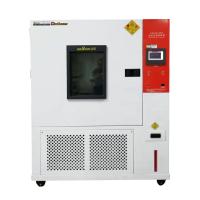
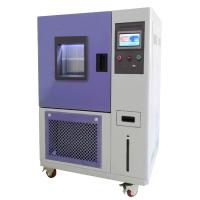
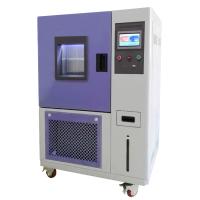
Low/high Temperature Test Chamber for potentiometers
A potentiometer is a component used to adjust voltage or current in a circuit and may be exposed to different temperature conditions during use. Therefore, high-low temperature resistance tests are required to evaluate its performance and reliability at different temperatures. The high temperature test can verify the thermal stability, resistance change and torque characteristics of the potentiometer, while the low temperature test can evaluate its mechanical properties and resistance change in a low temperature environment. Through these tests, the applicability and limitations of the potentiometer at different temperatures can be determined to provide guidance and guarantee for its actual use.

experiment method
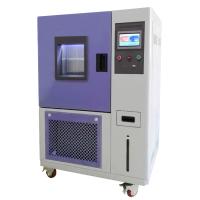
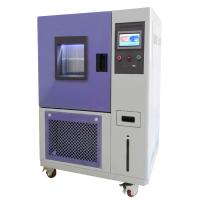
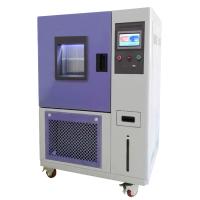
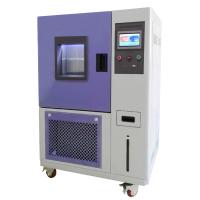
The high-low Temperature Test Chamber can be used for the high-low temperature resistance test of the potentiometer. This test can detect the performance and reliability of the potentiometer at different temperatures, so as to ensure that it can work normally in harsh environments. The following are the general steps of the high-low temperature resistance test of the potentiometer:
Prepare the sample: put the potentiometer sample into the high-low Temperature Test Chamber, and make sure the surface of the sample is clean.
Set test conditions: Set the temperature and time conditions of the high-low Temperature Test Chamber according to product specifications or test requirements. Usually tests are performed at different temperatures such as -40°C, 25°C and 85°C.
Start the test: start the high-low Temperature Test Chamber to make it start to heat up or cool down to reach the required temperature. After reaching each temperature, a period of time is required for the sample to acclimate to that temperature, typically 30 minutes to 1 hour.
Test performance: Test the performance of the potentiometer at each temperature, such as resistance value, linearity, stability, etc. Appropriate test equipment such as multimeters, oscilloscopes, etc. can be used. After testing at each temperature, the samples need to be returned to room temperature and their performance tested again.
End the test: After finishing all the tests, close the high-low Temperature Test Chamber, and take the sample out of the Test Chamber. Samples can be further analyzed and evaluated if required.
In short, the potentiometer high-low temperature resistance test can help to detect the performance and reliability of the potentiometer at different temperatures, so as to ensure that it can work normally under various environmental conditions.
- 1Application and structure principle of low/high Temperature Test Chamber
- 2Principle, application and selection of low/high Temperature Test Chamber for plastic belt
- 3Principle, application and selection of fire-proof coatings low/high Temperature Test Chamber
- 4Principle, application and selection of ultra low/high Temperature Test Chamber
- 5Principle and application of desktop low/high Temperature Test Chamber
- 6Application of FRP low/high Temperature Test Chamber
- 7The working principle and application scenario of non-standard high-low-Temperature Test Chamber
- 8Application of programmable low/high Temperature Test Chamber NBC-CDW-150M in luminaire testing
- 9What are the reasons why the high-low temperature alternating heating and Humidity Chamber cannot be thermostatic?