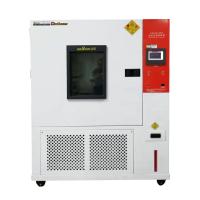
Application of low/high Temperature Test Chamber in NiMH battery
Ni-MH battery is a high-performance rechargeable battery, and its performance will change under different temperature environments, so high-low temperature resistance tests are required. These tests can test the battery performance parameters such as capacity, discharge rate, and cycle life under high-low temperature environments, and evaluate the quality and reliability of the battery. Through the high-low temperature resistance test, it can ensure that the Ni-MH battery can work stably and reliably in various application scenarios, and at the same time improve the safety and performance of the battery.
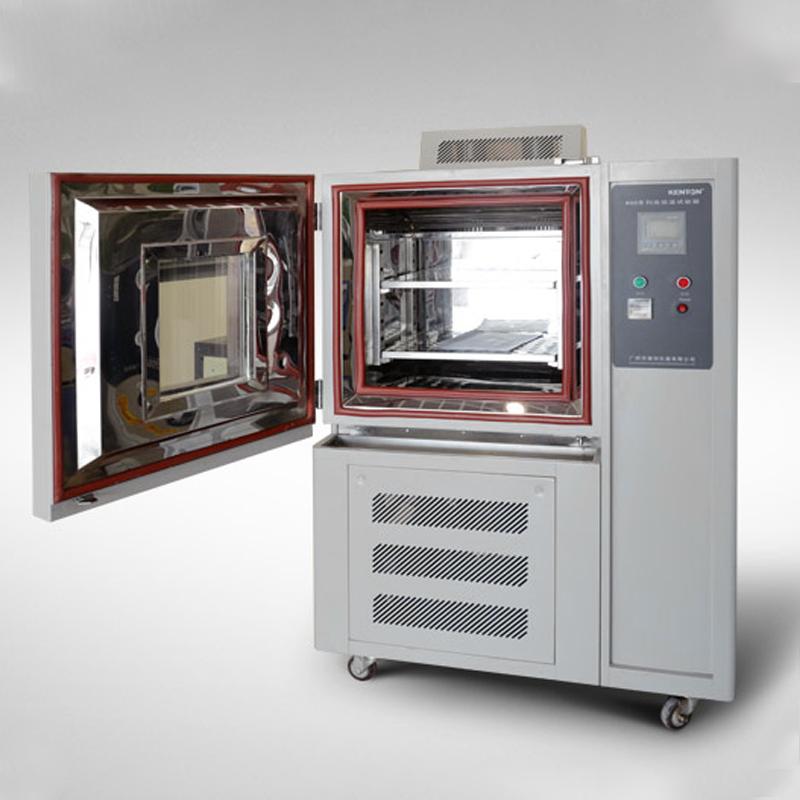
The high-low Temperature Test Chamber plays an important role in the high-low temperature resistance test of Ni-MH batteries, which can help manufacturers understand the performance and stability of Ni-MH batteries at different temperatures. The following is the application and test steps of the high-low Temperature Test Chamber in the high-low temperature resistance test of Ni-MH battery:
application
1. Test the capacity and discharge characteristics of Ni-MH batteries at different temperatures to determine the performance of the batteries under various environmental conditions.
2. Detect the service life and stability of Ni-MH batteries in high temperature or low temperature environment.
3. Simulate battery usage under various environmental conditions in the real world to evaluate its performance and reliability.
experiment procedure
1. Put the Ni-MH battery into the high-low Temperature Test Chamber, and set the required temperature and humidity conditions.
2. Wait for a while at the desired temperature until the temperature stabilizes.
3. Perform a constant current discharge test on the battery to measure the voltage and capacity of the battery at different temperatures.
4. Return the battery to normal temperature, wait for a while, and test the voltage and capacity of the battery again.
5. Repeat the above steps to test the performance and stability of the battery under different temperature and humidity conditions.
6. Analyze the test results and evaluate the performance and reliability of the battery in different environments.




- 1Application and structure principle of low/high Temperature Test Chamber
- 2Principle, application and selection of low/high Temperature Test Chamber for plastic belt
- 3Principle, application and selection of fire-proof coatings low/high Temperature Test Chamber
- 4Principle, application and selection of ultra low/high Temperature Test Chamber
- 5Principle and application of desktop low/high Temperature Test Chamber
- 6Application of FRP low/high Temperature Test Chamber
- 7The working principle and application scenario of non-standard high-low-Temperature Test Chamber
- 8Application of programmable low/high Temperature Test Chamber NBC-CDW-150M in luminaire testing
- 9What are the reasons why the high-low temperature alternating heating and Humidity Chamber cannot be thermostatic?