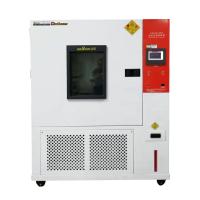
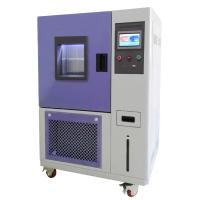
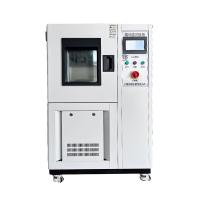
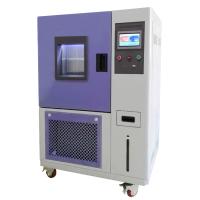
Low/high Temperature Test Chamber for high-low temperature resistance test of plastic products
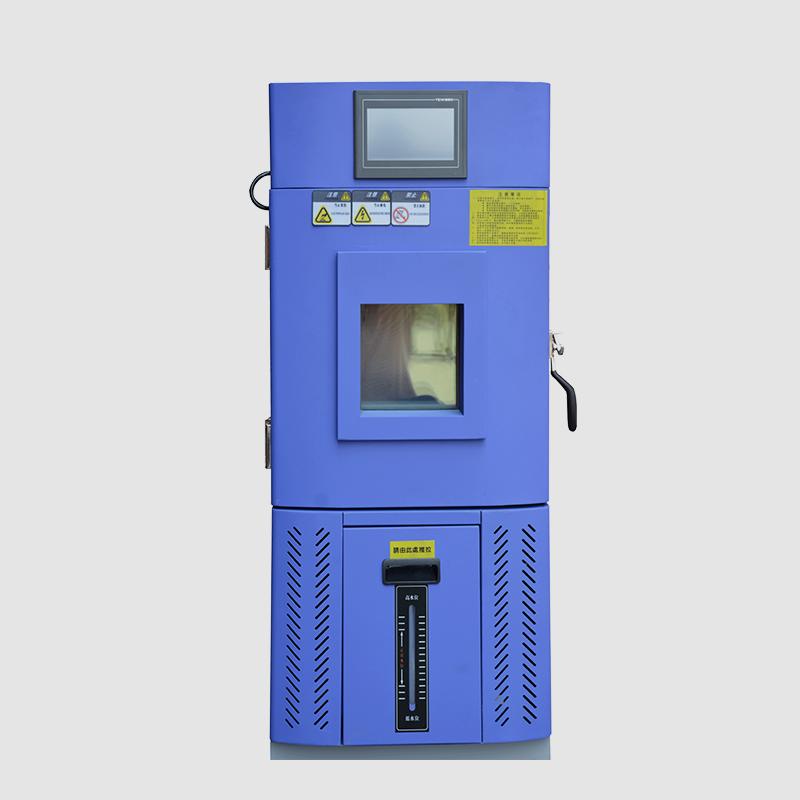
Plastic products will undergo physical and chemical changes in high-temperature and low-temperature environments, including changes in dimensional stability, mechanical properties, and chemical properties. For example, deformation, embrittlement, and deterioration may occur under different temperature environments. Its physical properties and durability. In order to test the high-low temperature resistance of plastic products, a high-low Temperature Test Chamber can be used for testing. The high-low Temperature Test Chamber can run for a long time in high temperature and low temperature environments, and test the performance of plastic products at extreme temperatures to determine their high-low temperature resistance. This can further ensure that the plastic products can be used normally in various temperature environments, improve their quality and reliability, and at the same time ensure their safety to the human body and the environment.
experiment method
The test steps of the high-low Temperature Test Chamber in the plastic high-low temperature resistance test:
Set the test temperature range, heating rate and cooling rate and other parameters of the high-low Temperature Test Chamber according to the test requirements.
Prepare test samples and ensure that the number and size of samples are appropriate for the size of the Test Chamber.
Place the test samples in the high-low Temperature Test Chamber, and record the location and quantity of the samples.
Start the high-low Temperature Test Chamber and heat it up to the set temperature, then keep the temperature stable for a period of time.
Cool down to the set low temperature and keep it steady for a while.
The heating and cooling are repeated until the specified number of cycles or test time is completed.
Record the dimensions, appearance and mechanical properties of the test samples during the test.
After the test, the test samples are evaluated and analyzed, and a test report is generated.


- 1Application and structure principle of low/high Temperature Test Chamber
- 2Principle, application and selection of low/high Temperature Test Chamber for plastic belt
- 3Principle, application and selection of fire-proof coatings low/high Temperature Test Chamber
- 4Principle, application and selection of ultra low/high Temperature Test Chamber
- 5Principle and application of desktop low/high Temperature Test Chamber
- 6Application of FRP low/high Temperature Test Chamber
- 7The working principle and application scenario of non-standard high-low-Temperature Test Chamber
- 8Application of programmable low/high Temperature Test Chamber NBC-CDW-150M in luminaire testing
- 9What are the reasons why the high-low temperature alternating heating and Humidity Chamber cannot be thermostatic?