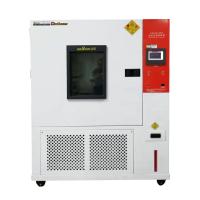
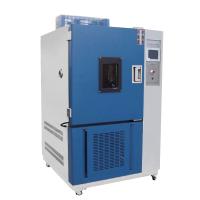
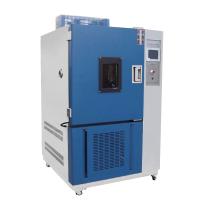
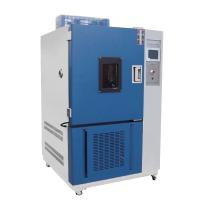
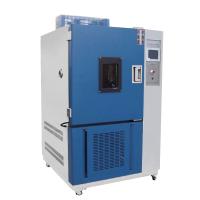
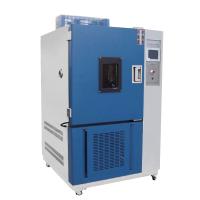
Low/high Temperature Test Chamber for high-low temperature resistance test
Silk screen printing is a common printing process that can print delicate and long-lasting patterns and characters on the surface of various materials. Since silk screen printing is often exposed to different temperature environments, such as high temperature baking or low temperature freezing, etc., high-low temperature resistance tests are required to ensure that the printing effect and quality of silk screen printing will not be affected by temperature changes. This test can test the physical and chemical properties of silk screen printing at different temperatures, such as adhesion, wear resistance, corrosion resistance, etc., so as to ensure the long-term stability and reliability of silk screen printing.
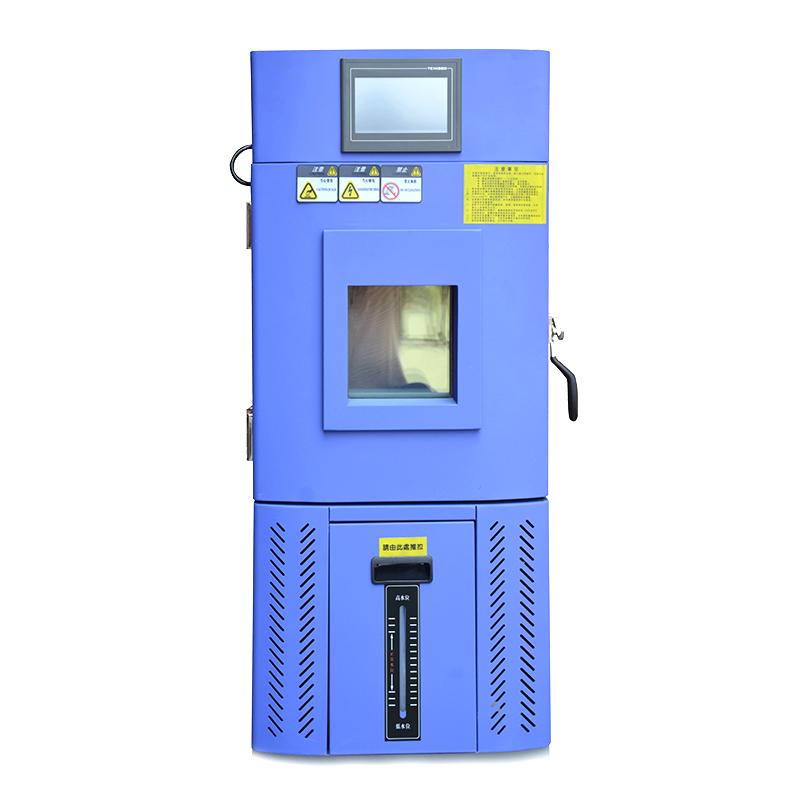
The high-low Temperature Test Chamber can be used for high-low temperature resistance tests of silk screen printing to test the performance and reliability of silk screen products in high-low temperature environments. Silk screen printing is a commonly used printing process, which is often used in electronics, automobiles, medical and other fields. Its high-low temperature resistance has an important impact on product quality and reliability. The following are the test steps of the high-low Temperature Test Chamber in the silk screen high-low temperature resistance test:
Preparation: Check whether the Test Chamber and temperature controller are working normally, and set the temperature range and heating and cooling rate of the Test Chamber according to the test requirements. Prepare a silkscreen sample and pay attention to its size and position.
Sample installation: place the silk screen sample to be tested in the test box, and fix the position and direction.
Test operation: Turn on the Test Chamber and temperature controller, and set the temperature range and heating and cooling rate of the Test Chamber. Raise the temperature of the Test Chamber to the set temperature range, keep it for a period of time, and then cool down to the set temperature. During the test, record the temperature changes inside the test box, and pay attention to observe the performance changes of the silk screen samples.
Evaluation of test results: After the test, take out the silk screen sample and observe whether there is peeling, deformation, cracking, etc. on the surface. Through the evaluation of the test results, the tolerance and stability of the screen printing products in high-low temperature environments can be judged.
NBCHAO reminds you: the surface of the silk screen sample should be clean and dry before the test, so as not to affect the test result. During the test, the temperature range and heating and cooling rate inside the Test Chamber should be strictly controlled to ensure the accuracy and reliability of the test. At the same time, the Test Chamber should be cleaned and maintained after the test to prolong its service life.


- 1Application and structure principle of low/high Temperature Test Chamber
- 2Principle, application and selection of low/high Temperature Test Chamber for plastic belt
- 3Principle, application and selection of fire-proof coatings low/high Temperature Test Chamber
- 4Principle, application and selection of ultra low/high Temperature Test Chamber
- 5Principle and application of desktop low/high Temperature Test Chamber
- 6Application of FRP low/high Temperature Test Chamber
- 7The working principle and application scenario of non-standard high-low-Temperature Test Chamber
- 8Application of programmable low/high Temperature Test Chamber NBC-CDW-150M in luminaire testing
- 9What are the reasons why the high-low temperature alternating heating and Humidity Chamber cannot be thermostatic?