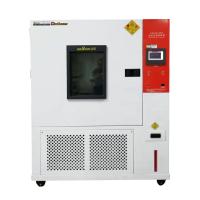
Application of low/high Temperature Test Chamber in high-low temperature resistance test of aluminum alloy sheet
Aluminum alloy sheets need to withstand various extreme environmental conditions in practical applications, such as high temperature, low temperature, humidity, etc., so high-low temperature resistance tests are required to verify their performance and reliability. In a high temperature environment, the aluminum alloy sheet is prone to oxidation and expansion, resulting in a decrease in its strength and stiffness, while in a low temperature environment, the aluminum alloy sheet may become brittle, prone to cracking and fracture. Through the high-low temperature resistance test, the performance change of aluminum alloy sheet under various temperature conditions can be evaluated, so as to determine its scope of application and service life, and provide scientific data support for the design and manufacture of related products.
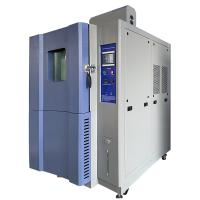
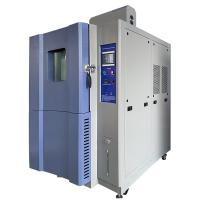
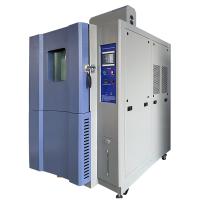
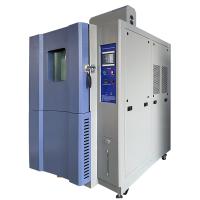
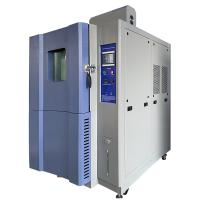
The application of the high-low Temperature Test Chamber in the high-low temperature resistance test of aluminum alloy sheet is to test the physical, chemical and mechanical properties of the material at different temperatures, as well as the degree of influence on the material.

experiment procedure
According to the relevant standards, formulate the test plan, including the test temperature range, heating/cooling rate, number of samples, sample size and test time, etc.
Prepare the sample sheet by cutting it to standard dimensions.
Place the sample in the high-low Temperature Test Chamber and set the test parameters.
At the beginning of the test, the high-low Temperature Test Chamber controls the test temperature to increase or decrease to the required temperature range, keep it for a period of time, and then increase or decrease the temperature to the next required temperature range until all the tests are completed.
During the test, observe and record the sample, including appearance, color, deformation, damage, etc.
After the test is completed, the sample is tested and analyzed, including physical properties, chemical properties and mechanical properties, etc.
According to the test results, evaluate the durability and stability of aluminum alloy plates in high-low temperature environments, and determine whether they meet the requirements of relevant standards.
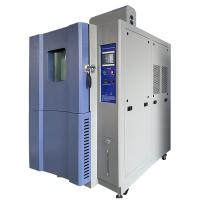
- 1Application and structure principle of low/high Temperature Test Chamber
- 2Principle, application and selection of low/high Temperature Test Chamber for plastic belt
- 3Principle, application and selection of fire-proof coatings low/high Temperature Test Chamber
- 4Principle, application and selection of ultra low/high Temperature Test Chamber
- 5Principle and application of desktop low/high Temperature Test Chamber
- 6Application of FRP low/high Temperature Test Chamber
- 7The working principle and application scenario of non-standard high-low-Temperature Test Chamber
- 8Application of programmable low/high Temperature Test Chamber NBC-CDW-150M in luminaire testing
- 9What are the reasons why the high-low temperature alternating heating and Humidity Chamber cannot be thermostatic?