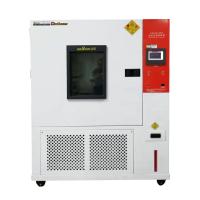
Low/high Temperature Test Chamber for testing high-low temperature resistance of fiberglass
Glass fiber is a commonly used high-performance material, often used in applications such as making composite materials. In practical applications, glass fibers need to withstand the influence of various high-low temperature environments, so high-low temperature resistance tests are required. This test method can evaluate the physical and chemical properties of glass fibers at different temperatures, including strength, hardness, elongation, fatigue resistance, chemical resistance, etc. These test results can help determine the applicable range and performance parameters of glass fibers under different temperature conditions, and provide scientific basis for practical applications.
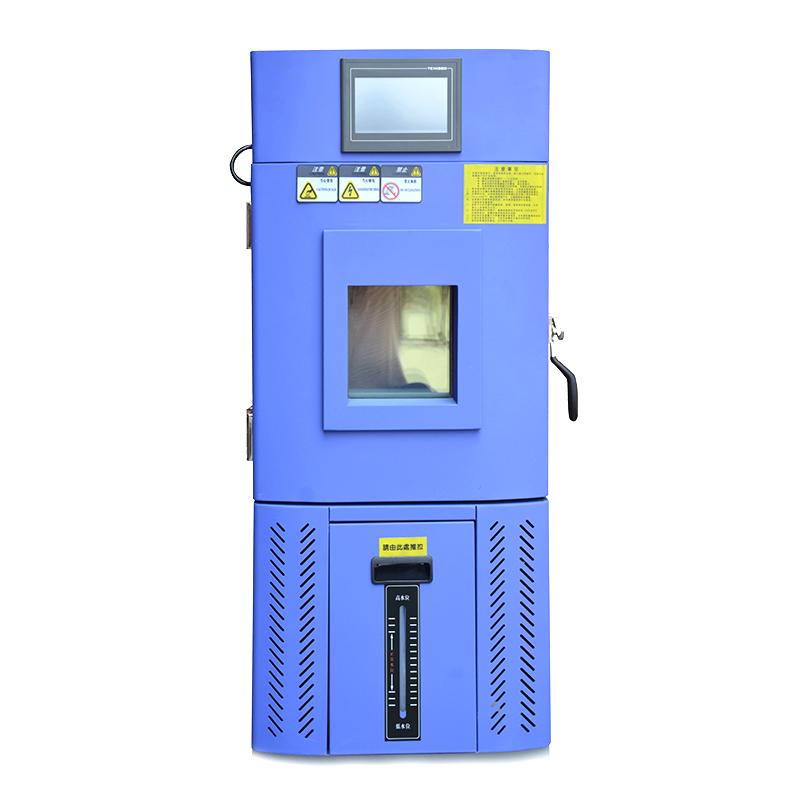
The high-low Temperature Test Chamber can be used to test the physical and chemical properties of glass fiber under high-low temperature conditions, such as heat resistance, cold resistance, mechanical strength, electrical insulation, etc.
experiment method
Randomly take some fiberglass samples from production and make sure they are the same size and shape.
Place the sample in the high-low Temperature Test Chamber, set the required temperature range and duration.
The high-low Temperature Test Chamber will gradually heat up or cool down until the desired temperature is reached. It is then kept at the set temperature for a period of time to ensure that the sample reaches an equilibrium state.
After the test, the sample is taken out and its appearance is observed to check for any problems such as deformation or cracking.
Record test data including information on temperature change, time, sample appearance and any visible physical or chemical changes.
Analyze test data and write test results into reports for reference when needed.
Beichao reminds you: Different test standards may require different test procedures and test conditions. Therefore, the required test standard should be determined and its guidance followed before testing.


- 1Application and structure principle of low/high Temperature Test Chamber
- 2Principle, application and selection of low/high Temperature Test Chamber for plastic belt
- 3Principle, application and selection of fire-proof coatings low/high Temperature Test Chamber
- 4Principle, application and selection of ultra low/high Temperature Test Chamber
- 5Principle and application of desktop low/high Temperature Test Chamber
- 6Application of FRP low/high Temperature Test Chamber
- 7The working principle and application scenario of non-standard high-low-Temperature Test Chamber
- 8Application of programmable low/high Temperature Test Chamber NBC-CDW-150M in luminaire testing
- 9What are the reasons why the high-low temperature alternating heating and Humidity Chamber cannot be thermostatic?