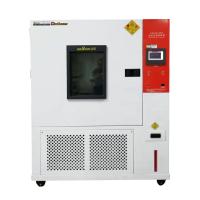
Application of low/high Temperature Test Chamber in high-low temperature resistance test of Encasement materials
Packaging materials are a key factor in protecting the safety and quality of commodities, and they need to withstand various high-low temperature environments, such as during transportation, storage and use. Therefore, the high-low temperature resistance test is a necessary method to evaluate its performance. This test method can evaluate the physical and chemical properties of packaging materials at different temperatures, including heat resistance, cold resistance, corrosion resistance, humidity resistance, pressure resistance, etc. These test results can help determine the application range and performance parameters of packaging materials under different temperature conditions, and provide scientific basis for practical applications.

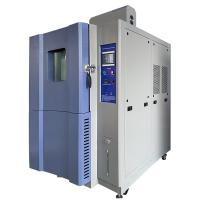
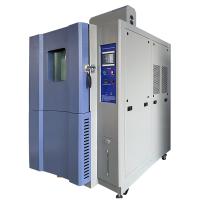
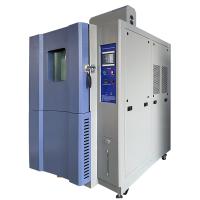
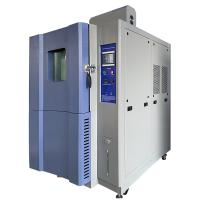
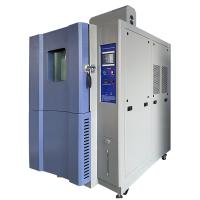
The high-low Temperature Test Chamber can be used for high-low temperature resistance tests of packaging materials. The following are common test steps:
Sample preparation: Randomly select a sufficient number of samples from the mass-produced packaging materials, and cut and process them according to the test requirements to ensure that the size and weight of each sample are basically the same.
Preheat treatment: Place the sample at room temperature for at least 4 hours, then place it in a high-low Temperature Test Chamber, and perform preheat treatment based on the temperature required by the experiment. The time is usually 2-4 hours.
High-low temperature cycle test: Place the sample in a high-low Temperature Test Chamber, set the corresponding temperature and humidity parameters, and conduct a high-low temperature cycle test. The cycle time and number of cycles are determined according to the test requirements.
Observation and detection: After each cycle, take the sample out of the high-low Temperature Test Chamber, observe whether there are cracks, deformation, discoloration, etc. on the surface, and conduct necessary physical performance tests, such as tensile, tearing, compression, etc. .
Test record and analysis: record the weight, size, physical performance test data and other information of samples before and after each cycle, and analyze and compare them to evaluate the high-low temperature resistance of packaging materials.
- 1Application and structure principle of low/high Temperature Test Chamber
- 2Principle, application and selection of low/high Temperature Test Chamber for plastic belt
- 3Principle, application and selection of fire-proof coatings low/high Temperature Test Chamber
- 4Principle, application and selection of ultra low/high Temperature Test Chamber
- 5Principle and application of desktop low/high Temperature Test Chamber
- 6Application of FRP low/high Temperature Test Chamber
- 7The working principle and application scenario of non-standard high-low-Temperature Test Chamber
- 8Application of programmable low/high Temperature Test Chamber NBC-CDW-150M in luminaire testing
- 9What are the reasons why the high-low temperature alternating heating and Humidity Chamber cannot be thermostatic?