Low/high Temperature Test Chamber LED packaging adhesive resistance to high-low temperature test scheme
LED encapsulant is a key material for LED lamp bead packaging, which may undergo physical and chemical changes under different environmental conditions, thus affecting its optical performance and service life. In practical applications, LED lamp beads may need to withstand the influence of extreme environments such as high temperature and low temperature. For example, in outdoor billboards, car lights and other fields, they need to be used in extreme temperature environments. Therefore, in order to ensure that the LED encapsulant can maintain its optical performance and service life in different environments, high-low temperature resistance tests are required to evaluate its light decay, color change, light transmittance, adhesion strength and other indicators at different temperatures , thus ensuring its reliability and stability in practical applications.
The high-low Temperature Test Chamber is a kind of equipment specially used to simulate extreme temperature environment, which can test the durability and stability of various materials and products under high-low temperature environment.
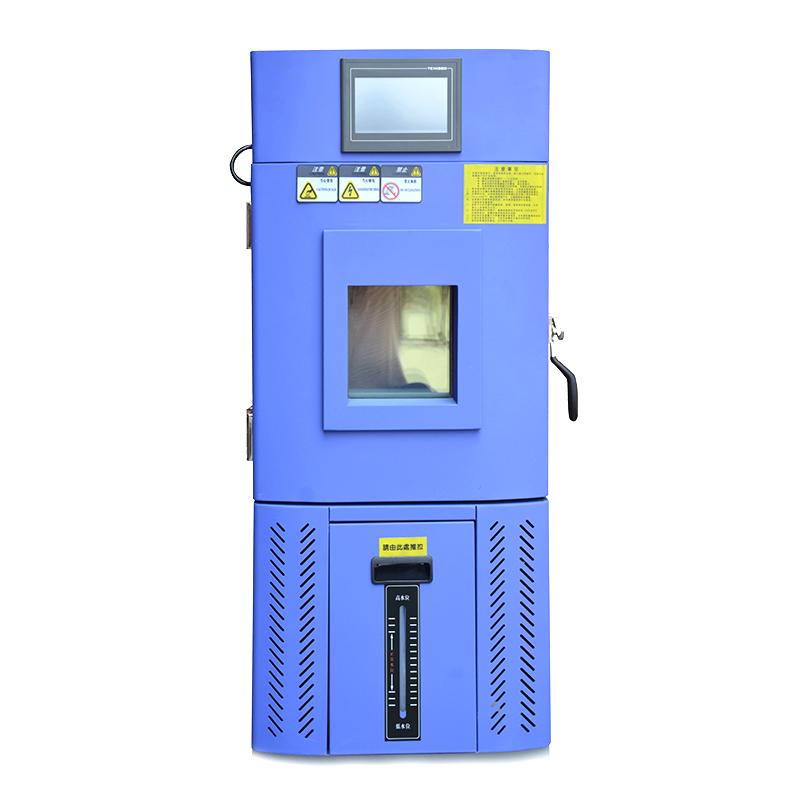
experiment procedure
Place the LED encapsulant in the high-low Temperature Test Chamber, and make sure there are no other objects around it.
Set the temperature range and change rate of the high-low Temperature Test Chamber, generally according to the standard test requirements.
Open the high-low Temperature Test Chamber and start the high-low temperature cycle test.
In high temperature and low temperature environments, the LED encapsulant is continuously tested, and the general test time ranges from several hours to several days, and the specific time is determined according to the test requirements.
According to the test requirements, gradually increase or decrease the temperature in the high-low Temperature Test Chamber, and record the performance and life data of the LED encapsulant at each temperature point.
After the test, analyze and evaluate the test data to judge whether the LED encapsulant meets the design requirements.


- 1Application and structure principle of low/high Temperature Test Chamber
- 2Principle, application and selection of low/high Temperature Test Chamber for plastic belt
- 3Principle, application and selection of fire-proof coatings low/high Temperature Test Chamber
- 4Principle, application and selection of ultra low/high Temperature Test Chamber
- 5Principle and application of desktop low/high Temperature Test Chamber
- 6Application of FRP low/high Temperature Test Chamber
- 7The working principle and application scenario of non-standard high-low-Temperature Test Chamber
- 8Application of programmable low/high Temperature Test Chamber NBC-CDW-150M in luminaire testing
- 9What are the reasons why the high-low temperature alternating heating and Humidity Chamber cannot be thermostatic?