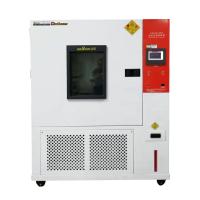
Low/high Temperature Test Chamber for high-low temperature resistance test of insulating potting materials
Insulation potting material is an important material used in electronic components, circuit boards and other equipment, which may undergo physical and chemical changes under different environmental conditions, thus affecting its insulation performance and service life. In practical applications, insulating potting materials may need to withstand extreme environments such as high temperature and low temperature. For example, in the fields of automotive electronics and aerospace, they need to be used in extreme temperature environments. Therefore, in order to ensure that the insulating potting material can maintain its insulating performance and service life in different environments, high-low temperature resistance tests are required to evaluate its insulation resistance, dielectric strength, heat resistance, cold resistance, etc. at different temperatures indicators, thereby ensuring its reliability and stability in practical applications.
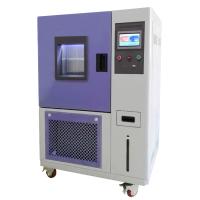
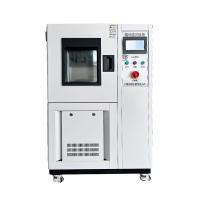
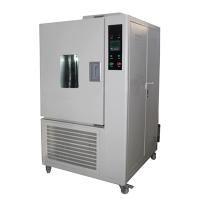
The high-low Temperature Test Chamber can be used for high-low temperature resistance tests of insulating potting materials. Insulating potting materials are mainly used for sealing, insulating and curing of electrical and electronic products, so high-low temperature tests are required to verify their performance in extreme environments.

experiment method
Prepare samples of insulating potting material as required. The shape and size of the sample shall conform to the required test standard.
Place the prepared sample in the high-low Temperature Test Chamber, and ensure that the sample is fully in contact with the heat transfer surface of the Test Chamber to ensure the accuracy of the test.
According to the test standard, set the temperature and time parameters of the Test Chamber. Generally speaking, the high temperature test temperature is 70°C to 150°C, and the low temperature test temperature is -40°C to -80°C. The test time is generally 24 hours to 72 hours.
Start the Test Chamber according to the set parameters, and start the high-low temperature alternating cycle test. During the test, attention should be paid to observing the surface condition of the sample and the operating state of the Test Chamber to ensure the smooth progress of the test.
At the end of the test, the samples are removed for inspection and evaluation. The evaluation mainly includes observing the appearance, size and performance of the sample. According to the test results, judge whether the sample meets the requirements. If the performance of the sample changes little and meets the requirements, it can be considered that the insulating potting material has good high-low temperature resistance. On the contrary, if the performance changes greatly, the formulation and process of the material need to be further improved.
NBCHAO reminds you: the high-low temperature resistance of insulating potting materials is also affected by other factors, such as the thickness, shape, and quality of the sample. Therefore, in the test, the consistency of the samples should be ensured as much as possible, so as to ensure the accuracy of the test results.


- 1Application and structure principle of low/high Temperature Test Chamber
- 2Principle, application and selection of low/high Temperature Test Chamber for plastic belt
- 3Principle, application and selection of fire-proof coatings low/high Temperature Test Chamber
- 4Principle, application and selection of ultra low/high Temperature Test Chamber
- 5Principle and application of desktop low/high Temperature Test Chamber
- 6Application of FRP low/high Temperature Test Chamber
- 7The working principle and application scenario of non-standard high-low-Temperature Test Chamber
- 8Application of programmable low/high Temperature Test Chamber NBC-CDW-150M in luminaire testing
- 9What are the reasons why the high-low temperature alternating heating and Humidity Chamber cannot be thermostatic?