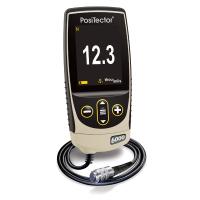
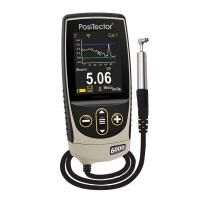
Introduction to coating performance testing
Coating performance testing is an important means to test and evaluate coating performance and quality in production. The performance of the coating reflects the quality of the coating, which is determined by various factors such as the spraying material, the spraying process, and the post-treatment of the coating. Therefore, the coating performance is different from the performance of the spraying material and the substrate material properties, which cannot be evaluated by conventional methods for testing the properties of metal or non-metal materials. When evaluating the coating quality, it is necessary to determine the relevant test content and corresponding test methods according to the different coatings of various products, according to their actual use and use requirements. The test content and methods of coating quality inspection are very extensive. The evaluation of coating performance involves many technical indicators. According to the actual application of domestic coating research and production, as far as general coatings are concerned, the performance of the test Mainly include: the appearance quality, thickness, corrosion resistance, porosity, hardness, bonding force, internal stress of the coating, brittleness and brazing properties of the coating, etc. Its content is shown in Table 11_1_1. Due to the different properties of the coating or its different use environments, there are many test methods for the same test item. There are many indicators in common for evaluating coating performance, but not all coatings require the same performance indicators, but depend on the specific application requirements of the coating. Different performance requirements have great differences in some performance indicators, or even the opposite.


The purpose of the coating, in addition to protecting and achieving certain functional indicators, almost always requires a certain appearance quality, especially decorative coatings or protective-decorative coatings, all require a gorgeous and bright appearance, not necessarily Obvious defects are allowed. Therefore, the appearance inspection of the coating is the most basic and commonly used inspection content. If the appearance is unqualified, there is no need to conduct other tests. Therefore, appearance quality inspection is one of the most important and common items in coating quality inspection.
Coating appearance quality includes:
(1) Surface defects Such as pinholes, pitting, nodules, bubbles, burrs, spots, burnt, shadows, yin and yang, and tree-like and spongy deposits on the surface of the coating.
(2) Roughness refers to the smoothness of the surface of the product after coating. During appearance inspection, the roughness should reach or be lower than the specified roughness index.
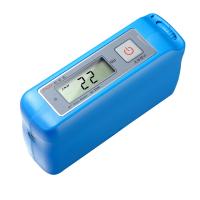
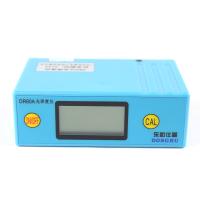
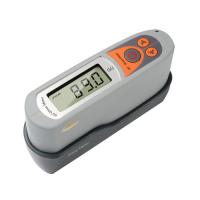
(3) Glossiness The reflectivity of the surface of the product after coating. During appearance inspection, its glossiness should meet or exceed the specified glossiness index. (Related instrument: gloss meter)
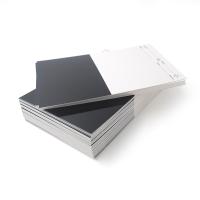
(4) Coverage refers to whether the part that should be coated is completely covered by the coating after the product is coated. (Related instrument: hiding power paper)
(5) Color In addition to the silver-white coating, for various colored coatings, the specified color should be achieved during the appearance inspection. (Related instrument: Colorimeter)
Sampling for coating appearance inspection shall be carried out according to product requirements or inspection standards.
Usually, there are several sampling methods as follows:
( 1 ) Products with high appearance requirements, valuable instrument parts, and some painted parts with strict appearance requirements should be inspected one by one.
(2) For products in large quantities that require classification of appearance quality, general inspection should be carried out (that is, 100% for classification inspection).
(3) For products with large batches and less strict appearance requirements, 5% to 10% of each batch of products can be selected for inspection. If any unqualified products are found, double the number of parts should be taken for re-inspection. During the re-inspection, there are still defects. A certain number of unqualified products can be partially or completely returned for repair or reworked according to the specific situation.
In the visual inspection of coatings, surface defects are generally carried out by visual inspection. Roughness can be tested with special instruments. Although there are instruments for testing gloss (gloss meter), it has not been widely used due to the influence of the shape of the coating and the color of the coating. At present, the visual method is still the main method. Coating coverage inspection is carried out by chemical method.



- 1Summary of determination methods for hiding power of coatings
- 2Pigment hiding power
- 3Determination of Coating hiding power
- 4Basic principle and application analysis of insulating paint gloss Detector
- 5GB/T 23981.2-2023: Paints and varnishes - Determination of hiding power - Part 2: Checkerboard method - Interpretation
- 6Concept, influencing factors and determination method of Coating hiding power
- 7Mayer Rods: The right-hand man for hiding power tests
- 8Coating performance testing: ensuring the efficiency and mass of the painting process
- 9Coating hiding power measurement