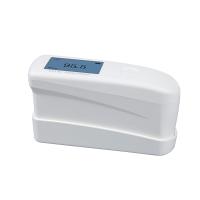
Introduction of coating surface gloss inspection
The gloss (also known as brightness) of the coating is an index that needs to be measured for the coating with high decorative requirements. Coating surface gloss refers to the ratio or intensity of reflected light on the coating surface under the action of a certain illumination and incident light at a certain angle. The greater the ratio or intensity of the reflected light, the higher the gloss of the coating. Although the gloss meter has been used in recent years to test the gloss of the coating surface, the influence of the geometric shape of the coating on the reflectivity is not significant. First, coupled with the interference of different coating colors, it is often difficult to obtain good results, so it has not been widely used. At present, the commonly used inspection methods include visual inspection and sample control method, and the photometer method has also been used abroad.
1. Visual evaluation method
The visual evaluation method is an empirical evaluation method. It is evaluated through visual inspection based on the experience accumulated by the inspectors in practice. It is often affected by factors such as the inspection environment illumination, the inspector's vision and experience, and is prone to interference and cause errors in the evaluation results.
In order to avoid various influences as far as possible, based on the experience gained from long-term practice, the light source of the tested environment is stipulated to be natural light or a fluorescent light source close to natural light, and its illuminance is 3001x (equivalent to the illuminance of a 40W fluorescent lamp at 500mm). In order to prevent the influence of the color and illuminance of the light source.
The grading reference standard of the visual glossiness empirical evaluation method is:
Level 1 (mirror bright) The coating is as bright as a mirror, and the facial features and eyebrows of a person can be seen clearly and clearly.
Level 2 (bright) The surface of the coating is bright, and people's facial features and eyebrows can be seen, but the eyebrows are not clear enough.
Level 3 (semi-bright) The surface of the coating is less bright, but the contours of human facial features can be seen, and the eyebrows are partially molded.
Level 4 (dull) The coating is basically dull, and the contours of human facial features cannot be seen clearly.
The empirical evaluation will be affected by human factors, and sometimes the evaluation results will be disputed, so when necessary, the model control can be used as a reference for evaluation.
2. Model control method
The template control method belongs to the comparative measurement method in the visual inspection method. It is carried out with a certain gloss reference template, combined with visual inspection. Because the reference model is used for comparison, the influence caused by the lack of vision or experience of the inspectors can be reduced to a certain extent. Therefore, this method is an improvement of the visual inspection method for coating gloss.
The standard glossiness template is as follows:
Grade 1 glossiness sample is processed and calibrated with a roughness of 0.04µm< Ra<0.08µm copper (or iron) test piece, electroplated bright nickel with chromium and then polished.
Grade 2 glossiness sample is processed and calibrated with a roughness of 0.08µm< Ra<0.16µm copper (or iron) test piece, electroplated bright nickel with chromium and then polished.
Level 3 Gloss Samples are made of copper (or iron) test pieces with a calibrated roughness of 0.16µm< Ra<0.32µm after processing, electroplated with semi-bright nickel and chromium.
Level 4 Gloss Samples: Copper (or iron) test pieces with a roughness of 0.32µm< Ra<0.63µm after processing, and electroplated with dark nickel and chrome.
Inspection and evaluation method:
Under the specified test conditions (same as the inspection of surface defects), the inspected coating is compared repeatedly with the standard glossiness sample, and the reflective properties of the two are observed. Finally, the reflective properties of the inspected coating are similar to a standard sample, and then When it is lower than the gloss level of a higher gloss standard sample, the gloss level of the standard sample is used as the gloss level of the coating to be inspected.
Things to pay attention to are:
① The standard glossiness sample should be properly preserved to prevent the surface state from being changed due to poor preservation;
②Before use, the standard sample should be carefully wiped with a clean soft cloth to make the surface clean and show the specified reflective performance. When swabbing, prevent damage to the surface state of the standard sample;
③The service life of the standard glossiness sample is one year. It should be updated regularly when used frequently.
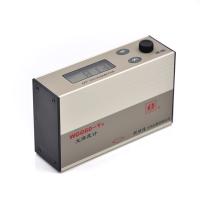
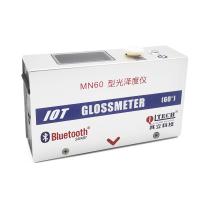
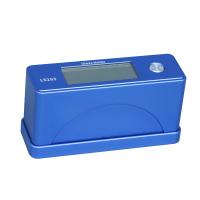
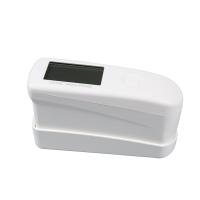
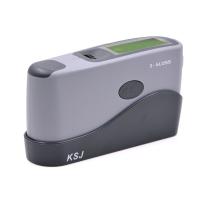
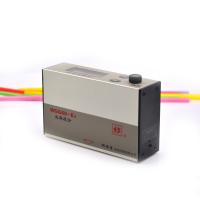
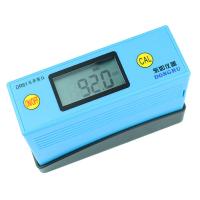
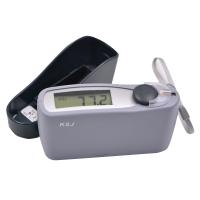
3. Photometer measurement method
Since there is no strict standard for visual evaluation of coating gloss, observations vary from person to person. Therefore, in recent years, foreign reports have used a gloss meter to measure the gloss of the coating, and it has received better results for flat coatings.
The photometer can also be used to measure the "whiteness" of some coatings. For example, when the average wavelength of the Spectrophotometer is 43o~49oµm, the reflectance of titanium dioxide is taken as 1oo to represent the "whiteness" to measure the "whiteness" of various zinc coatings. ".
At present, it is still difficult to measure the gloss of the coating with a gloss meter, and it is also impossible to distinguish the color difference of various bright coatings, so this method needs to be further studied and perfected.


- 1Principle and Application of Glossiness Tester
- 2Working Principle and Application of Metal Gloss Meter
- 3Basic principle and application analysis of insulating paint gloss Detector
- 4Working principle and application analysis of film Glossmeter
- 5Principle and application analysis of microporous gloss meter
- 6 FZ/T 01097 Analysis of fabric gloss test method
- 7Evaluation and Application of Optical Properties of Powder coatings
- 8Coating coatings - Determination of surface gloss and Gloss meter
- 9The Importance and Method of Gloss Measurement of Paint Film