Pigment and paint Color determination
The accurate identification of pigment and paint color is of great significance for the control of product measurement.
The precise control of the color of the paint has special significance in the aspects of painting camouflage engineering, printing product trademarks, and products that need to be painted in a color that is completely in line with the regulations and is often consistent due to special operating conditions. Therefore, great attention should be paid to the problem of correct determination of color. But until now, although many different instruments have been proposed and many special methods have been drawn up for this purpose, there are still some difficulties in the experiments.
Since the determination of color is related to the problem of painting, we will only quote some methods applicable to the determination of the color of pigments and paint colors. The color of any paint on an object that can be seen by eyesight is determined by the spectrum of light reflected or diffused from the surface of the object or particles (the particles are distributed inside the object at a certain distance from the surface of the object). The color is determined by the optical properties of the object, which in turn depends on the structure and composition of the object.
The color of the pigment depends on the degree of asymmetry of the character, but also depends on the physical properties of the pigment, especially its degree of dispersion. Any color (white, gray, black) that can reflect the gloss on it in different degrees (while the optical fiber does not undergo any major changes) is called achromatic color. It can be seen that only the degree of reflection is the main feature of achromatic colors. At the same time, each chromatic color (red, blue, yellow, etc.) is characterized by three very obvious properties such as brightness, hue and saturation. The brightness of a color is expressed by the degree to which light is reflected from the painted surface. The hue system is represented by the selective absorption capacity of the surface for different wavelengths of light. Color saturation is expressed by the difference between a chromatic color and an achromatic color of the same brightness.
The simple method of determining color is to observe the appearance of the color, which can only give a general superficial understanding of the color of the pigment or paint. Therefore, this method of relying on the present and present to measure is definitely not applicable. Sometimes, various color samples are used to measure the color, and there are a large number of standard color samples in the color sample; the color of the sample is compared with the standard color samples in the color book. Such color samples are suitable only for the approximate determination of the color and tint of paints and pigments. For the determination of achromatic colors, a specialized instrument called a photometer has been widely used. There are several types of photometers described below.
If a filter is used, a photometer can also be used to measure chromatic color, but the well cannot measure very accurate results. As mentioned above, the characteristics of achromatic color are basically only expressed by the reflection degree of the light incident on it, so the photometer is mainly based on the measurement of this reflection degree.
To study the spectral composition of visible light, a Spectrophotometer can be used. The perfect ones are the photoelectric Spectrophotometer and photoelectric Colorimeter made with the photoelectric cell as the cornerstone. The working principle of the photoelectric Colorimeter is to make the light irradiated on the three photoelectric tubes pass through three optical filters. The photocurrent is proportional to the radiation color coordinate axes x, y and z etc.
There are also automatically controlled Spectrophotometer s; in this instrument, the inclination of the galvanometer excited by the photocurrent can be recorded automatically by means of imaging. With the help of a photoelectric Spectrophotometer , not only the light in the visible spectrum can be measured, but also the light in the ultraviolet spectrum and infrared spectrum can be measured when a photoelectric tube sensitive to any wavelength range is selected. For the measurement of color, only the visible part of the spectrum is meaningful. When measuring color by the three-color method, a Colorimeter can be used. Like other color measuring instruments, Colorimeters can be divided into two types: visual inspection and objective measurement. In measuring color with a visual Colorimeter, the main problem is to equalize the two halves of the field of view visible in the instrument's eyepiece.
Since the eyes of each observer have different sensitivities to colors, the final results of the measurement may also be inconsistent. After using the photoelectric tube, this shortcoming can be avoided, so the photoelectric Colorimeter is an instrument that can obtain the displayed degree of the customer. The B3H multi-energy photoelectric Colorimeter proposed by AA Shklover and PC Joffe has aroused great interest in the paint industry because it can ensure the accuracy and reproducibility of the test results. According to MM Gurevich's opinion, visually observed Colorimeters can be divided into two types: addition-mixing and subtraction-mixing according to their working principles. In an additive-mixing Colorimeter, the color of the field of view is varied by the optical mixing (or addition of light) of several different colored irradiances. The subtractive mixing Colorimeter is based on the color difference. The subtractive mixing Colorimeter is not very interesting in color measurement, so we will not study it further. Among the additive mixing Colorimeters, the simple one is the "rotating disk" type, while the perfect one is the three-color Colorimeter. When using a visual observation instrument to measure color, it is of special significance to fix the conditions when observing with the eyes (observing with the eyes is for comparing colors and measuring colors).
Since people's vision in daytime and dusk (or night) is realized by the two photosensitive factors of the eye-unary retinal cone cells and retinal rod cells, and dusk vision cannot distinguish colors, so in order to compare And to measure color, it is necessary to create the same conditions (environment) as the vision of retinal cone cells in daytime, instead of using equipment compatible with retinal rod cells. As MM Gurevich pointed out, in order to achieve this goal, the following conditions need to be fulfilled:
l, "The visual field should be very bright to ensure the effective use of retinal cone cells in the human eye and to eliminate the influence of retinal rod cells that cannot do different colors." The brightness of the field of view should not be less than about 10-3 luminance units, but should not be greater than 1 luminance unit.
2, "The diameter of the visual field should not be greater than 1.5~2°". This limitation is due to the fear of introducing a large number of retinal rod cells during the comparison process, and the number of such rod cells is more outside the boundary of the fovea of 1 macular macula.
3. Although in most cases, the measured color is carried out when the background brightness is zero (that is, when the background becomes black), the measured color should be measured when the background (background color) brightness is very high down (brightness greater than zero).
- 1What is the difference between tristimulus Colorimeter and Colorimeter?
- 2How does Colorimeter detect particulate matter (PM) color differences?
- 3Application of Colorimeters in paint&Coating color difference detection
- 4Several selection points about food Colorimeters
- 5Selection points of portable Spectrophotometer
- 6Non-contact Colorimeter selection considerations
- 7Color Measurement Challenges Faced by Manufacturers in the Metals Industry
- 8CS-810 Desktop Spectrophotometer Application Case Cleaner Color Detection
- 9How to calibrate Spectrophotometer s and Colorimeters?
-
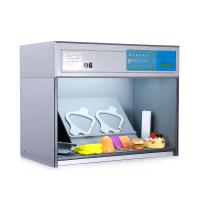
![TILO T60 (5) five light source lighting booth configuration D65, TL84, CWF, F, UV five light sources]()
-
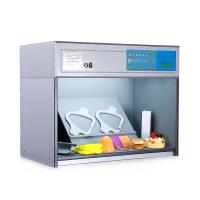
![TILO T60 (4) four light source Standard Light Booth, equipped with D65, TL84, F, UV four light sources]()
-
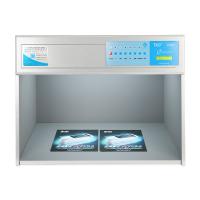
![TILO P60 (6) six light source lighting booth configuration D65, TL84, CWF, F, UV, U30 six light sources]()
-
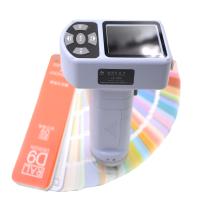
![KINGWELL JZ-300 general Colorimeter 8mm diameter, plastic, lame plating, Eletroplating, printing industry special]()
-
![CHNSPEC CRX-50 Online Colorimeter, Non-Contact Colorimeter]()
-
![CHNSPEC CRX-51 Non-Contact Colorimeter]() CHNSPEC CRX-51 Non-Contact Colorimeter$ 11159.00
CHNSPEC CRX-51 Non-Contact Colorimeter$ 11159.00