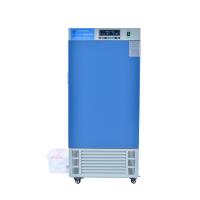
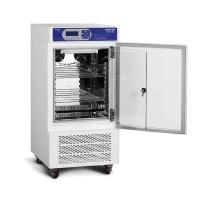
Application of Constant Temperature and Humidity Chamber in IC humidity resistance test
Chip IC (Integrated Circuit) is a very important electronic component that is widely used in various electronic devices. In actual use, the chip IC needs to withstand the test of various environmental conditions, such as high temperature, high humidity, low temperature, etc. Therefore, the heat and humidity resistance test is one of the important indicators to measure the quality of the chip IC.
The heat and humidity resistance test of the chip IC is to detect whether its performance changes by exposing the sample to a high-temperature and high-humidity environment. During the test, the humidity and temperature of the sample are usually controlled. For example, the sample is exposed to an environment of 85°C and 85%RH, or an environment of 60°C and 95%RH for a certain period of time, and then its performance is checked. damaged.
In the heat and humidity resistance test, commonly used indicators include the electrical properties, mechanical properties, and chemical properties of the chip IC. For example, in terms of testing electrical properties, parameters such as resistance, capacitance, and inductance of chip ICs are usually tested; in terms of testing mechanical properties, it is usually detected whether the package of chip ICs is cracked or oxidized.
In order to ensure the heat and humidity resistance of the chip IC, multiple tests are usually performed on the sample, and relevant data are recorded during the test for subsequent analysis and comparison. In addition, in the production process, measures can also be taken, such as adjusting the manufacturing process, selecting good materials, etc., to improve the heat and humidity resistance of the chip IC.

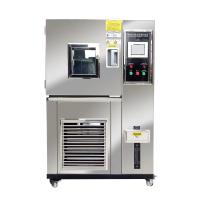
The constant temperature and Humidity Chamber can be used to conduct the heat and humidity resistance test of the chip IC. This test is usually used to test the reliability & stability of the chip IC in a high temperature and high humidity environment to determine the quality and performance of the chip IC.
During the test, the chip IC needs to be placed in the test box, and the temperature and humidity of the test box can be adjusted. Usually, the temperature can be set between 40°C and 85°C, and the humidity can be set between 10%RH and 98%RH. Expose the chip IC to a constant temperature and humidity environment for a certain period of time, and then test its performance and reliability.
When carrying out the constant temperature and humidity test, the following points should be paid attention to:
Ensure that the temperature and humidity control of the Test Chamber is accurate and reliable, and avoid inaccurate test results due to control problems in the Test Chamber.
Ensure that the storage and operation of the chip IC meet the standards to avoid inaccurate test results due to improper operation.
According to the specific test requirements and standards, determine the time and conditions of the test to avoid inaccurate test results due to overexposure or too short a time during the test.
The constant temperature and humidity test can effectively evaluate the reliability & stability of the chip IC in a high temperature and high humidity environment, improve the quality and reliability of the product, and then meet the needs of the market and customers.
- 1Constant Temperature and Humidity Chamber
- 2Principle and Application of Constant Temperature and Humidity Chamber Biochemical Incubator
- 3Principle Characteristics and Application of New material Constant Temperature and Humidity Chamber
- 4The working principle of the three major systems of Humidity Chamber
- 5What are the Dehumidification modes in the Humidity Chamber?
- 6Application of Constant Temperature and Humidity Chamber in Lithium Battery
- 7Constant Temperature and Humidity Chamber FAQ and calibration method
- 8Application of Humidity Chamber in Food industry
- 9Printing circuit board humidity resistance test