Printing circuit board humidity resistance test
A printed circuit board is an important component widely used in electronic equipment. In actual use, printed circuit boards need to withstand various extreme environmental conditions, such as high temperature, high humidity, etc., and these conditions will have varying degrees of impact on their performance. Therefore, the heat and humidity resistance test is a very important link in the quality control of printed circuit boards.
The humidity and heat resistance test is to test the resistance performance of printed circuit boards in harsh environments by simulating the impact of high temperature and high humidity environments on printed circuit boards. Typically, this test exposes the printed circuit board to high temperature and high humidity for a certain period of time, and then detects whether its performance has changed.
In the heat and humidity resistance test, commonly used indicators include electrical properties, appearance quality, chemical properties, etc. For example, in terms of testing electrical performance, parameters such as resistance and dielectric strength of circuit boards are usually tested; in terms of testing appearance quality, it is usually tested whether there are corrosion, blistering, cracking, etc. on the surface of circuit boards.
In order to ensure the heat and humidity resistance of printed circuit boards, samples are usually tested several times, and relevant data are recorded during the test for subsequent analysis and comparison. This kind of test can not only ensure the reliability of printed circuit boards in actual use, but also provide reference and improvement directions for the production process.
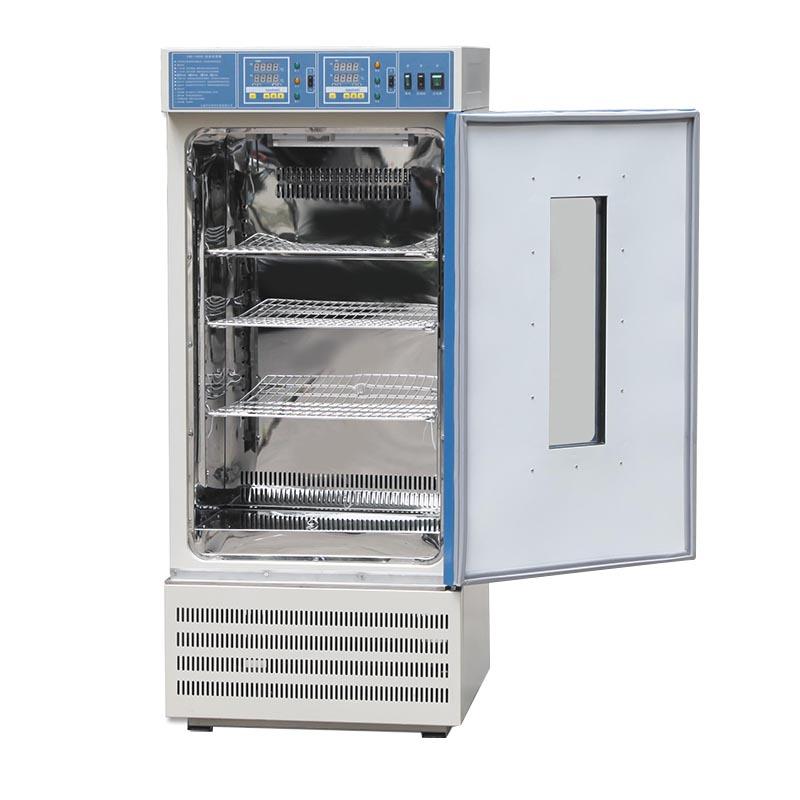
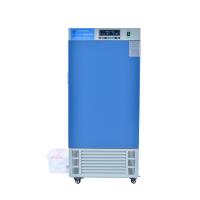
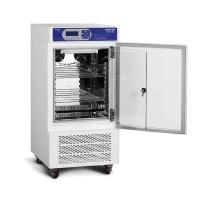
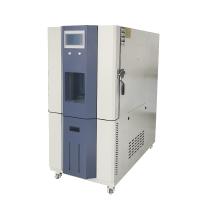
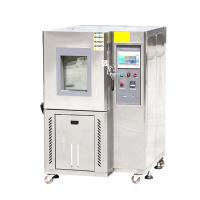
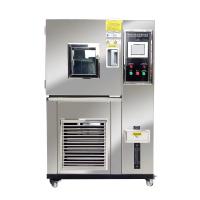
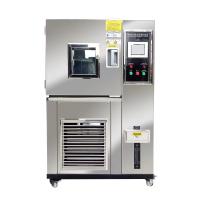
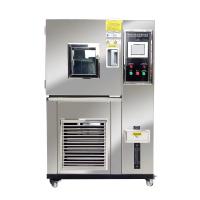
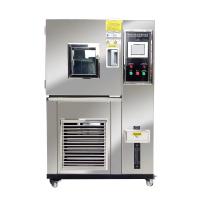
The constant temperature and Humidity Chamber can be used for the heat and humidity resistance test of printed circuit boards. The following are the general steps of the test method:
According to the test standards and sample requirements, set the temperature and humidity of the Test Chamber, and preheat the Test Chamber until the set temperature and humidity are stable.
Place the printed circuit board samples to be tested in the test box, and the placement positions should be evenly distributed.
The samples are placed under constant temperature and humidity conditions for a period of time, generally 48 hours or longer.
Take out the sample and check its surface for corrosion, oxidation, discoloration, etc.
According to test standards or requirements, test and analyze various performance indicators.
During the test, the following items should also be paid attention to:
The temperature and humidity in the Test Chamber should be kept stable at all times to avoid fluctuations or exceeding the set range.
The placement of samples should be reasonable to avoid excessive differences in local temperature or humidity.
When carrying out the test in the test box, the interference of other items should be avoided, so as not to affect the accuracy of the test results.
After the test is completed, the test box should be cleaned and maintained to ensure its normal service life and test accuracy.
- 1Constant Temperature and Humidity Chamber
- 2Principle and Application of Constant Temperature and Humidity Chamber Biochemical Incubator
- 3Principle Characteristics and Application of New material Constant Temperature and Humidity Chamber
- 4The working principle of the three major systems of Humidity Chamber
- 5What are the Dehumidification modes in the Humidity Chamber?
- 6Application of Constant Temperature and Humidity Chamber in Lithium Battery
- 7Constant Temperature and Humidity Chamber FAQ and calibration method
- 8Application of Humidity Chamber in Food industry
- 9Application of Constant Temperature and Humidity Chamber in IC humidity resistance test