Introduction to coating wear resistance
In the actual use of coatings, one of the most widely used and most effective properties is the width of the coating. When the coating is mainly used for loss of width, it is even more necessary to understand and evaluate the coating It is very necessary for the selection of spraying materials and the design of the spraying process, as well as predicting the performance of the coating.
Coating Abrasion Resistance
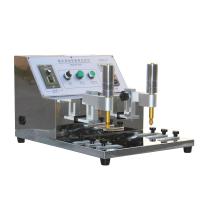
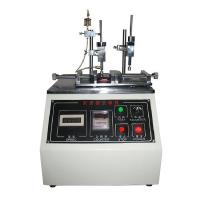
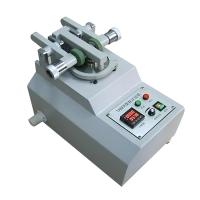
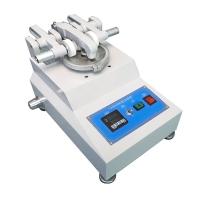
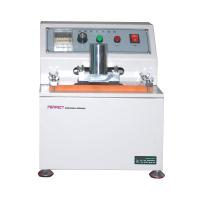
Since the coating is a flat stack of sprayed material particles on the surface of the substrate, the particles that make up the coating are harder than the original sprayed material. Because the pores are distributed between the particles of this stack, the macroscopic hardness of the coating is not the same. Very high, but the particles themselves have a unique property of being hard. Moreover, compared with the original sprayed material, the sprayed coating has more oxides in different forms (such as granular) in the sprayed structure, or as a thin film interposed between the coating and the particles, forming a hard material dispersed. This is the reason why the coating can be used as an excellent web material. In addition, if two kinds of wire materials with different properties are used in spraying, a mixture of two materials or a pseudo-alloy coating can be made. This is yet another reason why coatings can be used as web materials. (Related instruments: Abrasion Tester)
There are many materials for spraying, such as carbon steel, stainless steel, molybdenum, self-fluxing alloy or self-fluxing alloy mixed with superhard powder, and various ceramics (alumina, chromium oxide, etc.). Adding superhard powder materials such as tungsten carbide to the spraying material can obtain a stronger and wider coating.

- 1Working principle and application of UV coating Cupping testing device
- 2Application of shakeout Tester in organic polymer film abrasion resistance testing
- 3Application of shakeout Tester in aluminum surface coating abrasion resistance testing
- 4Paint film abrasion resistance and test method thereof
- 5Polyethylene (PE) coating indentation hardness inspection and its importance in pipeline corrosion protection
- 6Paint film abrasion resistance and its test method - rubber abrasive wheels method
- 7Determination of abrasion resistance of paint film
- 8Determination method of paint film abrasion resistance and its importance
- 9Coating performance testing: the key to ensuring quality coatings