Application of Humidity Chamber in humidity resistance test of photovoltaic backplane adhesive
Photovoltaic backsheet adhesive is a special adhesive applied to solar panel components. Its main function is to fix and protect the various components of the battery component and prevent cracks and deformation of the component due to stress and other reasons during use. At the same time, it also has functions such as waterproof, moisture-proof, and oxidation-proof. Since the photovoltaic backsheet glue is in the outdoor environment for a long time, it will be affected by factors such as sun exposure, rain, high temperature, etc., so a heat and humidity resistance test is required.
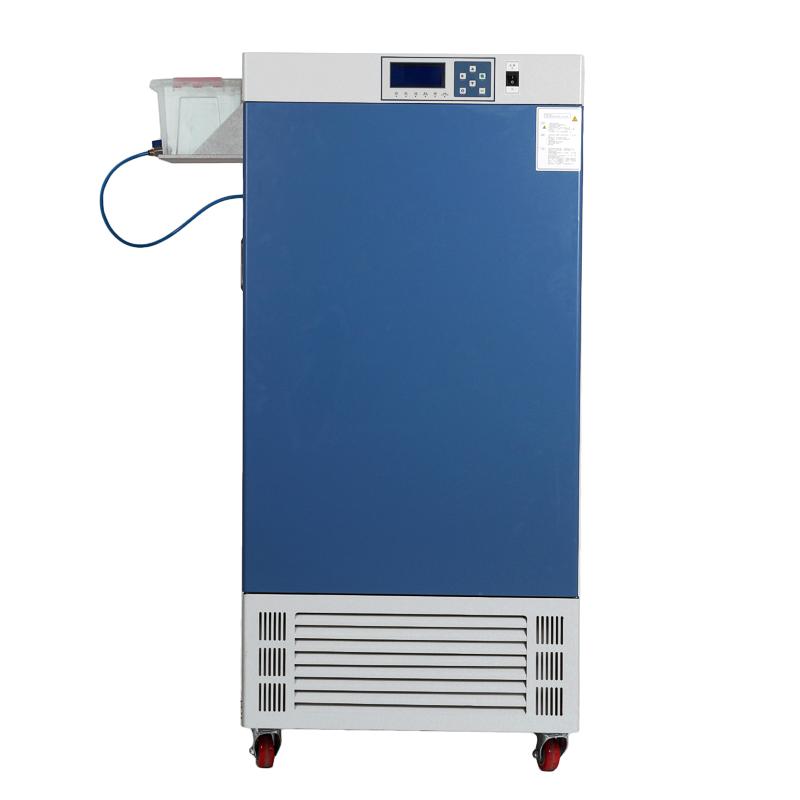
The humidity and heat resistance test can simulate the situation that the photovoltaic backsheet glue is exposed to high temperature and high humidity for a long time, and test its performance and reliability, including adhesive strength, water resistance, heat resistance, aging resistance, etc. Through these tests, it is possible to evaluate the performance of photovoltaic backsheet adhesives in actual use and determine whether they meet relevant standards and regulations, such as IEC 61215, IEC 61646 and other international standards, so as to ensure the safety, reliability and durability of solar panel components operation, improve its quality and performance, and meet the needs of the market and customers.
experiment method
The humidity and heat Test Chamber can be used to simulate the humidity and temperature under different environmental conditions in the humidity and heat resistance test of the photovoltaic backplane adhesive to test the humidity and heat resistance of the photovoltaic backplane adhesive. Usually the following test methods are used:
Sample preparation: The photovoltaic backsheet glue is made into samples of corresponding size and shape.
Constant temperature and humidity condition setting: According to the environmental conditions to be simulated, set the humidity and heat Test Chamber to the corresponding temperature and humidity. For example, to simulate a test under 85°C/85%RH environmental conditions, it is necessary to set the temperature of the Test Chamber to 85°C and the relative humidity to 85%.
Test condition control: Place the sample in a damp heat Test Chamber, and control the test time and conditions. The common test time is 1000 hours. During the test, the temperature and humidity in the Test Chamber should be kept stable.
Analysis of test results: After the test, observe the changes in the appearance, performance and weight of the samples, analyze the test results, and evaluate the moisture and heat resistance of the photovoltaic backsheet adhesive.
NBCHAO reminds you: When conducting the humidity and heat resistance test of photovoltaic backsheet glue, the appropriate test conditions and methods should be selected according to the actual application situation to ensure the reliability and accuracy of the test results.




- 1GB/T 10586-2006 Detailed explanation: Core technical indicators and acceptance specifications for damp heat Test Chamber
- 2Humidity chamber core components dismantling: how to select compressors/Sensors
- 3Inaccurate lab data? 90% of people ignore Test Chamber calibrating issues
- 4Chip high-low temperature heat and humidity performance test
- 5Humidity cabinet test equipment
- 6Application of Humidity Chamber in building materials and flooring industry
- 7Principle, application and selection of programmable Humidity Chamber for die casting
- 8Humidity Humidity Chamber principle, application and selection
- 9Principle, application and selection of field effect transistor programmable Humidity Chamber