Humidity Cyclic Chamber Humidity resistance test for LCD display
LCD monitors may also be affected by harsh environmental factors such as high temperature and high humidity during use, resulting in problems such as display instability, distortion, and damage. In order to ensure the reliability and stability of the LCD display in the actual use process, it is necessary to conduct a heat and humidity resistance test. By simulating the use of high-temperature and high-humidity environments, the performance and reliability of the LCD display under this condition are tested to determine its performance. Whether it meets product standards and customer needs. This can ensure that the LCD display can work normally in various harsh environments, improve its quality and reliability, and provide users with better products and services.
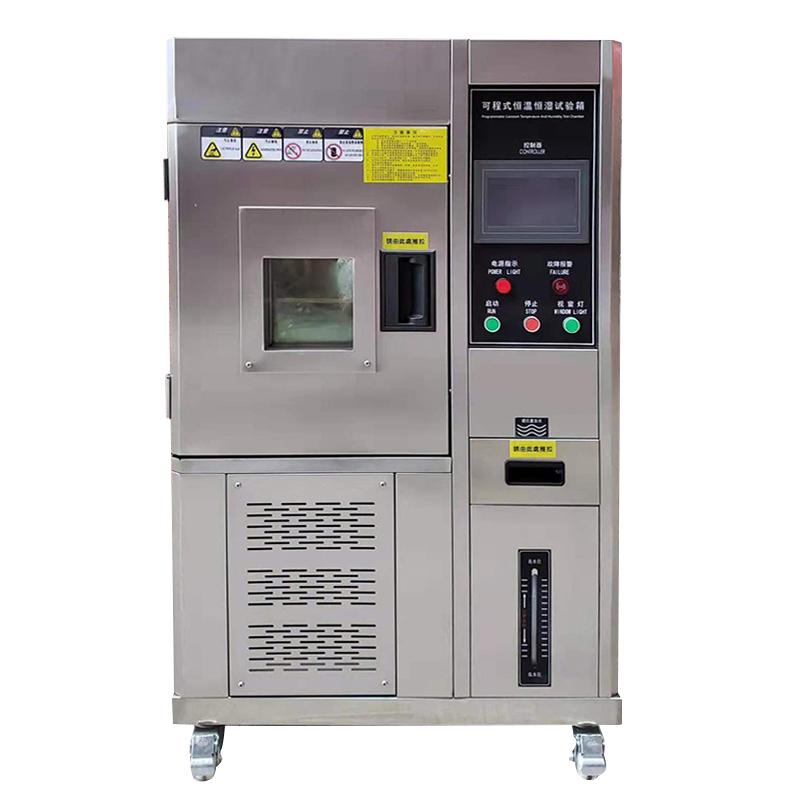
The humidity and heat Test Chamber can be used for the humidity and heat resistance test of LCD displays. This test can test the reliability & stability of LCD displays in high temperature and high humidity environments.
experiment method
Here's how to test it:
1. Preparation: Set the temperature of the Test Chamber to 60°C and the relative humidity to 95%. Place the LCD display in the test box, and connect the power supply and signal source.
2. Test process: 48 hours of continuous testing in the Test Chamber. During the test, observe the LCD display for blurring, distortion, or abnormal colors. If there is an abnormal situation, it needs to be recorded.
3. Test results: After the test, take out the LCD monitor and let it return to room temperature naturally. Observe again whether there is any abnormality, and if so, record it.
4. Data analysis: According to the test results, evaluate the reliability & stability of the LCD display in a high temperature and high humidity environment, and conduct data analysis.
Beichao reminds you: When conducting this kind of test, you should pay attention to the control of the temperature and relative humidity of the Test Chamber to ensure that it meets the standard requirements. At the same time, corresponding test plans and evaluation standards should be formulated according to specific product requirements and standard requirements.
- 1GB/T 10586-2006 Detailed explanation: Core technical indicators and acceptance specifications for damp heat Test Chamber
- 2Chip high-low temperature heat and humidity performance test
- 3Application of high-low temperature heat and humidity alternating Test Chamber in rubber industry
- 4Humidity cabinet test equipment
- 5Damp heat testing chamber and low-Temperature Test Chamber
- 6What are the reasons why the high-low temperature alternating heating and Humidity Chamber cannot be thermostatic?
- 7What are the requirements for the installation site of the low/high Temperature Test Chamber?
- 8Application of Constant Temperature and Humidity Chamber in Lithium Battery
- 9How to distinguish between low/high Temperature Test Chamber and heat & cold shock chamber