Determination of Pigment Dispersion by Wet Sieve Method
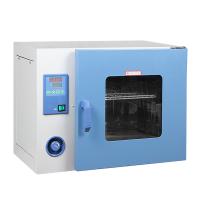
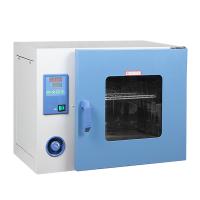
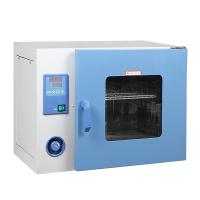
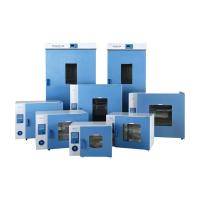
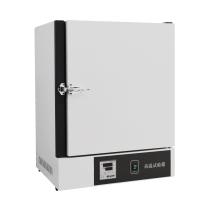
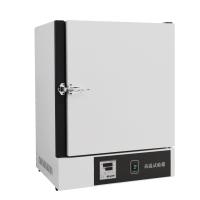
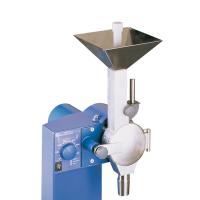
Take about 10 grams of pigment (2 grams when using carbon black) and 250 milliliters of water to reconcile in a porcelain dish. Gently grind the residue at the bottom of the dish with your fingers, and at the same time pour the suspension several times on the sieve surface wetted with water (the number of holes is in line with the requirements in the corresponding standard). When all the clumps have been ground up, collect the residue on the joints. Put the sieve surface with the pigment in a container filled with 250ml of water, and use a soft brush to grind on the sieve surface (relevant equipment: Grinder). The water in the dish was changed several times until there was no trace of pigment in it. First use ethanol: wet the residue, then wet it with a centrifuge, place it in the air for 30 minutes, and then put it in a drying box (oven) and dry it at ]00~105°C until it reaches a constant weight. The residue on the sieve is expressed as a percentage according to the previous formula.
In the case of pigments that are soluble in water, tests shall be carried out with other wetting liquids (for example, gasoline) that do not dissolve the pigment. If the number of grams of the maximum sieved amount is taken as 100%, the difference between the two determinations shall not exceed 5%.
Determining the degree of dispersion of the same pigment in different laboratories often yields different results. This is because the tests were carried out in different ways. Therefore one should always use a method that gives exactly the same result, and use a fixed method that is strictly consistent with previous records.
CB Yakubovich and BC Stokoff6 have examined the accuracy of the various methods used to determine the degree of dispersion of pigments by sieving and have come to the conclusion that under the condition of water as the wetting liquid , the wet sieving method is accurate.
- 1Principle, application and selection of Electric Oven
- 2Principle, application and selection of vertical Electric Forced Air Drying Oven
- 3Principle, application and selection of Electric Oven
- 4Principle, application and selection of pigment Drying Oven
- 5Principle, application and selection of ozone sterilizing oven
- 6Principle, application and selection of electric heating air Drying Oven
- 7Principle, application and selection of tunnel oven
- 8Principle, application and selection of vacuum electric Drying Oven
- 9Principle, application and selection of nitro paint Drying Oven