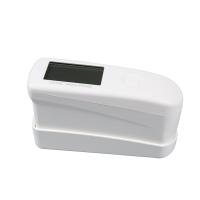
How to calculate Glossiness units GU and%
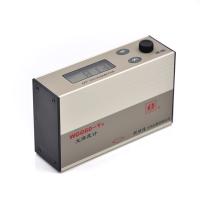
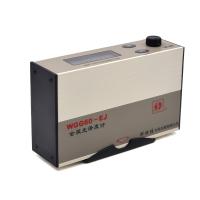
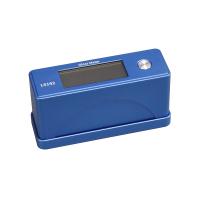
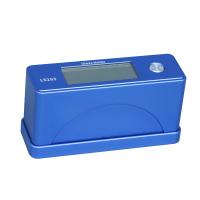
A gloss meter is typically used to measure the glossiness of an object's surface, with common gloss units being GU and %. GU stands for Gloss Units, which represents the numerical result obtained by the gloss meter, while % represents the relative gloss percentage compared to a standard sample.
The specific calculation method is as follows:
For GU, the gloss meter gives a numerical value by comparing the difference between the reflection angles of a standard light source and a test sample. This numerical value is the GU value, which typically ranges from 0 to 200.
For %, the standard sample is defined as having a value of 100 GU. Therefore, the GU value can be converted to a relative gloss percentage using the following formula: relative gloss percentage = (sample GU value / standard sample GU value) x 100%. For example, if the GU value of the standard sample is 100 and the GU value of the test sample is 80, the relative gloss percentage would be 80/100 x 100% = 80%.
NBCHAO reminds you that different gloss meters may use different standard light sources and geometric reflection angles, so results may vary when measured on different devices.

- 1Gloss inspection method of slurry inks
- 2Principle and Application of Glossiness Tester
- 3Working Principle and Application of Metal Gloss Meter
- 4Basic principle and application analysis of insulating paint gloss Detector
- 5Working principle and application analysis of film Glossmeter
- 6Principle and application analysis of microporous gloss meter
- 7 FZ/T 01097 Analysis of fabric gloss test method
- 8Evaluation and Application of Optical Properties of Powder coatings
- 9Coating coatings - Determination of surface gloss and Gloss meter