Determination of Pigment light fastness under artificial light
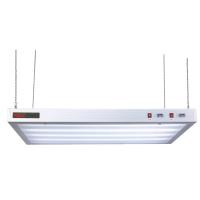
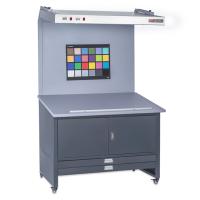
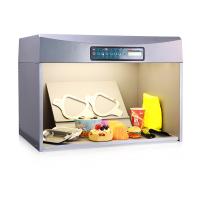
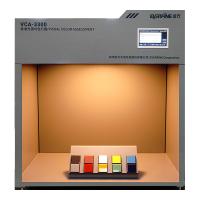
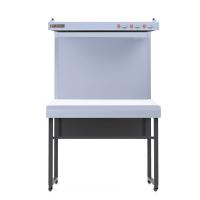
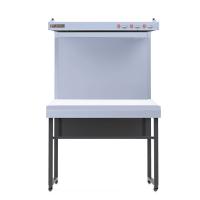
There are many inconveniences in determining the lightfastness of pigments under natural light. These include fluctuations in the intensity of sunlight, changes in air humidity, and the need to conduct experiments in sunny and regulated weather, and often have changes in temperature and so on. All of these factors are often obstacles to rapid testing of light fastness, especially in areas with very few sunny days. Therefore, in the determination of the lightfastness of pigments, attempts have been made to use artificial light that imitates the sun. (Related instruments: standard light box)
The intensity of light emitted by artificial light sources should always be constant, and the chemical effects caused by the light should be similar to the effects of sunlight.
Until now, in testing the light resistance of pigments, mercury-quartz lamps and arc lamps that emit a large amount of ultraviolet light are mainly used. The intensity of ultraviolet light emitted by such lamps is actually constant. .
The main disadvantage of mercury-quartz lamps is that after a certain period of use, the ultraviolet light emitted by them will gradually decrease in intensity. Generally, when the quartz lamp is lit for 1000-1500 hours, its light intensity can be fixed. After that, the lamp holder (burner) must be replaced. An electric arc with an ordinary carbon electrode can also be used as an artificial light source, but the ultraviolet light intensity of this arc is lower than that of an arc with an iron core carbon electrode inside. Arc lamps using carbon electrodes with iron cores not only emit light, but also emit light in the visible part of the spectrum. Therefore, in order to extract ultraviolet light, the light of this lamp must be passed through a set of filters made of colored liquid placed in a quartz vessel or placed in a glass vessel that can transmit ultraviolet light. made up of. These filters absorb all visible light and pass only ultraviolet light.
When preparing the optical filter, copper sulfate solution that can absorb red light and yellow light and nitrosodimethylaniline solution that can absorb green light, blue light and purple light can be used, and special colored glass can be used.
When conducting general tests, artificial light sources without filters can be used, while for more accurate tests, it is better to use filters. A 750-watt filament lamp is also used when measuring light fastness; its light can be fused with sugar and copper sulfate solution. Now, there are still various types of incandescent lamps made of glass that can penetrate ultraviolet light, and they are also widely used. In this case, the filter is not necessary.
The further improvement of this lamp is that in addition to its hot wire, there is also an auxiliary mercury lamp head to extend the ultraviolet light part of its light language. These lamps emit all the rays of sunlight (ultraviolet, light, and heat); the undesirable short-wave light emitted by pure quartz lamps is absorbed by the outer glass bulb.
High-pressure mercury lamps with high light emission should also be proposed. Under the condition of consuming the same electric energy, the light emitted by them can be 2~2.5 times larger than ordinary incandescent lamps.
- 1Color mass management by standard light source
- 2Application of Standard light source Color Assessment Cabinet in Color Detection
- 3Color measuring instrument printing requirements
- 4How to solve homochromatic spectrum?
- 5Measuring Color Uniformity of Fabrics with Standard Light Box
- 6Identify monochromatic spectrum using an efficient color scheme
- 7Standard light source color light box lighting calibration
- 8What is a standard light source color light box and why use it?
- 9Avoid product color inconsistency by using a standard light source on the color box