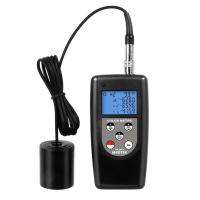
What is the difference between Color Reader and Colorimeter?
What is the difference between Color reader and Colorimeter?
A color reader and a Colorimeter are both instruments used for measuring and quantifying color. However, they have different applications and levels of accuracy. Here is a brief comparison of the two:
Color Reader:
A color reader is a simpler and more compact device, typically used by non-experts or in field applications.
It's primarily used for color matching, where the user aims to find the closest match for a specific color from a predefined set of colors or color swatches, such as a paint manufacturer's color chart.
Color readers usually provide less accurate and less detailed color measurements compared to Colorimeters.
They often use RGB (red, green, blue) color models or other simplified color spaces.
Color readers are more affordable and user-friendly, making them suitable for DIY enthusiasts, painters, or designers who need a quick and easy color matching solution.

Colorimeter:
A Colorimeter is a more sophisticated and precise instrument, used in professional and industrial applications.
It's designed to measure color properties such as color coordinates, color difference, and color strength, according to standardized color spaces like CIE Lab, CIE LCH, or Hunter Lab.
Colorimeters provide more accurate and detailed color measurements compared to color readers, making them suitable for quality control, research and development, and color formulation.
They typically use tristimulus filters that closely mimic the human eye's response to color, ensuring more accurate and consistent color measurements.
Colorimeters are more expensive and may require a higher level of expertise to operate and interpret the results, making them suitable for professionals in industries such as coatings, plastics, textiles, and automotive.

In summary, a color reader is a simpler and more affordable tool for quick color matching, while a Colorimeter is a more advanced and precise instrument for accurate color measurements in professional and industrial applications.
- 1CS-810 Desktop Spectrophotometer Application Case Cleaner Color Detection
- 2Gardner Color: The color scale of translucent liquids
- 3Did you know that the maturity of fruits and vegetables can be quantified?
- 4Color measurement of tomatoes
- 5Calibration of Spectrophotometer s and Colorimeters
- 6What instrument is a Colorimeter? What types and applications are there
- 7Look at this, what is the difference between a Colorimeter and a Spectrophotometer ?
- 8Differences between several common water quality testing equipment
- 9Definition of water hardness and how to measure water hardness value?
-
![LANDTEK CM-200S Portable Colorimeter]() LANDTEK CM-200S Portable Colorimeter$ 259.00
LANDTEK CM-200S Portable Colorimeter$ 259.00 -
![YUE FENG SD-1 Beer Colorimeter high-precision chroma measurement Instrument]()