Cyclic corrosion test and its test procedures
What it the Cyclic corrosion testing?
Cyclic corrosion testing, also known as salt spray testing or salt fog testing, is a type of accelerated corrosion testing that simulates harsh environmental conditions to assess the corrosion resistance of materials, coatings, or products. It is a widely used method in industries such as automotive, aerospace, marine, and coatings to evaluate the performance and durability of materials and coatings under corrosive conditions.
In cyclic corrosion testing, a test specimen is exposed to alternating cycles of corrosive environments, including salt spray (or salt fog), humidity, and often temperature variations. The test specimens are typically subjected to a sequence of different corrosive conditions, such as salt spray exposure, followed by humidity exposure, and then drying, to simulate realistic environmental conditions that can lead to corrosion.
The salt spray exposure involves spraying a solution of salt water onto the test specimens, typically with a concentration of 5% sodium chloride (NaCl), at a controlled temperature and humidity. The salt spray creates a corrosive environment that accelerates the corrosion process and simulates the effects of exposure to saltwater or other corrosive atmospheres.
The humidity exposure involves exposing the test specimens to high humidity conditions, typically around 100% relative humidity, to create a humid environment that can accelerate the corrosion process and promote the formation of corrosion products.
Temperature variations are often incorporated into cyclic corrosion testing to simulate the effects of thermal cycling and temperature changes that can occur in real-world environments. This can involve exposing the test specimens to temperature changes, ranging from low temperatures to high temperatures, to evaluate the effects of thermal stress on the corrosion resistance of materials and coatings.
The cyclic nature of the test, with alternating exposure to salt spray, humidity, and temperature variations, aims to accelerate the corrosion process and provide a more severe and accelerated assessment of the corrosion resistance of materials or coatings compared to natural exposure to corrosive environments over time.
Cyclic corrosion testing is typically conducted in accordance with recognized standards, such as ASTM B117 (for salt spray testing), ISO 9227 (for salt spray and alternating tests), or other industry-specific standards, to ensure consistent and standardized testing procedures and results.
The results of cyclic corrosion testing are typically evaluated by measuring and documenting the appearance and extent of corrosion on the test specimens, such as the formation of rust, blisters, or other corrosion-related defects. These results can provide valuable information on the corrosion resistance and durability of materials or coatings, and can be used for quality control, product development, material selection, and performance prediction in various industries.

Which materials need to test?
A wide range of materials can be tested for cyclic corrosion resistance, including:
Metals: Various types of metals, including ferrous (e.g., steel, cast iron), non-ferrous (e.g., aluminum, copper, brass), and alloys (e.g., stainless steel, galvanized steel), may need to be tested for cyclic corrosion resistance. These materials are commonly used in automotive, aerospace, marine, construction, and other applications where exposure to corrosive environments is a concern.
Coatings: Different types of coatings, such as paint, powder coating, electroplating, anodizing, and other surface treatments, may be tested for cyclic corrosion resistance. Coatings are often applied to metals, plastics, composites, and other materials to provide protection against corrosion and other environmental factors, and their performance can be evaluated through cyclic corrosion testing.
Plastics: Some plastics and polymers used in outdoor or harsh environments may require cyclic corrosion testing to assess their resistance to corrosion and degradation caused by exposure to salt spray, humidity, temperature variations, and other environmental factors. Examples of such plastics include those used in automotive parts, outdoor equipment, and marine applications.
Composites: Composite materials, which are combinations of two or more different materials with different properties, may also be tested for cyclic corrosion resistance. Composite materials are commonly used in aerospace, automotive, marine, and other applications, and their performance in corrosive environments may be critical to ensure their durability and longevity.
Painted surfaces: Painted surfaces, such as painted metal parts, structures, or products, may require cyclic corrosion testing to evaluate the performance of the paint coating in a corrosive environment. This can be important in industries such as automotive, aerospace, marine, and construction, where painted surfaces are exposed to harsh environmental conditions.
Other materials: Depending on the specific industry and application, other materials such as concrete, ceramics, glass, and others may also need to be tested for cyclic corrosion resistance. For example, in construction and infrastructure applications, concrete structures may be exposed to corrosive environments, and their performance can be evaluated through cyclic corrosion testing.
It's important to note that the need for cyclic corrosion testing depends on the specific requirements of the application, industry standards, regulations, and other factors. Materials that are expected to be exposed to corrosive environments, either in their raw form or as coatings, may require cyclic corrosion testing to assess their performance and ensure their durability and longevity.
How to Test?
The testing steps for cyclic corrosion testing typically include the following:
Preparation of test specimens: Test specimens, which can be materials, coatings, or products, are prepared according to the specifications of the relevant standard or testing requirements. This may involve preparing specimens of specific dimensions, cleaning and treating the specimens to remove contaminants or surface coatings, and applying any required surface treatments or coatings.
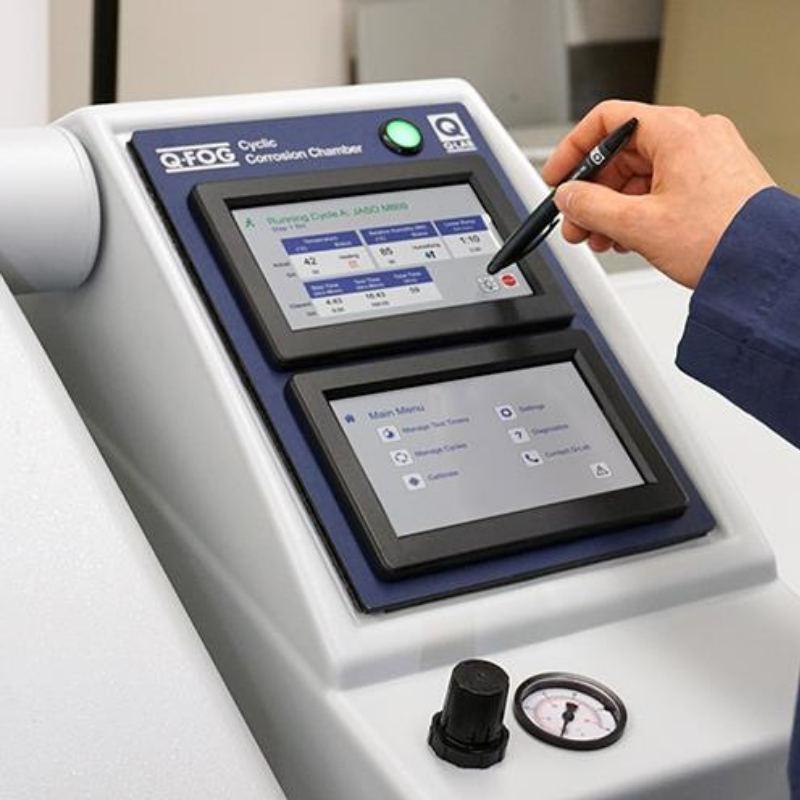
Setting up the Test Chamber: The cyclic corrosion Test Chamber is prepared according to the testing standard or requirements. This may involve adjusting the temperature, humidity, and salt spray concentration settings of the chamber to the desired levels as per the test specifications.
Placing the test specimens in the chamber: The prepared test specimens are carefully placed in the Test Chamber, ensuring that they are positioned correctly and securely to allow for uniform exposure to the corrosive environment. The test specimens may be suspended or mounted in a specific orientation or configuration, as per the testing standard or requirements.
Initiating the cyclic corrosion test: The Test Chamber is started, and the cyclic corrosion test is initiated by exposing the test specimens to the predetermined cycles of salt spray, humidity, and temperature variations, as per the testing standard or requirements. The test specimens are typically exposed to these cyclic conditions for a specified duration, which can range from hours to weeks or even months, depending on the testing requirements and standards.
Monitoring and recording the test conditions: The test conditions, including temperature, humidity, salt spray concentration, and any other relevant parameters, are closely monitored throughout the test duration, and recorded at specified intervals as per the testing standard or requirements. This helps ensure that the test conditions are maintained within the desired range and provides accurate data for later analysis.
Inspecting and evaluating the test specimens: At the end of the specified test duration, the test specimens are carefully removed from the Test Chamber, and their appearance and condition are inspected and evaluated according to the testing standard or requirements. This may involve visual inspection, measurement of corrosion-related defects, and documentation of the results.
Analyzing and interpreting the results: The results of the cyclic corrosion testing, including the appearance and extent of corrosion on the test specimens, are analyzed and interpreted according to the testing standard or requirements. This may involve comparing the results against established criteria, rating scales, or performance requirements to determine the corrosion resistance and durability of the materials or coatings being tested.
Drawing conclusions and taking appropriate actions: Based on the results of the cyclic corrosion testing, conclusions are drawn regarding the corrosion resistance and durability of the test specimens. If the materials or coatings meet the required performance criteria, no further action may be needed. If the materials or coatings fail to meet the performance requirements, further actions may be required, such as adjusting the material formulation, modifying the coating process, or retesting with different conditions.
Reporting and documentation: The results of the cyclic corrosion testing, including the test conditions, observations, and conclusions, are documented in a comprehensive test report as per the testing standard or requirements. This report serves as a record of the testing process, results, and conclusions, and can be used for quality control, product development, and other purposes.
It's important to note that the specific testing steps for cyclic corrosion testing may vary depending on the testing standard, industry, and specific requirements of the test. It's essential to follow the relevant standard or testing requirements carefully to ensure accurate and consistent results.
- 1Working Principle and Application Analysis of Ceiling Salt Spray Tester
- 2Principle, significance and method of salt spray test
- 3Salt spray test NSS, ACSS, CASS difference
- 4Different test methods and similarities and differences of salt spray test
- 5Salt Spray Tester in salt spray testing
- 6Hardware salt spray test method
- 7The principle and application of salt spray corrosion Test Chamber, the operation and selection method
- 8How Salt Spray Tests Improve the Quality of Metal Plating and Coatings
- 9How does the surface coating prevent corrosion?
-
![HZAOC LSO2-100 SO2 corrosion Test Chamber]() HZAOC LSO2-100 SO2 corrosion Test Chamber$ 15123.00
HZAOC LSO2-100 SO2 corrosion Test Chamber$ 15123.00 -
![HZAOC SO2-300 SO2 corrosion Test Chamber]() HZAOC SO2-300 SO2 corrosion Test Chamber$ 15358.00
HZAOC SO2-300 SO2 corrosion Test Chamber$ 15358.00 -
![HZAOC SO2-250 SO2 corrosion Test Chamber]() HZAOC SO2-250 SO2 corrosion Test Chamber$ 15358.00
HZAOC SO2-250 SO2 corrosion Test Chamber$ 15358.00