The relationship between wet film and dry film
Wet film and dry film are two terms commonly used in the coating industry to describe different stages of the coating process. The relationship between wet film and dry film can be summarized as follows:
Wet film:
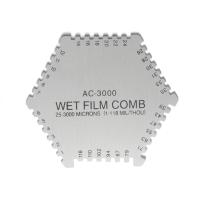
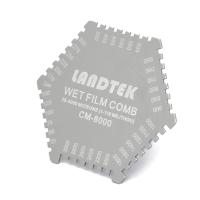
Wet film refers to the thickness of the liquid coating applied to a substrate before it has dried or cured. It is typically measured immediately after the coating has been applied using a wet Film Thickness Gauge or by other methods, such as visual inspection or gravimetric measurement. Wet film thickness is an important parameter in coating applications, as it directly affects the final properties and performance of the coating, such as adhesion, appearance, and durability.
Dry film:
Dry film, on the other hand, refers to the thickness of the coating after it has completely dried or cured. It is typically measured using a dry Film Thickness Gauge, which is a non-destructive testing tool that measures the thickness of the coating without damaging the substrate or the coating itself. Dry film thickness is a critical parameter in coating applications, as it determines whether the coating meets the required specifications, such as thickness requirements for corrosion protection or other performance criteria.
The relationship
The relationship between wet film and dry film is important in ensuring that the applied coating meets the desired thickness specifications. Coating manufacturers typically specify the required wet film thickness to achieve the desired dry film thickness after the coating has dried or cured. This is because coatings typically shrink during the drying or curing process, resulting in a decrease in thickness from the wet film to the dry film. The extent of this shrinkage depends on various factors, such as the type of coating material, environmental conditions during drying or curing, and the formulation of the coating.

Coating applicators, therefore, need to apply the coating at the appropriate wet film thickness to account for this shrinkage and achieve the desired dry film thickness. If the wet film thickness is too thin, it may result in a dry film thickness that does not meet the required specifications, leading to reduced performance or potential coating failures. On the other hand, if the wet film thickness is too thick, it may result in longer drying or curing times, uneven coatings, or other defects.
In summary, the relationship between wet film and dry film is critical in the coating industry, as it involves applying the coating at the appropriate wet film thickness to account for shrinkage during drying or curing and achieve the desired dry film thickness. Proper measurement and control of wet film and dry film thickness are essential to ensure the quality and performance of coated surfaces in various applications.
- 1Discuss the relationship between wet film and dry film
- 2What are the properties of dry film?
- 3Application of wet-film
- 4How to test container dry film?
- 5Adhesion of the corresponding coating, how many indicators can be met to meet the requirements?
- 6What does the 90-10 principle of dry film measurement mean?
- 7What are the relevant standards for thickness of dry film measurement?
- 8What is the reason for the difference in the actual value of the wire rod Spreader theory?
- 9How to determine the coating thickness of wet film?
邓少卿;孙恩毅 - 《浅谈漆膜厚度的测试方法》