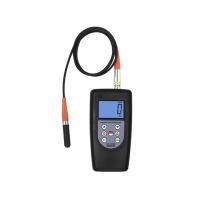
Coating Thickness Gauge: Magnetic VS Eddy Current
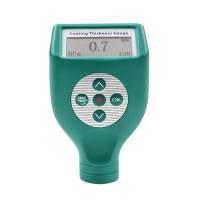
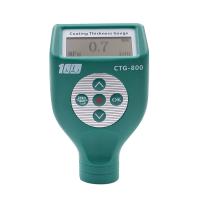
Magnetic Film Thickness Gauges and current Film Thickness Gauges are both used to measure the thickness of thin films, but they use different methods to do so. Magnetic Film Thickness Gauges are used to measure the thickness of non-magnetic coatings on magnetic substrates, while current Film Thickness Gauges are used to measure the thickness of conductive coatings on non-conductive substrates.
Different principles
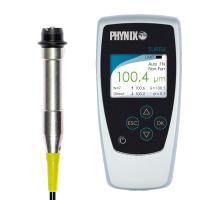
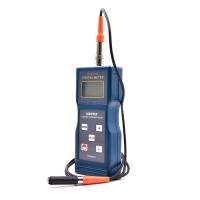
Magnetic Film Thickness Gauges use the principle of magnetic induction to measure the thickness of a non-magnetic coating on a magnetic substrate. The gauge consists of a probe that contains a coil and a permanent magnet. When the probe is placed on the coating, an alternating current is passed through the coil, which generates a magnetic field that induces eddy currents in the substrate. The eddy currents create their own magnetic field, which opposes the magnetic field of the probe. The strength of the magnetic field generated by the probe decreases as the distance between the probe and the substrate increases, and the gauge measures this decrease in magnetic field strength to determine the thickness of the coating.
Current Film Thickness Gauges, on the other hand, use the principle of electrical conductivity to measure the thickness of a conductive coating on a non-conductive substrate. The gauge consists of a probe that contains two electrodes. When the probe is placed on the coating, a small alternating current is passed through the electrodes, and the gauge measures the resistance of the coating. The thickness of the coating is calculated based on the relationship between the resistance of the coating and its thickness.

Advantages and disadvantages
Both types of gauges have their own advantages and disadvantages. Magnetic Film Thickness Gauges are typically faster and easier to use, as they do not require the coating to be conductive. However, they may be less accurate than current Film Thickness Gauges, particularly for very thin coatings or coatings with a low conductivity. Additionally, magnetic Film Thickness Gauges may not work well for non-magnetic substrates, as there is no magnetic field to measure.
Current Film Thickness Gauges, on the other hand, can provide more accurate measurements for conductive coatings, particularly those with a high conductivity. However, they may require a longer measurement time, as the probe needs to establish a stable electrical contact with the coating. Additionally, current Film Thickness Gauges may not work well for non-conductive coatings, as there is no electrical conductivity to measure.

The choice between a magnetic Film Thickness Gauge and a current Film Thickness Gauge depends on the specific application and the properties of the coating and substrate being measured.
Other factors to consider when choosing a Film Thickness Gauge include the required accuracy, the range of thicknesses to be measured, the size and shape of the substrate, and the environment in which the measurement will be taken. Some gauges may be more suitable for field use, while others may be better suited for laboratory use.
It's also important to consider the cost of the gauge, as well as the cost of any necessary calibration or maintenance. In general, magnetic Film Thickness Gauges tend to be less expensive than current Film Thickness Gauges, but this can vary depending on the specific model and manufacturer. Both magnetic Film Thickness Gauges and current Film Thickness Gauges are valuable tools for measuring the thickness of thin films. The choice between the two types of gauges depends on the specific application and the properties of the coating and substrate being measured. When selecting a gauge, it's important to consider factors such as accuracy, range, substrate type, and cost, as well as any necessary calibration or maintenance requirements.


- 1Nondestructive measurement Coating thickness
- 2Principle, application and selection of traffic coatings Coating Thickness Gauge
- 3Principle, Application and Selection of Eddy current Coating Thickness Gauge
- 4Principle, Application and Type Selection of Electronic Coating Thickness Gauge
- 5Explore the principle, application and selection of phosphating layer Coating Thickness Gauge
- 6Principle, Application and Type Selection Analysis of Chrome Coating Thickness Gauge
- 7Principle, Application and Selection of Coating Thickness Gauge for inner wall of small pipe
- 8Basic principle and application scenario of steel Coating Thickness Gauge
- 9Principle and Application Analysis of Coating Thickness Gauge