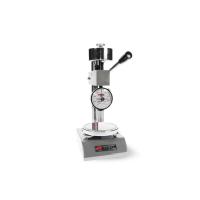
How much do you know about the 3 methods of paint film hardness testing?
Film hardness testing is a method of evaluating the scratch, wear and deformation resistance of a coating after drying. Hardness testing helps determine whether a coating meets the performance requirements of a specific application. Here are some commonly used coating hardness testing methods:
Pencil Hardness Test:
The Pell method is a commonly used method for testing the hardness of paints. By using pencils of different hardness, the hardness grade of the paint can be determined.
Steps:
A. Prepare a set of standard pencils with hardness ranging from 6B to 9H.
B. Place the paint sample on a hard, flat surface.
C. On the paint surface, apply light pressure at a 45-degree angle and draw a straight line about 1 inch (25 mm) in pencil.
D. Observe the paint surface for visible scratches. If so, try repeating the process with a softer pencil until you find the hardest pencil that won't cause paint scratches.
E. Record the hardness grade of the paint, which corresponds to the hardest pencil that will not cause paint scratches.

Buchholz hardness test:
The Brinell hardness test is used to measure the indentation hardness of the coating surface.
Steps:
A. Prepare a Brinell Hardness Tester, which usually contains a spherical indenter with a standard weight.
B. Place the paint sample on a hard, flat surface.
C. Place the indenter on the paint surface so that the spherical part is in contact with the paint.
D. Place the standard weight on the indenter to apply pressure to the paint surface. Hold the pressure for 30 seconds.
E. Measure the length and width of the indentation using a microscope or other magnifying equipment.
F. Calculate the Brinell hardness of the paint according to the Brinell hardness calculation formula.

König and Persoz swing bar hardness test:
These tests use a pendulum to apply an impact on the paint surface and assess paint hardness by measuring the pendulum's swing time.
Steps:
A. Prepare a König or Persoz pendulum Hardness Tester.
B. Place the paint sample on a hard, flat surface.
C. Install the Tester on the paint surface to ensure that the pendulum can swing freely and does not hit surrounding obstacles.
D. Pull the pendulum to its maximum swing and release it to apply an impact on the paint surface.
E. Use a timer to record the time the pendulum swings on the painted surface. For the König test, the time required to swing 60 times is usually recorded; for the Persoz test, the time required to swing 200 times is usually recorded.
F. Evaluate paint hardness based on test results. The longer the pendulum swings, the higher the paint hardness.

Paint hardness testing helps to determine whether the coating has sufficient scratch and wear resistance to meet the requirements of a specific application field. During the development and production of coatings, ensuring that the coating has the right hardness is very important to improve product quality and meet customer needs. It is recommended to perform a hardness test after the coating has dried to obtain accurate results. During the testing process, please follow the relevant international and industry standards.
- 1Determination of paint film hardness by pencil method under GB/T 6739 standard
- 2Determination method of paint film hardness - swing rod hardness, scratch hardness, indentation hardness
- 3Determination of Hardness of Waterborne Anticorrosive Coating film
- 4Effect of Ultraviolet curing paint Spreader on Wooden ground floor film performance
孙伟圣;王艳伟;徐 立;杨植辉;张秋娟;晁 久;吴忠其;李先春 - 《木材工业》
- 5Film Swing Hardness Test
郑顺兴 - 《涂料与涂装科学技术基础》
- 6Film Scratch Hardness Test
郑顺兴 - 《涂料与涂装科学技术基础》
- 7Film Indentation Hardness Test
郑顺兴 - 《涂料与涂装科学技术基础》
- 8How to measure film Hardness with Pendulum?
- 9Summary of film hardness performance testing