Coating Metering rod: Mayer-Rod
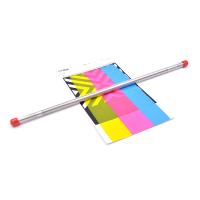
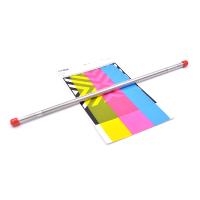
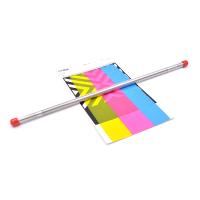
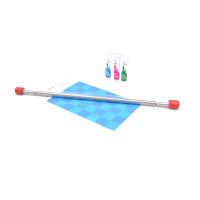
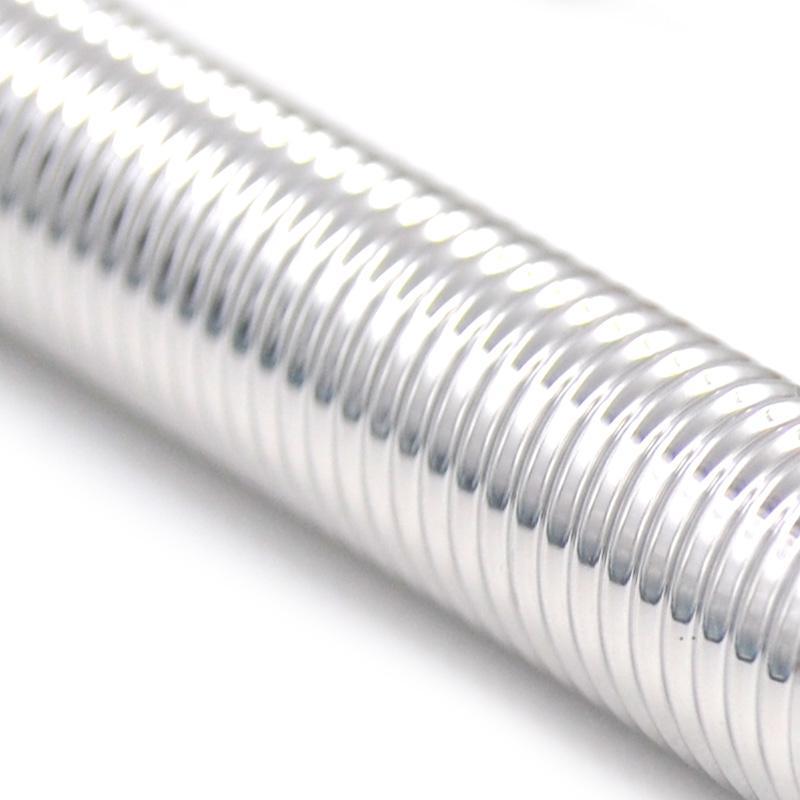
Mayer-Rod (Meyer rod) is a commonly used paint metering rod, also known as Mayer scraper. It is mainly used to control the thickness of coating materials such as paints, inks and adhesives. Paint metering wands are made of metal with a smooth surface for easy cleaning and allow for accurate, even coatings.
The paint metering rod is characterized by a series of equally spaced transverse grooves on its surface, the size and spacing of these grooves determine the thickness of the paint. When the paint passes through the paint metering rod , the paint fills into the groove to form a certain thickness of the coating. By adjusting the size and spacing of the grooves, coatings of different thicknesses can be achieved.

advantage
Paint metering sticks offer the following advantages:
High precision: It can realize accurate coating thickness control, reduce paint waste and reduce production costs.
Uniform coating: The design of the paint metering rod makes the paint evenly distributed on the surface of the substrate and improves the coating quality. This is especially important for coatings that require a high degree of consistency, such as automotive, electronic equipment and other industries.
EASY TO CLEAN: The smooth surface of the stick makes it easy to wash and keep clean. This helps reduce paint carryover and cross-contamination, ensuring coating quality.
Strong adjustability: The groove size and spacing of the paint metering rod can be adjusted according to different coating requirements and process conditions, making it highly adaptable and flexible.
Wide range of applications: paint metering sticks can be applied to various coatings, inks, adhesives and other coating processes, including paper, plastic film, metal plate, textiles and other substrates.
defect
However, paint metering sticks also have some limitations, such as they may not work well in high-viscosity paints and high-thickness coating applications. Therefore, in practical applications, it is necessary to select a suitable paint metering rod according to the specific coating requirements. To overcome the limitations of paint metering rods in certain situations, the paint industry has also adopted other types of paint metering rods. Here are some common paint metering sticks and their applications:
Linear Squeegee: The Linear Squeegee is a simple and functional paint metering stick. It uses a straight metal rod to control the coating thickness by adjusting the gap with the substrate surface. Linear drawdown blades are suitable for low viscosity coating materials such as paints, inks and adhesives, especially in the application of thinner coatings.
Rotary scraper: The rotary scraper is a paint metering rod, its working principle is to use a metal rod with a scraper to rotate at a certain speed, and the coating thickness is controlled by the contact between the scraper and the surface of the substrate. The rotary drawdown blade is suitable for the application of high-viscosity paint and high-thickness coating, which can achieve more uniform and effective paint application.
Air Gap Scraper: An air gap scraper is a paint metering rod that uses gas pressure to control coating thickness. It is suitable for the application of high-viscosity coatings and high-thickness coatings, which can achieve accurate and uniform coating application. The main advantage of the air gap scraper is that it can effectively reduce the waste of paint and reduce production costs.
Magnetic scraper: A magnetic scraper is a paint metering stick that uses magnetism to control the thickness of the coating. It is suitable for the application of high-viscosity coatings and high-thickness coatings, which can achieve accurate and uniform coating application. The main advantage of the magnetic scraper is that it can effectively reduce the waste of paint and reduce production costs.
These paint metering sticks play a key role in the application in the paint industry. By choosing a suitable paint metering rod, the coating quality can be effectively improved, the production cost can be reduced, and the coating requirements of different industries and products can be met. In practical application, it is necessary to select a suitable paint metering rod according to the nature of the paint, coating thickness, substrate type and other factors to achieve a better coating effect.
Selection points
When selecting and using paint metering sticks, there are several key factors to consider to ensure better coating results:
Paint properties: factors such as paint viscosity, fluidity, and drying speed will affect the choice of paint metering rods. For example, for high-viscosity paints, a rotary, air-gap, or magnetic scraper may be more appropriate than a paint metering stick .
Coating Thickness: Coating thickness also has a great influence on the choice of paint metering rod. Thinner coatings may be better suited to a linear scraper or paint metering rod , while thicker coatings may require the use of a rotary scraper, air gap scraper, or magnetic scraper.
Substrate Type: Different substrates also have an impact on the choice of paint metering rods. For example, for metal plates or plastic films, paint metering rods need to have good abrasion resistance, while for flexible substrates such as paper or textiles, paint metering rods need to have good flexibility.
Production speed: Paint metering rods need to be able to accommodate the speed of the production line. On high-speed lines, a paint metering bar that enables rapid application, such as a rotating drawdown blade or an air-gap drawdown blade, may be more suitable.
Cleaning and Maintenance: Paint metering wands need to be easy to clean and maintain to ensure coating quality and productivity. For example, paint metering rods and linear scrapers are relatively easy to clean due to their smooth surfaces.
To sum up, paint metering rods play a very important role in the paint industry. Proper selection and use of paint metering rods can greatly improve coating quality, reduce production costs, and meet the needs of a variety of paint applications. In actual production, a suitable paint metering rod should be selected based on comprehensive consideration of paint properties, coating thickness, substrate type and other factors to ensure a better coating effect. At the same time, the correct use and maintenance of paint metering rods is also the key to improving production efficiency and coating quality.
- 1Coating Metering rodsFAQ
- 2
- 3Advantages and disadvantages of Mayer-Rod
- 4Cleaning, maintenance and service life prediction of coated measuring rods
- 5What is Mayer Wire Bar Coating?
- 6Analysis of Advantages and Disadvantages of Mayer Wire Bar Coater
- 7Explanation of the principle and structure of the wire rod applicator
- 8How to choose these experimental coating equipment?
- 9Why are paper coaters and converters transitioning to forming metering grooves?