Humidity chamber FAQ and its solution
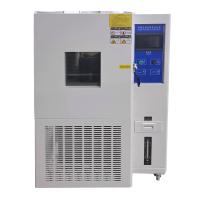
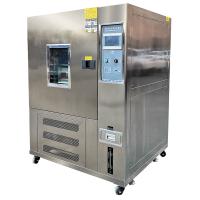
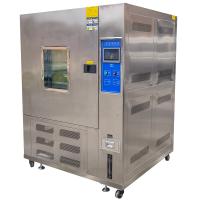
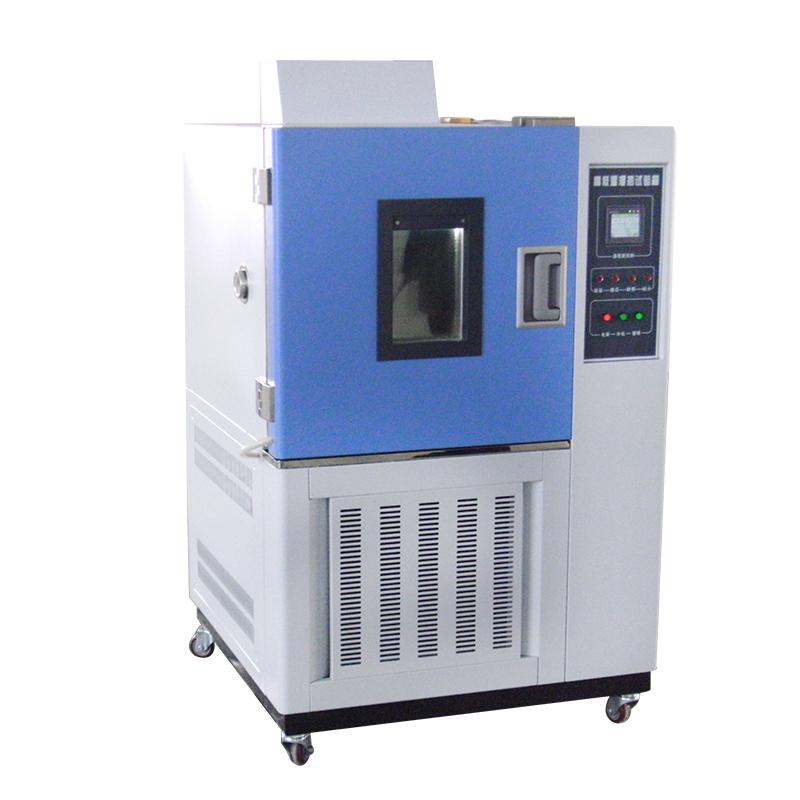
The constant humidity and heat Test Chamber is a kind of equipment used for testing the durability and stability of materials under high temperature and high humidity environment. It can be tested for a long time in a set high temperature and high humidity environment to test the performance and durability of materials.
The constant humidity and heat Test Chamber is usually composed of a heating system, a humidification system, a control system, a working room, and an inlet and outlet device. Heating systems usually use electric heating elements, gas stoves or steam heating to heat the air to a set temperature. The humidification system can evaporate water into moisture, so that the humidity in the Test Chamber reaches the set high humidity environment. The control system can precisely control parameters such as temperature, humidity, and time to meet the testing requirements of different materials. The design and construction of the working room and the feeding and discharging device will also vary according to different usage scenarios and material requirements.
common problem
Inaccurate temperature or humidity readings.
Unstable temperature or humidity.
The device is heating or cooling unevenly.
The device is leaking or the Water Tank is insufficient.
An error occurred in program operation.
Solution
Temperature or Humidity Calibration: Place a thermometer or hygrometer in a constant damp heat Test Chamber and set the Test Chamber to a known humidity or temperature. After waiting a period of time, compare the thermometer or hygrometer reading with the temperature or humidity reading displayed by the Test Chamber. If there is a difference, a calibration adjustment is required. Calibration can be done by adjusting the temperature or humidity calibration parameters in the controller.
Equipment uniformity calibration: Place several thermometers or hygrometers inside the Test Chamber, and set the Test Chamber to a known humidity or temperature. After waiting for a period of time, compare whether the readings of each metering point are consistent. If there is a difference, a uniformity calibration adjustment is required. This can be done by adjusting how and where the heating, cooling and fans work, and by adjusting the position of items inside the Test Chamber.
Equipment Water Tank capacity calibration: fill the Water Tank in the Test Chamber with water, and record the water capacity. Then set the Test Chamber to a certain humidity, after measuring for a period of time, pour out the Water Tank and record the remaining water capacity. Subtract the previously recorded water capacity from the remaining water capacity to obtain the amount of water used by the Test Chamber at that humidity. If the amount of water used is inconsistent with the capacity in the specification, a Water Tank capacity calibration adjustment is required. It can be calibrated by adjusting the Water Tank capacity parameter in the controller.
Water leakage of the equipment or insufficient capacity of the Water Tank: If the equipment leaks water or the capacity of the Water Tank is insufficient, it will affect the operation of the equipment and the accuracy of the test data. The treatment method includes checking the sealing performance of the Water Tank and the capacity of the Water Tank, and replacing or repairing the problematic parts in time.
Error handling in program operation: If an error occurs in program operation, it is necessary to reset the program or adjust the parameters in the controller.
North and South Chao reminds you: the constant humidity and heat Test Chamber needs to be calibrated and maintained regularly. At the same time, it is necessary to regularly clean the interior of the equipment, check the performance and condition of heating, cooling, control, sensors and other equipment, and replace or repair problematic parts in time. In addition, it is recommended to carry out maintenance according to the operation manual of the equipment and the maintenance instructions provided by the manufacturer to ensure the long-term stable operation of the equipment.
Precautions
In the process of using the constant humidity and heat Test Chamber, the following points should also be paid attention to:
Reasonably arrange the placement of samples to ensure that the samples can be subjected to uniform temperature and humidity distribution.
Do not accumulate too much sundries or samples inside the Test Chamber to avoid affecting the operation of the equipment and the accuracy of the data.
According to actual needs, reasonably select the temperature or humidity range and accuracy of the Test Chamber to avoid inaccurate test data due to mismatching equipment parameters.
Before testing, it is best to preheat or precool the equipment to ensure that the equipment can reach the required temperature and humidity conditions.
During the use of the equipment, the humidity and temperature changes and test data are recorded in time, and analyzed and processed as needed.
In short, the constant humidity and heat Test Chamber is a commonly used environmental simulation test equipment, but it is necessary to pay attention to the use and maintenance of the equipment during use to ensure the stability of the equipment and the accuracy of the test data.
- 1GB/T 10586-2006 Detailed explanation: Core technical indicators and acceptance specifications for damp heat Test Chamber
- 2Humidity cabinet test equipment
- 3Damp heat testing chamber and low-Temperature Test Chamber
- 4Application of Constant Temperature and Humidity Chamber in Lithium Battery
- 5Humidity chamber FAQ, calibration method, precautions
- 6Humidity chamber FAQ calibration method
- 7Humidity chamber FAQ and correct calibration method
- 8Application of Humidity Chamber in Polymer and composite industry
- 9Application of Humidity Chamber in Photovoltaic industry