The principle and operation steps of laboratory heat sealing instrument
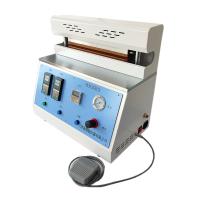
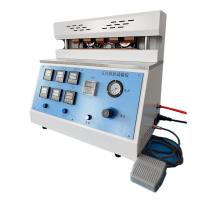
The laboratory heat sealer is an instrument used to test the heat seal strength and heat seal performance of plastic films, composite films and other materials. Its principle is based on the physical process and thermal principles of heat sealing.
working principle
The laboratory heat sealer usually consists of two heat sealing heads, which can heat and press two films together to form a heat seal area. During the test, it is necessary to place the film sample to be tested in the heat-sealing area, adjust parameters such as temperature and pressure, and perform the heat-sealing test.
The heat sealing process mainly includes the steps of heat conduction, melting and solidification. When the heat sealing head is heated to a certain temperature, the temperature of its surface is higher than the melting point of the film, and the film begins to melt. Simultaneously with melting, heat energy is transferred from the heat sealing head into the film, causing the surrounding material to start melting as well. When two melted films meet, they will form a certain heat-seal area through heat energy transfer. After the heat sealing is completed, the film will start to solidify and form a certain heat sealing strength, which is used to test the heat sealing performance.
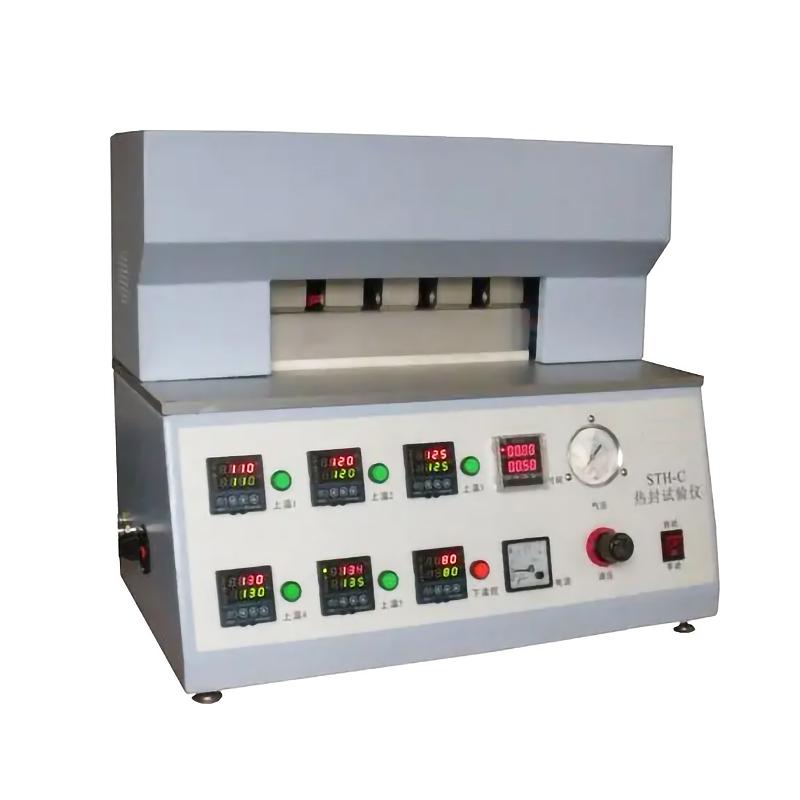
In the laboratory heat sealer, the heat sealing process can be controlled by adjusting the heating temperature, pressure, time and other parameters, and the heat sealing strength and heat sealing performance of the film can be tested. Through the heat seal test, the heat seal quality, reliability and durability of the material can be evaluated to provide technical support and reference for the application of the material.
Steps
The following are the basic operation steps of the laboratory heat sealer:
Sample preparation: According to the test needs, prepare film samples that meet the requirements. Usually, cutting, cutting, cleaning and other treatments are required to ensure that the samples meet the standard requirements.
Adjust test parameters: place the heat sealing head on the test platform, and adjust the test parameters such as temperature, pressure, time, etc. to meet the test requirements and standard requirements. When adjusting the parameters, it is necessary to refer to the test standard and the instrument manual, and adjust according to the actual situation.
Place the sample: place the prepared sample between the heat seal heads, and position and arrange it according to the standard requirements and testing needs. When placing samples, it is necessary to pay attention to factors such as the number, location, and density of the samples to ensure the accuracy and reliability of the test results.
Test: press the test button, the instrument starts to test automatically. During the test, it is necessary to monitor the test data and instrument status, record and deal with the test results and abnormal situations in time. Multiple tests can be performed as needed to obtain more accurate test results.
Result analysis: After the test, analyze and evaluate the results according to the test results and standard requirements to determine the heat seal strength, heat seal performance and appearance quality of the sample and other indicators. When analyzing the results, it is necessary to refer to the test standards and technical requirements, and make necessary comparisons and statistics.
Data processing and reporting: According to the test results and analysis, process and summarize the test data, and compile the test report. The test report should include test methods, test results, data analysis and conclusions to meet actual needs and requirements.
In general, the operation steps of the laboratory heat sealer need to follow the standardized test process and requirements to ensure the accuracy and reliability of the test results. When conducting a test, attention should be paid to sample preparation, test parameters, test process and data processing to ensure the scientificity and reliability of the test results.
-
![JINGWEN JW-RF330S Digital display heat sealer, room temperature~ 300 ℃]()
-
![GERUISI GRS-RY200 hot press shaping machine, soft pack lithium battery hot press shaping]()
-
![JINGWEN JW-RF330SW Heat Sealing Tester]() JINGWEN JW-RF330SW Heat Sealing Tester$ 2201.00
JINGWEN JW-RF330SW Heat Sealing Tester$ 2201.00