Industrial floor coatings key performance and detection method
Abstract:
文章《工业地坪涂料关键性能及其检测方法》介绍了工业地坪涂料的应用领域、关键性能及其检测方法。工业地坪涂料广泛应用于工业厂房、仓储、停车场等场所,具备耐磨、耐腐蚀、防滑等特点。文章详细列举了附着力、硬度、耐化学品性能、耐磨性、耐水性、耐盐雾性和耐温性等关键性能,并说明了这些性能的检测仪器及具体操作步骤。这些检测方法为确保地坪涂料质量提供了有效手段,有助于提升工业场所的安全性和使用寿命。
Industrial floor coatings refer to coatings used on the ground of industrial plants, logistics storage, parking lots, stadiums and other places. They have the characteristics of wear resistance, corrosion resistance, dust resistance, and anti-skid. It is used in a wide range of fields, such as pharmaceutical factories, electronics factories, automobile factories, food factories, machinery factories, warehouses, logistics centers, airports, hospitals, schools, etc.
The following are the common key properties of industrial floor coatings and the corresponding testing instruments and testing steps:
| Performance name | Testing equipment | Detection steps |
|---|---|---|
| Adhesion | Adhesion Tester | 1. Prepare the test board and test coating 2. Fix the test board on the test bench 3. Cut the grid pattern with a test scratch 4. Tape the grid at the pattern slit 5. Apply glue on the coated surface 6. Apply paint on the glue with a test brush 7. Wait for curing and peel off |
| hardness | Impression Hardness Tester | 1. Prepare the test sample 2. Use a round-headed steel ball of specified quality to press on the surface of the sample 3. Measure the diameter of the impression 4. Calculate the hardness value according to the formula |
| Chemical Resistance | Chemical solutions and test tubes | 1. Prepare the test sample 2. Prepare different chemical solutions 3. Soak the sample in the chemical solution 4. Observe the coating surface changes |
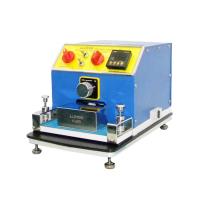
| wear resistance | Abrasion testing machine | 1. Prepare test sample and abrasion testing machine 2. Fix the sample on the testing machine 3. Load a certain mass of grinding wheel and mortar 4. Run the testing machine for a certain time 5. Check the coating surface for wear |
| water resistance | Water Immersion Tester | 1. Prepare the test sample 2. Coat the surface of the sample with a layer of coating with a specified thickness 3. Place the sample in the water immersion Tester for a certain period of time 4. Take out the sample and observe the change of the coating surface |
| Salt Spray Resistance | Salt spray Test Chamber | 1. Prepare the test sample 2. Coat the surface of the sample with a specified thickness of coating 3. Place the sample in a salt spray Test Chamber to expose for a certain period of time 4. Take out the sample and observe the change of the coating surface |
| Temperature resistance | Thermal Cycler | 1. Prepare the test sample 2. Apply a layer of coating with specified thickness on the surface of the sample 3. Place the sample in the thermal cycle box for cyclic heating |
Products required
Relevant knowledge